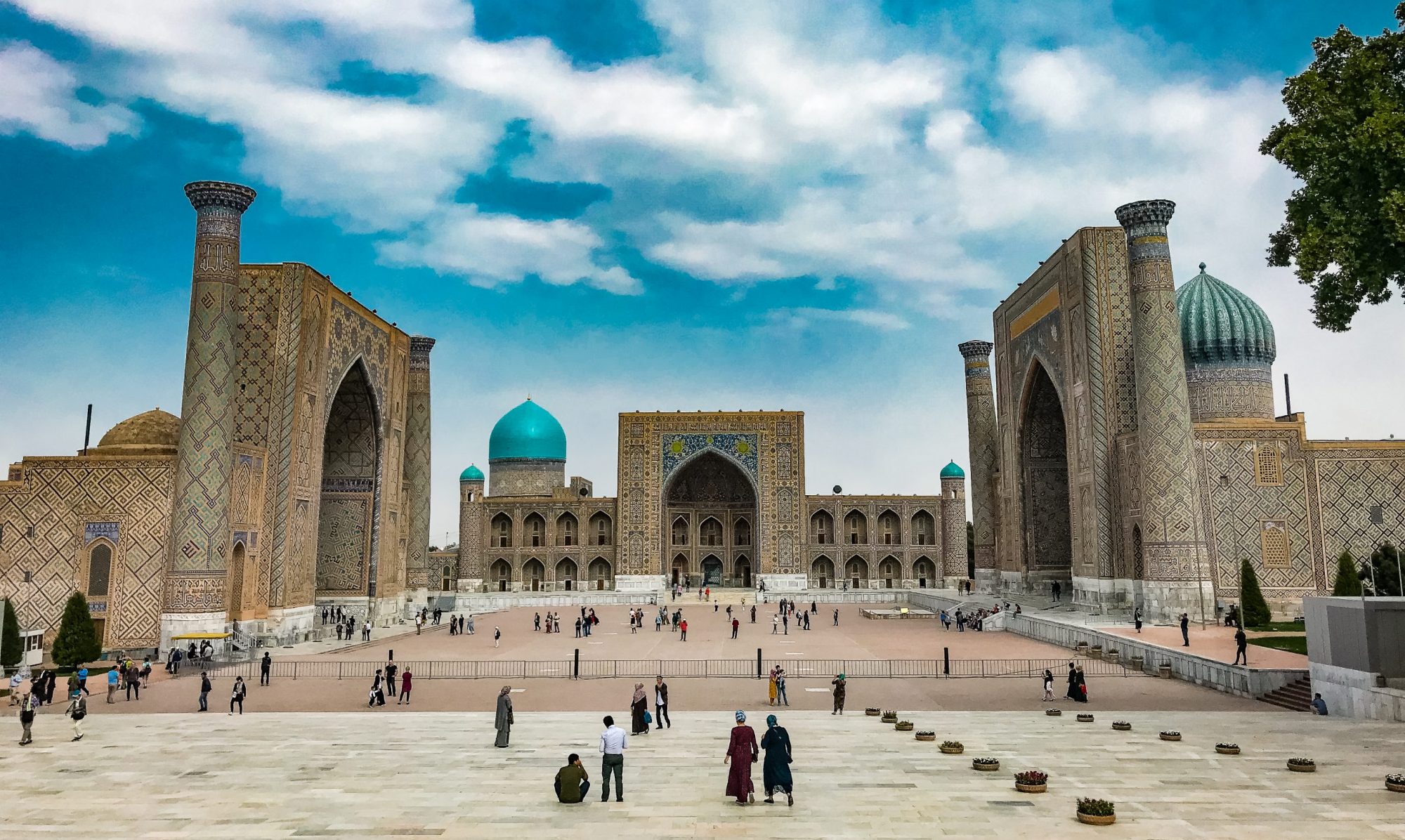
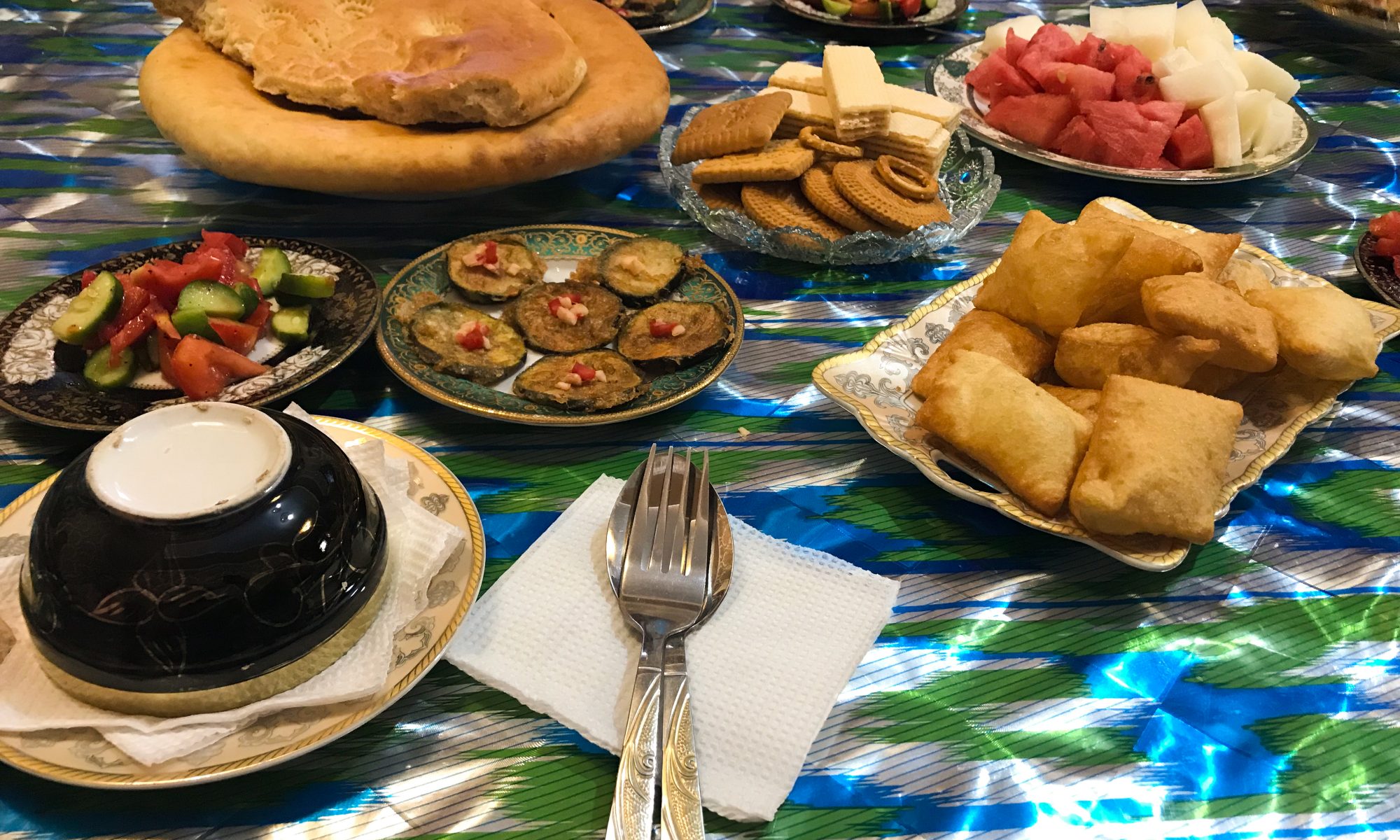
Uzbek cuisine is really about noodles, bread, rice, and meat, if you want to put it into three words. As a Central Asian country, it received influences from all directions, also because of the Silk Road, which crossed the country with Khiva, Bukhara, and Samarkand as the main reference cities. Influences from Persia, Turkic tribes, China, Uyghurs, Jews, Russians, etc. are melted in one in the Uzbek kitchen, which became very famous in the former USSR but also around the world.
Street food
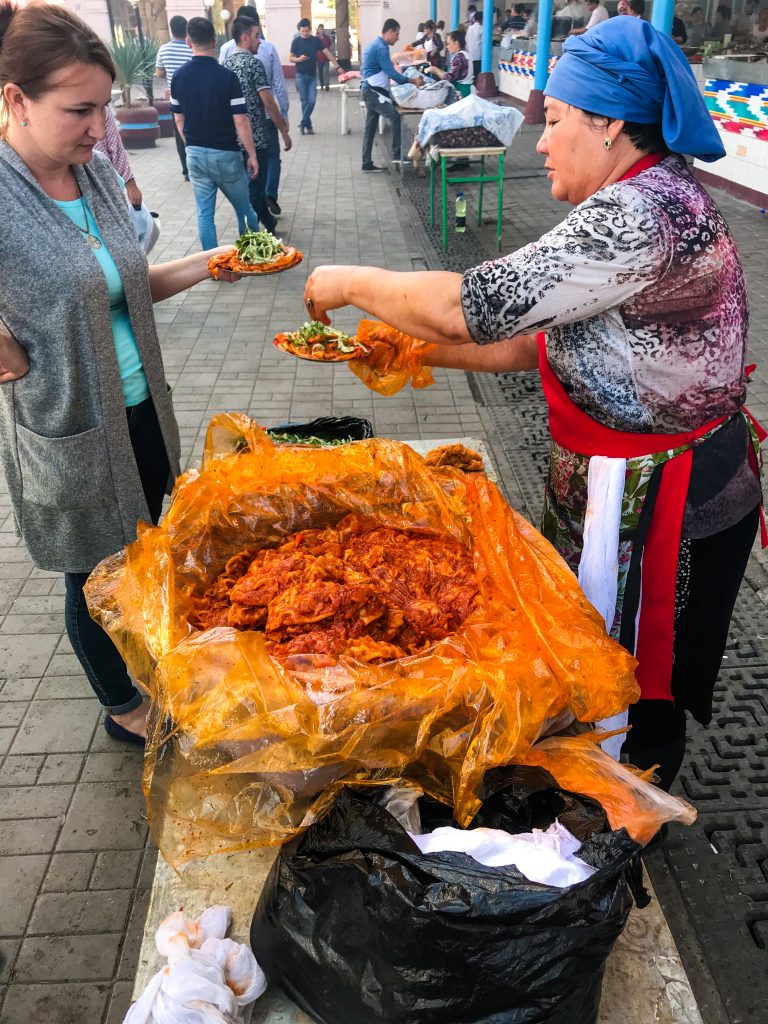
Going to a traditional market, you can explore the most delicious and cheap street food, which is dominated by noodles and meat. If you visit Tashkent, I recommend going to Chorsu Bazar and getting lost in that huge market, however aiming to find the street food area.
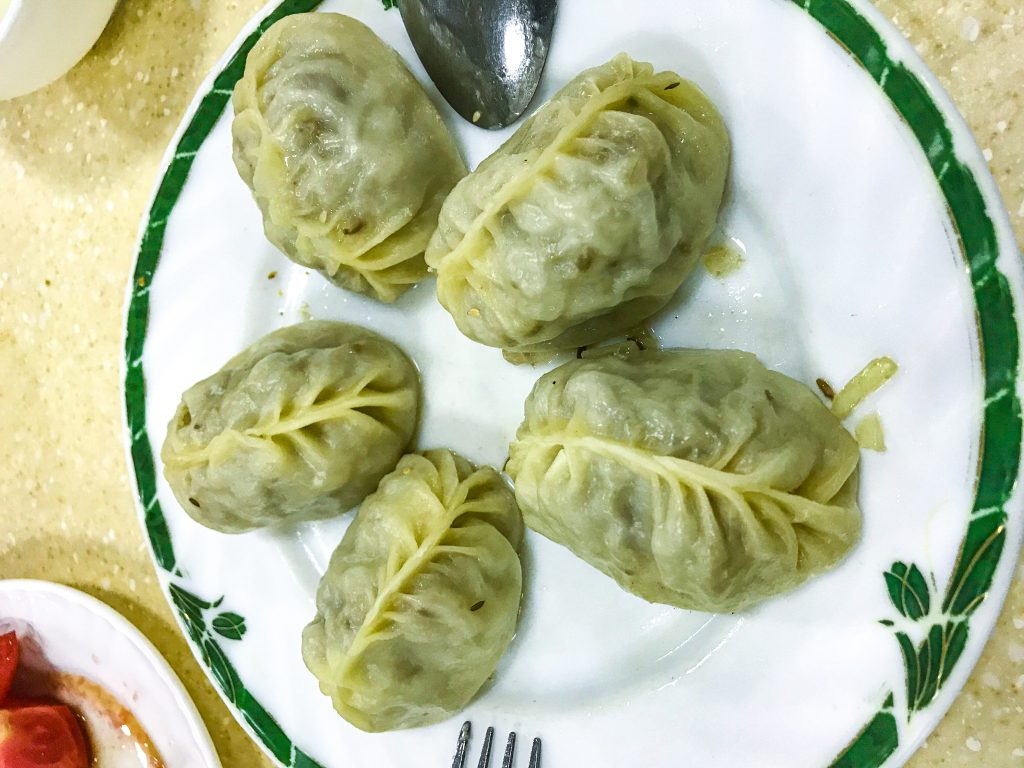
Loving Turkish manti (little tortellini-like dumplings) and knowing that all the Turkic nations have this tradition, originated from the Uyghurs, I was eager to try the Uzbek variant of it. I was amazed to find out that there are dozens of different manti and noodle dishes, some of them quite surprising. Like the giant manti, which was sold out of a huge plastic sack with a delicious tomato and dill sauce!
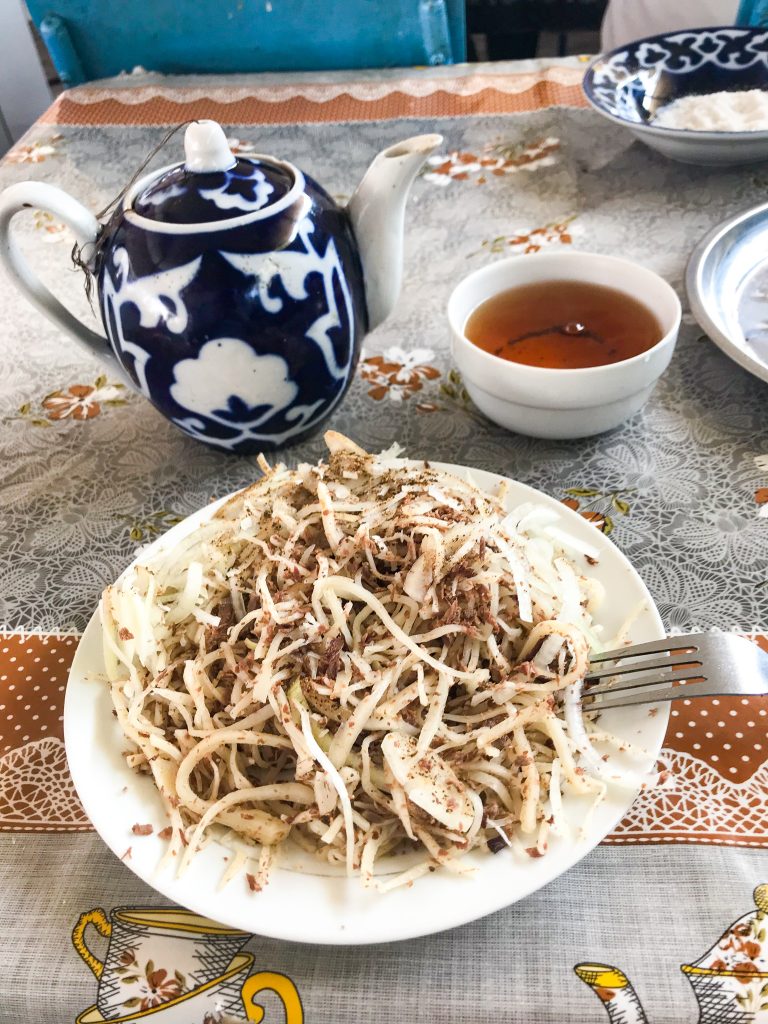
Another noodle dish I tried was this kind of spaghetti with horse meat and onions.
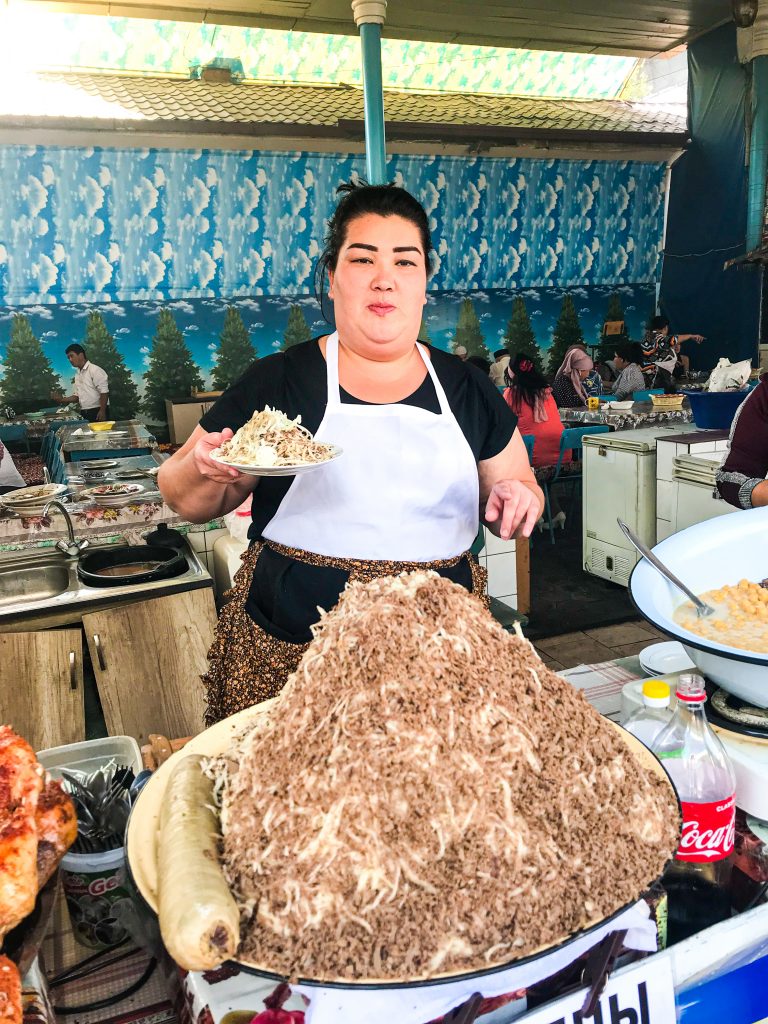
Everything was served with the traditional green tea, just in the sitting area in the back of the sellers.
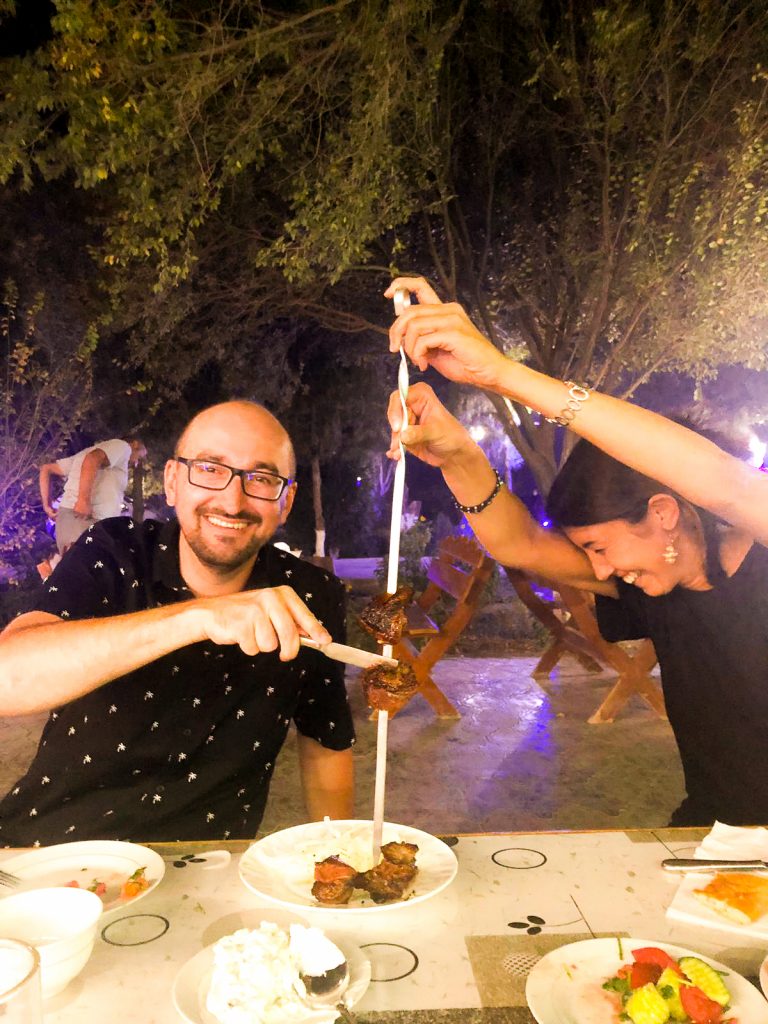
The meat on the market is also delicious, you can choose from different kinds of kebabs: lamb, lever, minced meat, chicken, etc. Since I was already full of noodles and horse sausage, I tried in the evening some huge kebabs with my travel mates. And good that I met them because it took all of our strength to fight with those presentable pieces of meat!
Noodle or manti restaurants are also widespread and you can find them quite easily everywhere, there are even chains of them. The difficulty is really to decide what to take because of the variety of manti, noodles, fillings, sauces… When you are in doubt, take a mixed plate! In Tashkent, I recommend Lagmonxona, close to the Chorsu Bazar.
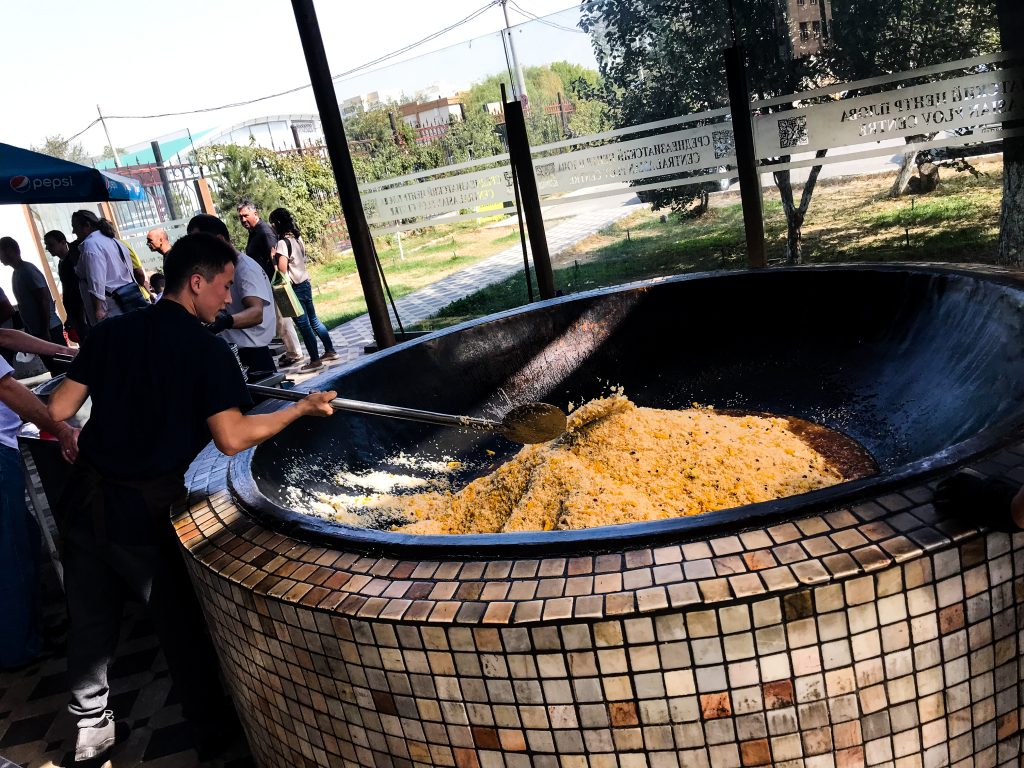
Another famous Uzbek dish is the “palov”/“pilaf”, a rice dish with pieces of meat, vegetables, and dried fruits cooked in a giant “Kazan” (cauldron). It is not just tasty but entertaining watching the cooks preparing it and the hungry folks waiting for their turn to get a big spoon on their plates. In Tashkent you can enjoy the show and the Beshqozon, literally translated as “five cauldrons”.
Uzbek bread
Coming now to bread, the most traditional breads are the flatbreads, in multiple variations, depending on the regions, cooked in tandoors. The bread has generally a round shape symbolizing the sun and is decorated with different patterns and sesame seeds. Traditional Uzbek bread, called generically non or patyr is sold practically everywhere. Especially the Samarkand type non is famous. It is believed that this bread can be stored for three years not going off. To make the bread soft again, just sprinkle it with water and heat it in the oven.
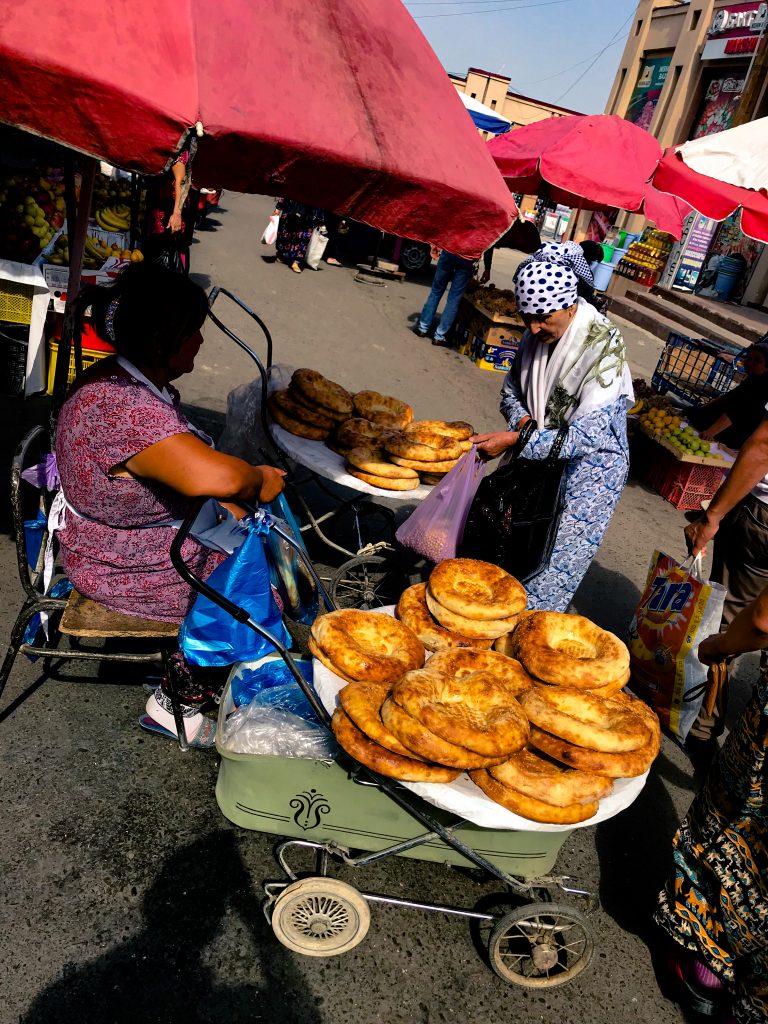
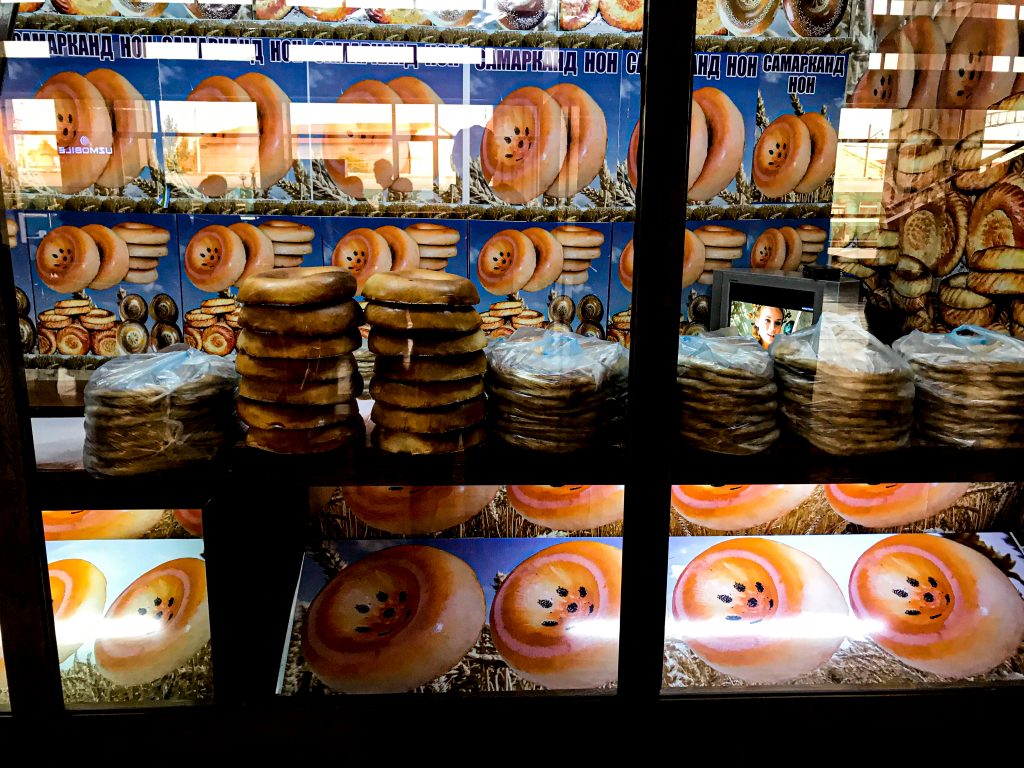
There are several legends explaining this property of the Samarkand bread. One of them says that is the Samarkand air. The more acceptable reason is the use of several types of flour and adding a lot of salt. Anyways, the bread is very popular. You can encounter this round and dense texture bread in the markets, on the street, and even in the railway station is a huge shop, if you want to take a loaf as a souvenir with you.
A dish from Karakalpakstan
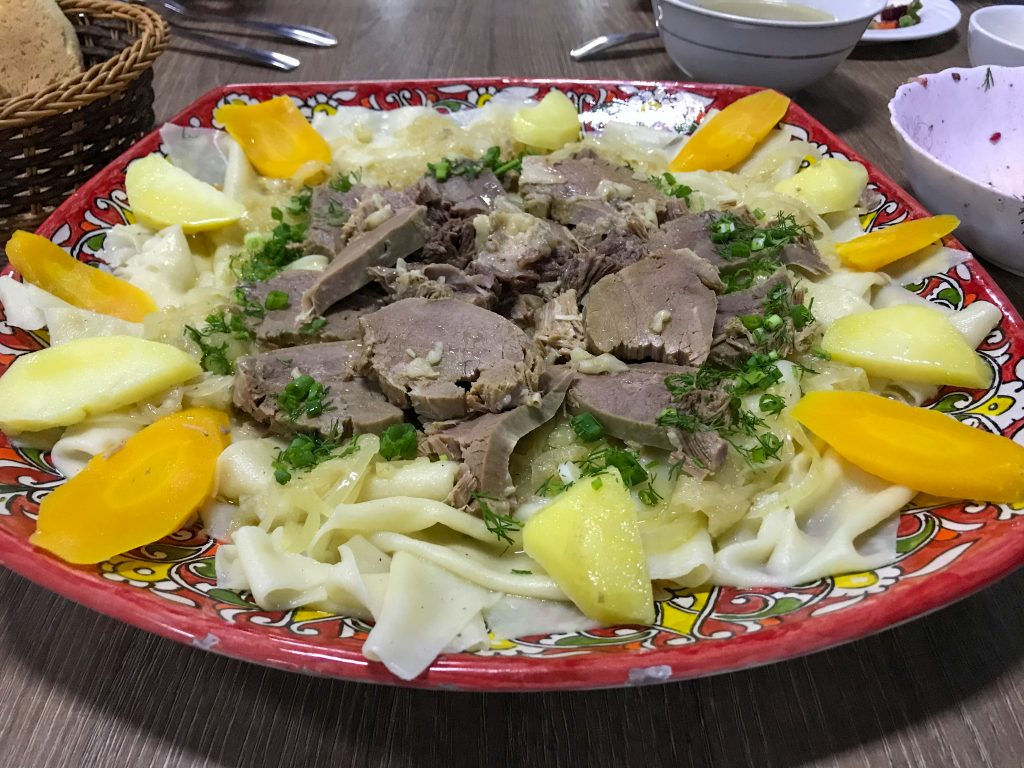
And finally, I wanted to present a Karakalpak specialty. Coming back from the Aral Sea trip (see this post), we were asking our guide to recommend a traditional restaurant. Since I understand Turkish, he told me, that I could easily remember the restaurant’s name, simply memorizing “besh parmak”, which in Uzbek and Turkish equally means “five fingers”. That memory hook worked, we got to the restaurant and ordered the dish after the restaurant was named: the besh parmak! A huge plate of noodles, tender meat, and vegetables came but without any cutlery! Only then we realize why it is called “five fingers”! Was delicious, ending up licking our ten fingers dry!