Throughout my sourdough journey to “bake the world a better place”, I have learned a great deal from experienced bakers. Friends and colleagues have now asked me to teach them how to make sourdough bread in return. What an honor! I wondered how I might be able to best meet this demand.
Initially, I focused on sharing my experiences with the baking community through my blog, especially as it’s simpler to manage and further develop on my own. While an equally enriching platform, workshops, on the other hand, require more planning: developing concepts, coordinating with participants, and organizing logistics.
I needed a nudge to take the plunge, and my dear friend Johanna provided just that. She not only encouraged me, but also offered her support to make it happen. Fittingly, Johanna was the one who introduced me to the magic of sourdough years ago, sparking my passion for it. Now, we are combining our enthusiasm and skills to try something new!
Johanna and I are actively involved in an association called Bildungsflügel e.V., which supports disadvantaged children and young people through social and educational initiatives. We decided this would be a fitting opportunity to organize the sourdough baking workshop as a fundraising event for the association. This approach allowed us to raise money for a meaningful cause while simplifying the financial logistics of the event.
Planning the Workshop
With the initial framework in place, we started planning the two-day workshop. This included creating a schedule, listing necessary materials and ingredients, and preparing
We also did a trial run in Johanna’s kitchen, where the workshop would be held. This test baking session helped us fine-tune the timing, familiarize ourselves with the space, and most importantly, test the oven. Fortunately, the loaves of bread turned out delicious! With this success, we sent out invitations to our first group of participants—our “guinea pigs.”
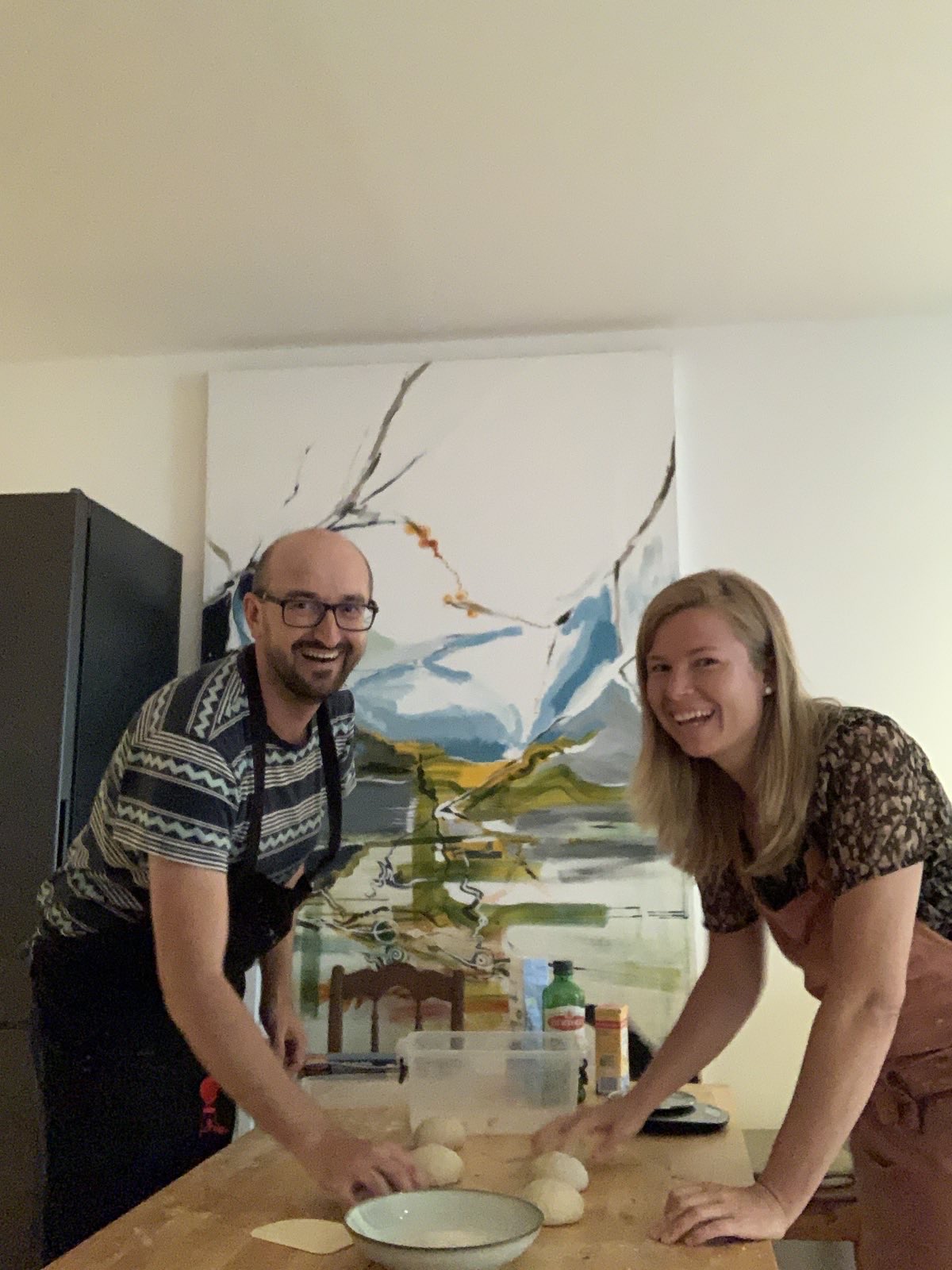
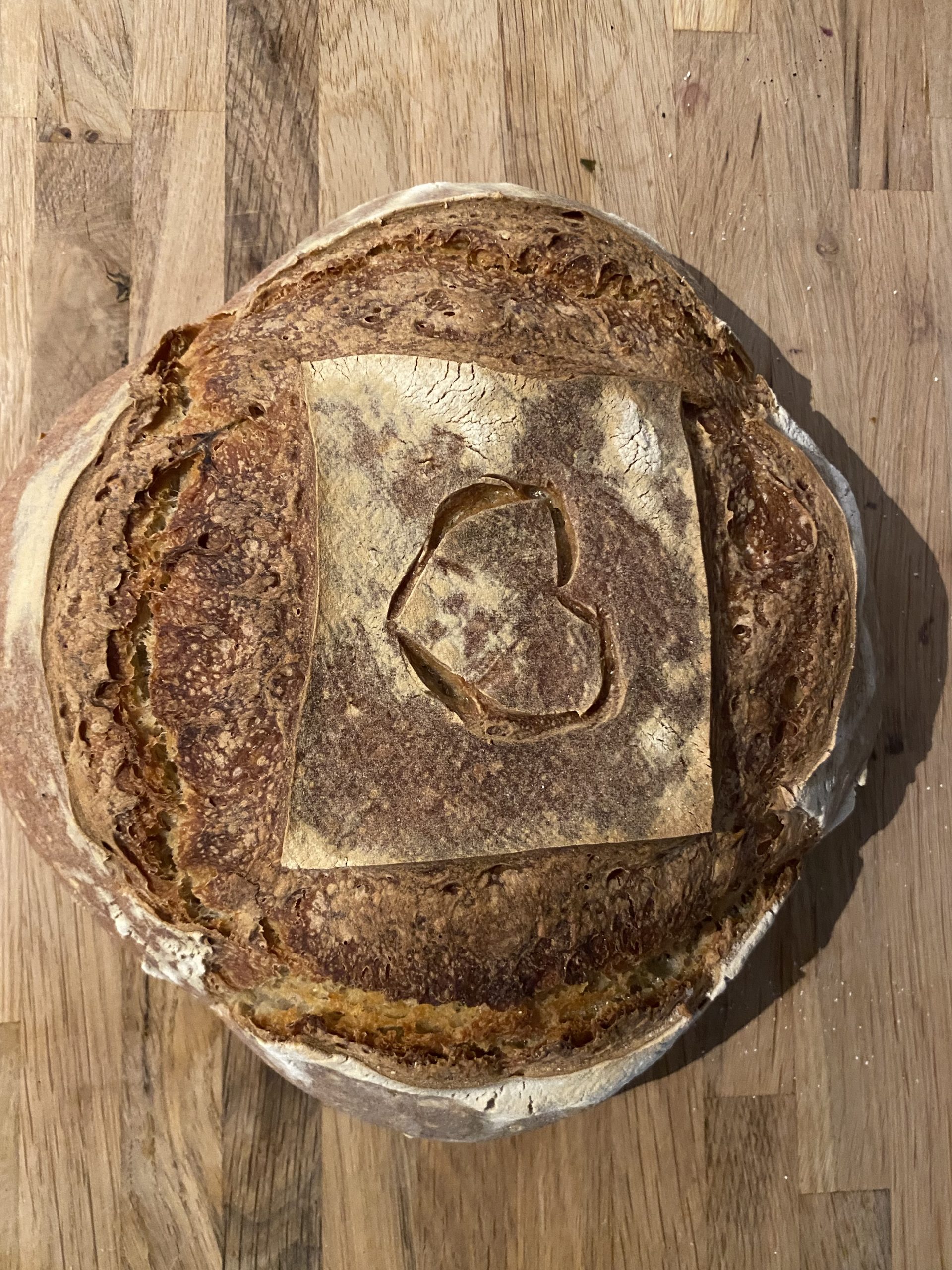
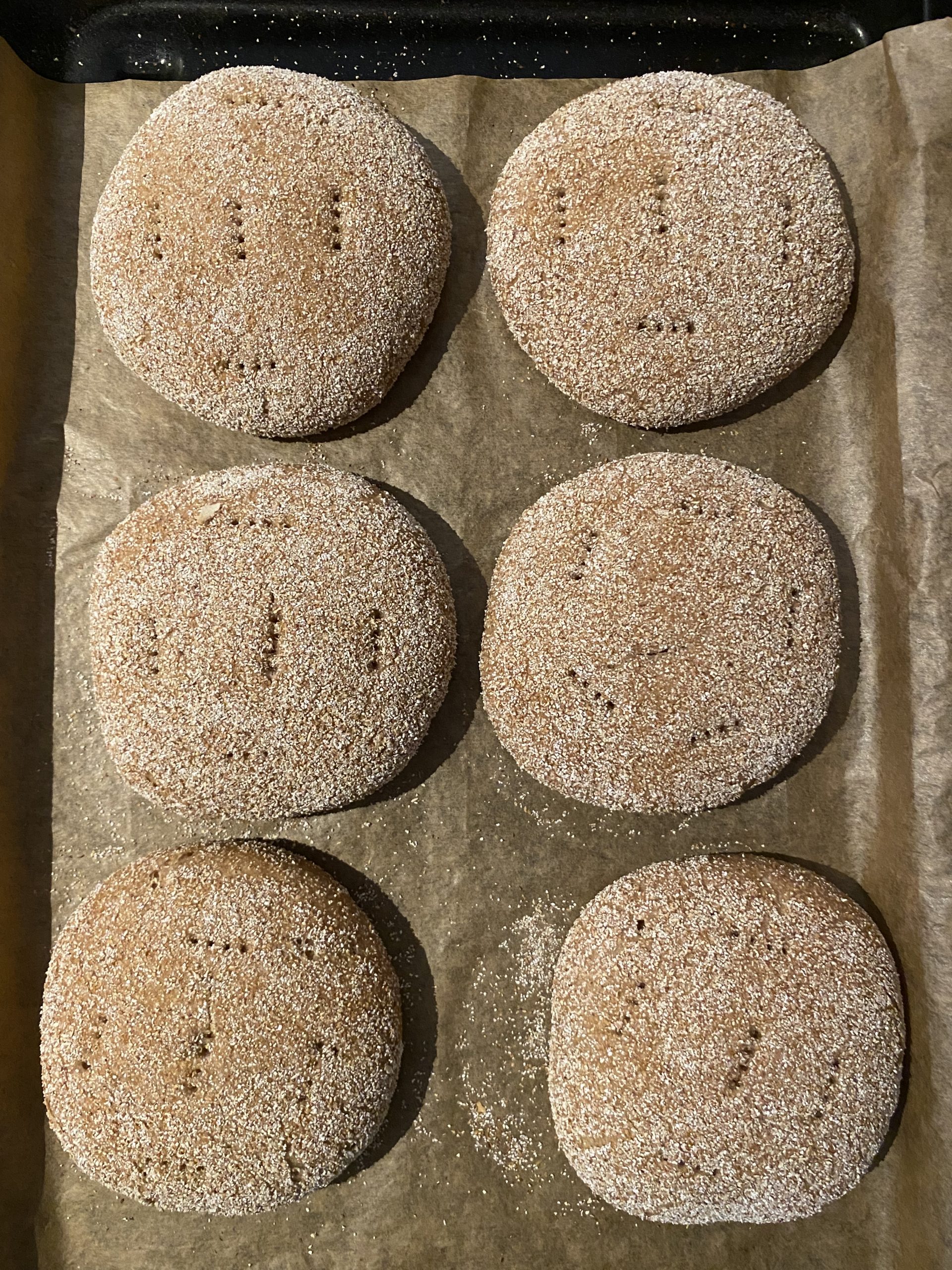
For the first workshop, I primarily reached out to friends and colleagues, who had previously expressed interest in learning how to bake sourdough bread. The feedback was enthusiastic, and we ended up with four motivated participants!
Day 0: The Preparations
Our final preparations began on Friday – one day before the start of the workshop. Johanna gathered the last of the materials, and I arrived with a significant amount of sourdough starter in tow. Together, we cleaned, organized the space, and prepared the overnight focaccia dough, which we planned to serve for lunch on the first day. By the time we finished, we were exhausted, but equally as excited for the weekend ahead.
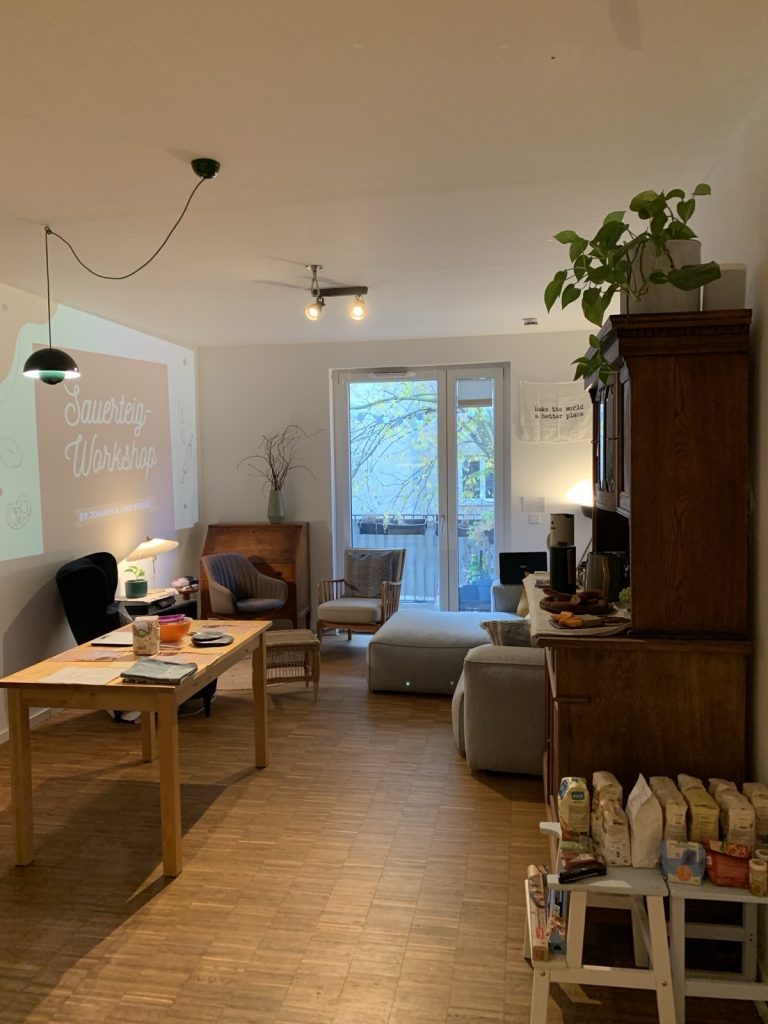
Day 1: Getting Started
The first day of the workshop began early for Johanna and me, as we prepared tea, coffee, and snacks to warmly welcome our participants. By 10 a.m., everyone had arrived—smiling and eager to dive in. It was the perfect start to a busy baking day!
We began with introductions and a brief overview of sourdough baking.
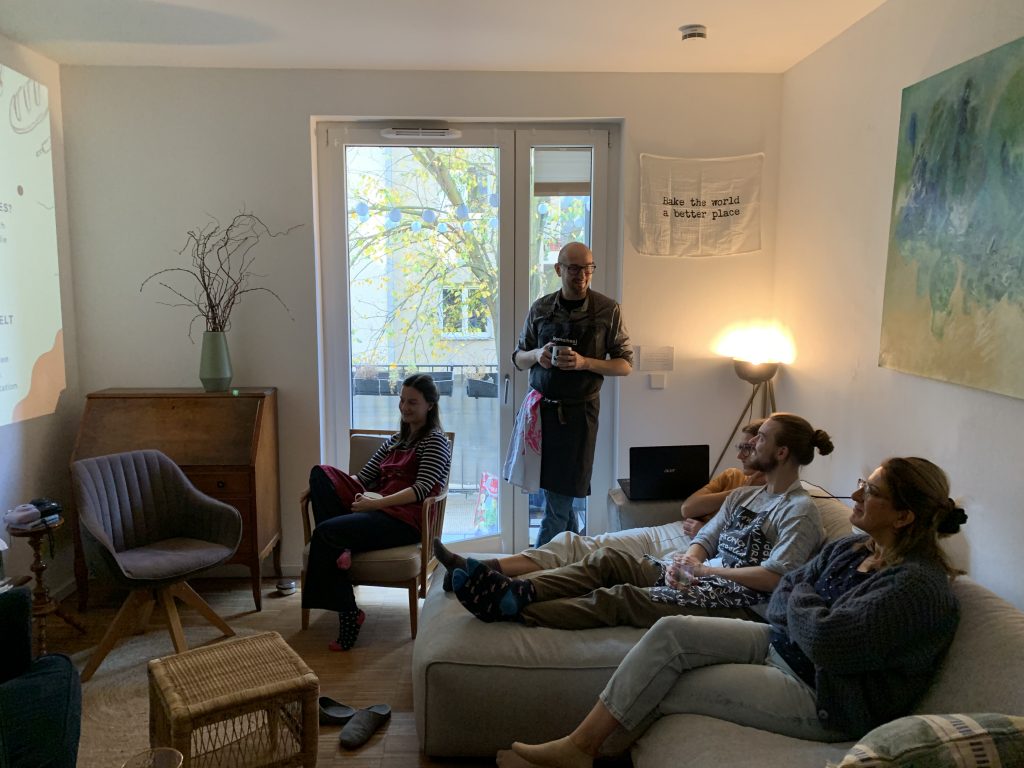
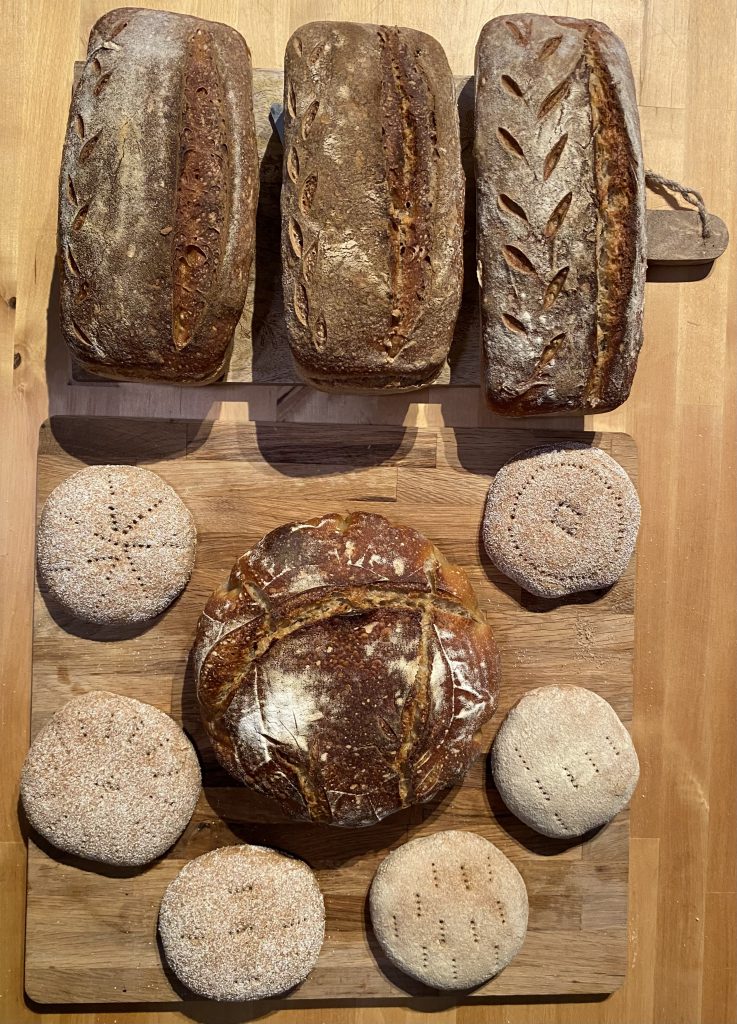
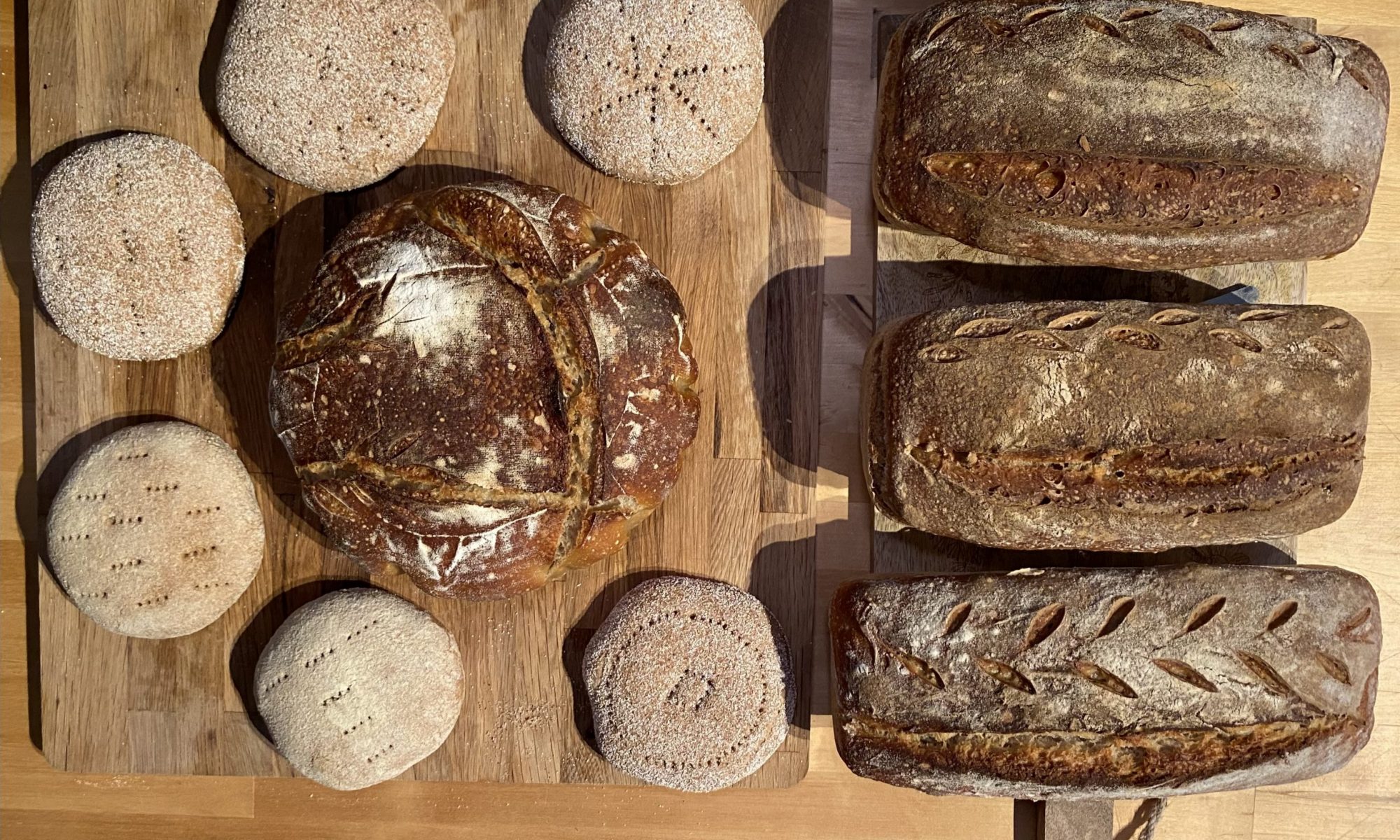
Then, theory turned into practice as we prepared the autolyze (mixing of the water and flour) for two breads: a French-style Tourte de Meule and a Moroccan barley bread called Khobz. Participants also prepared their own sourdough starters to take home at the end of the day.
Next came kneading with the addition of the sourdough and salt and practicing folding techniques.
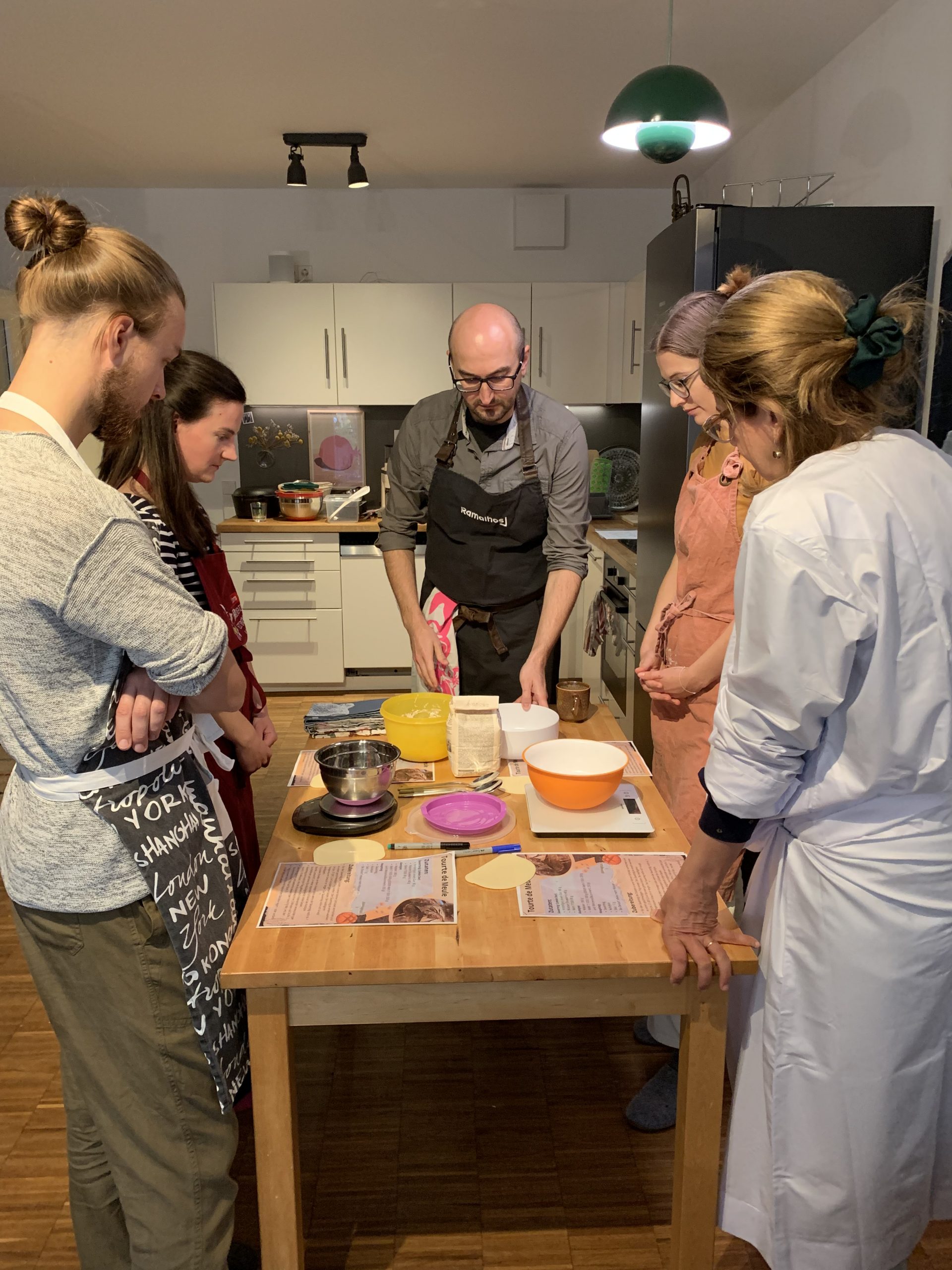
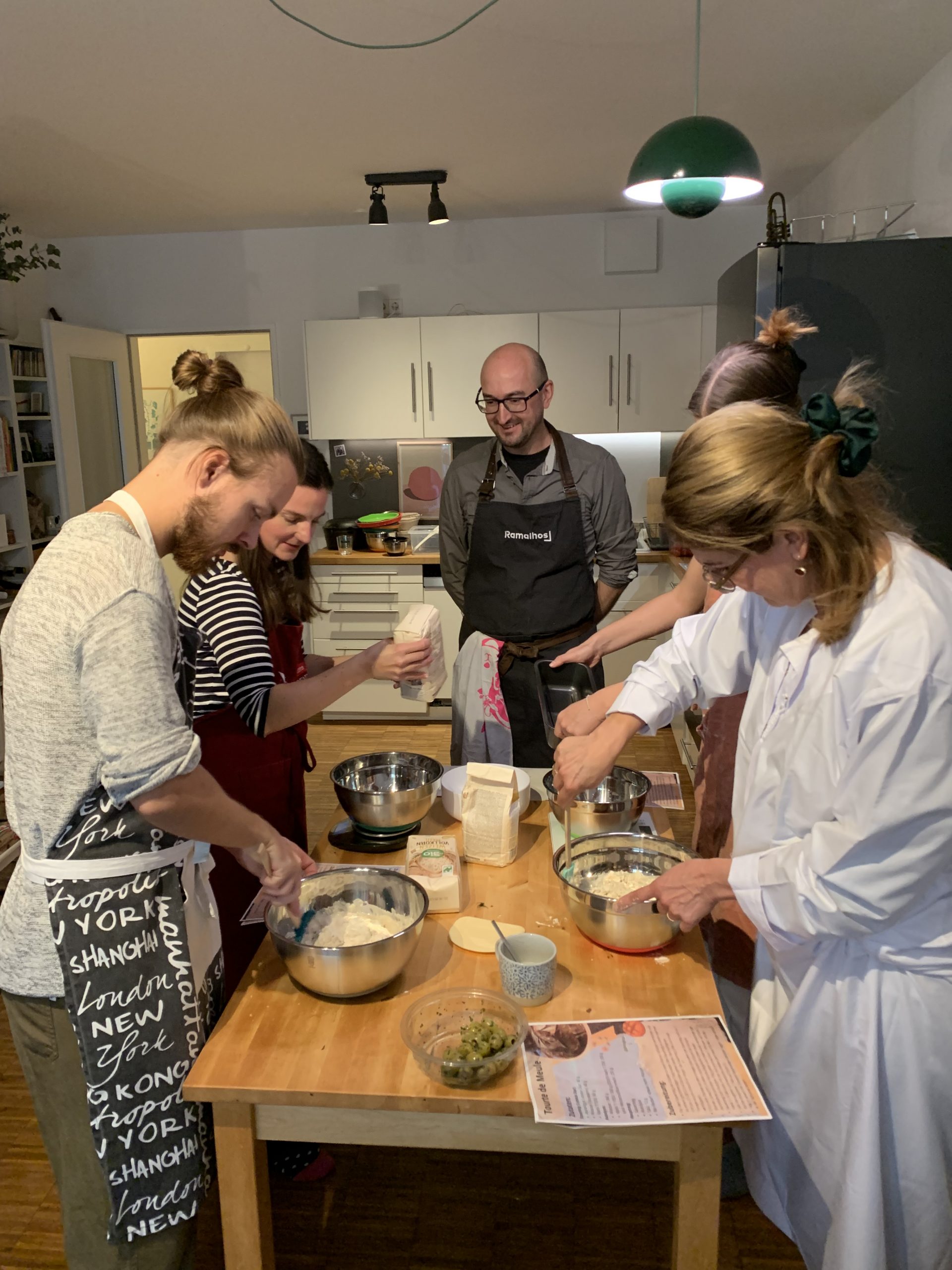
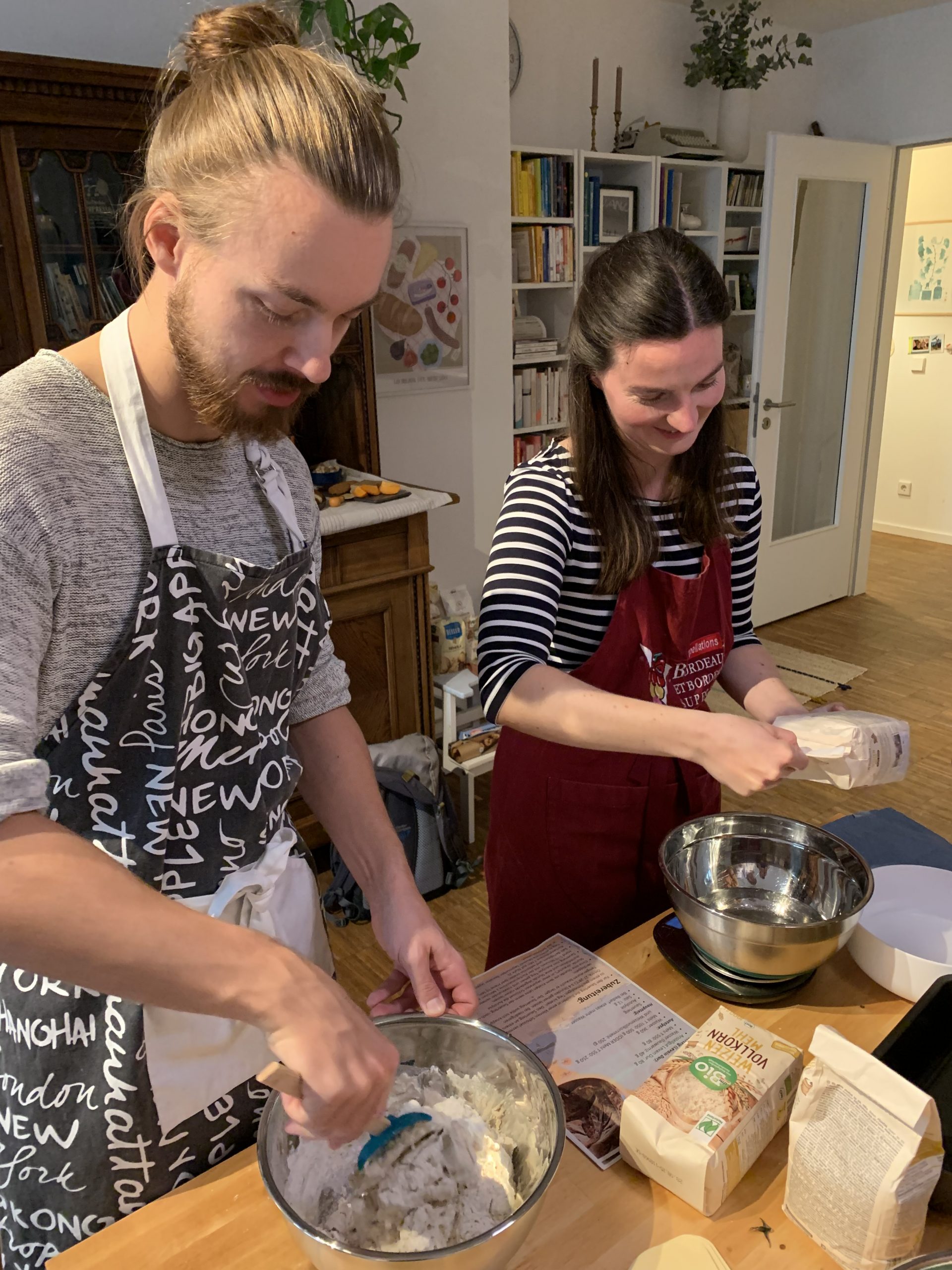
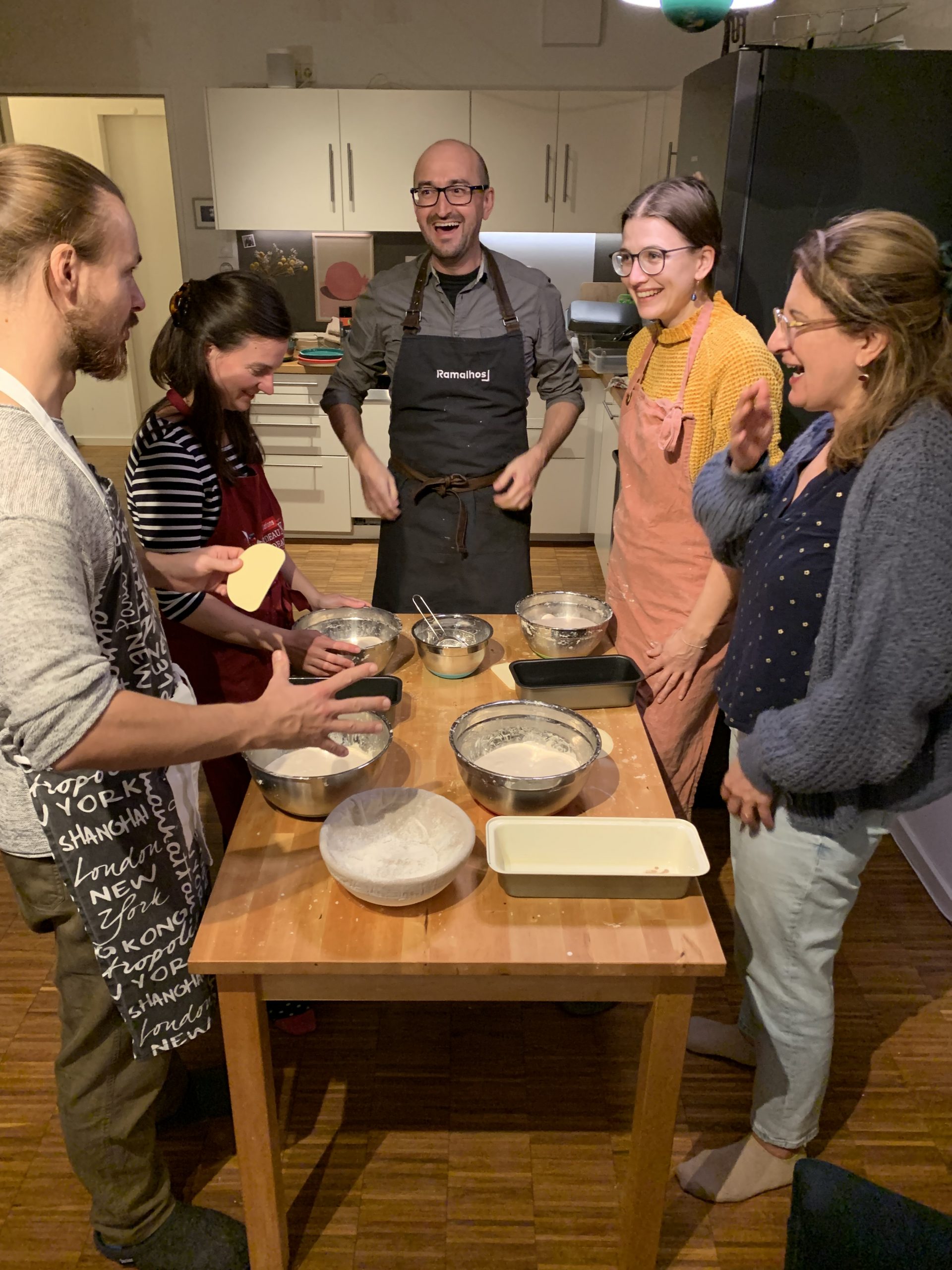
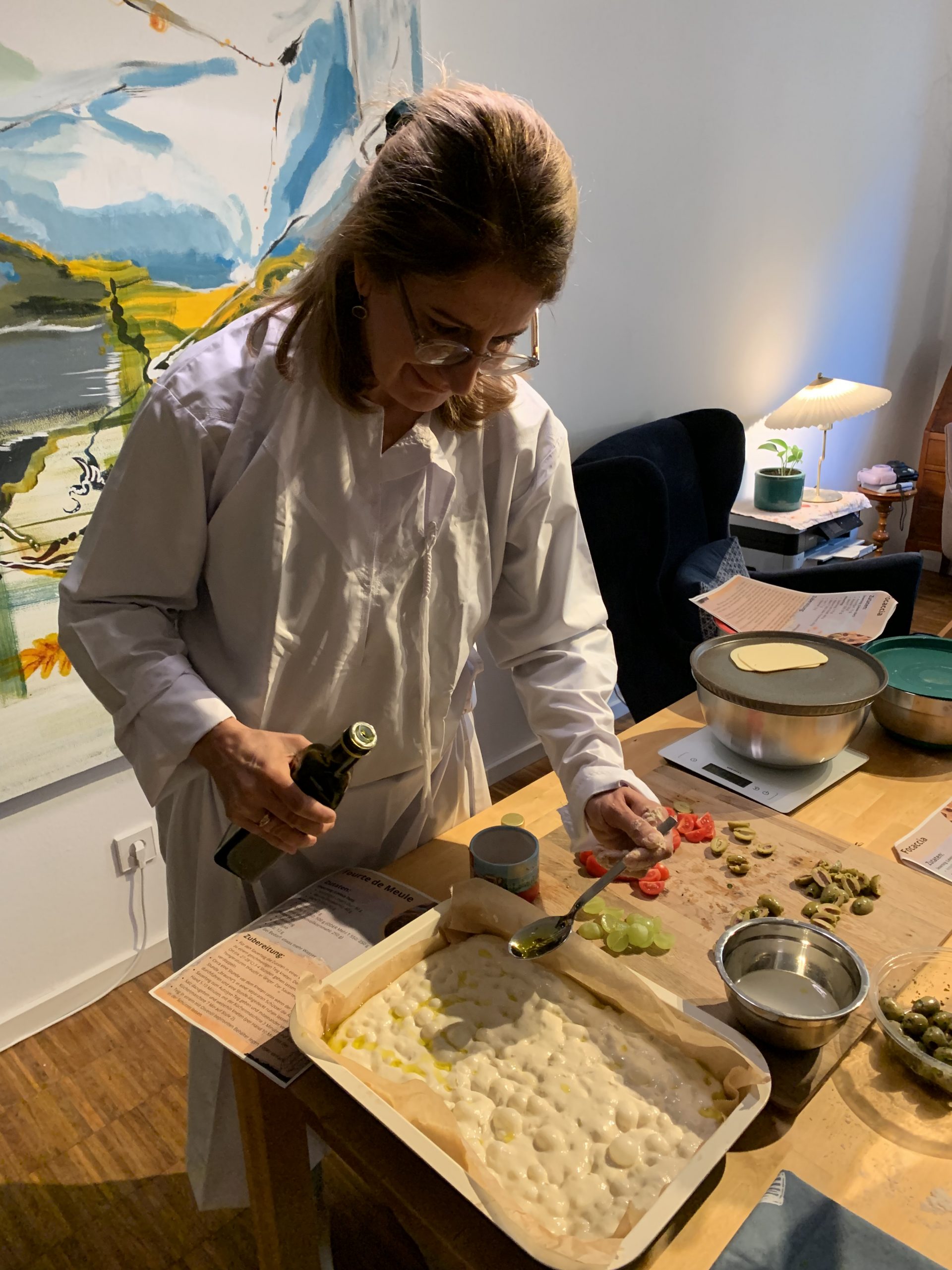
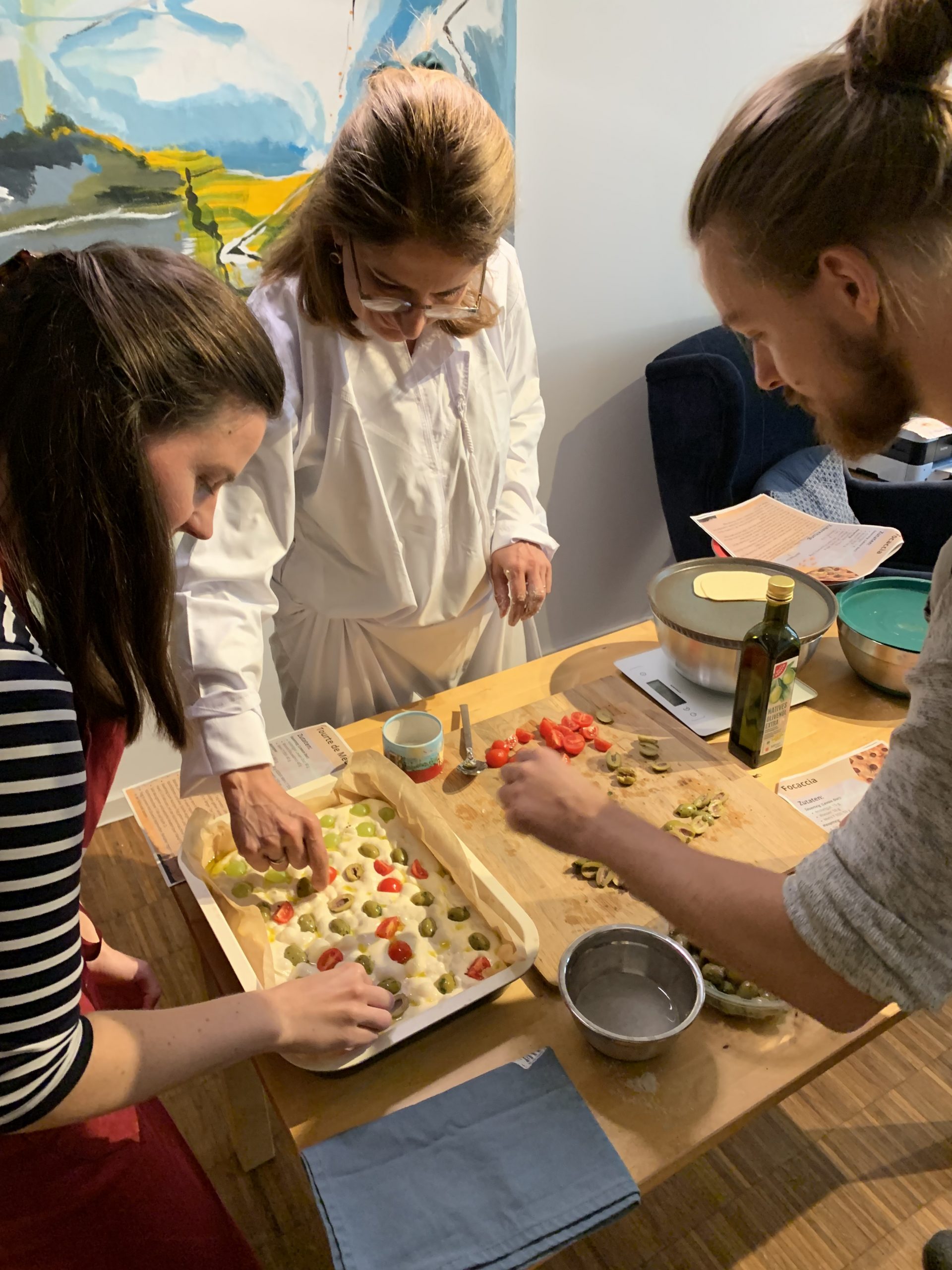
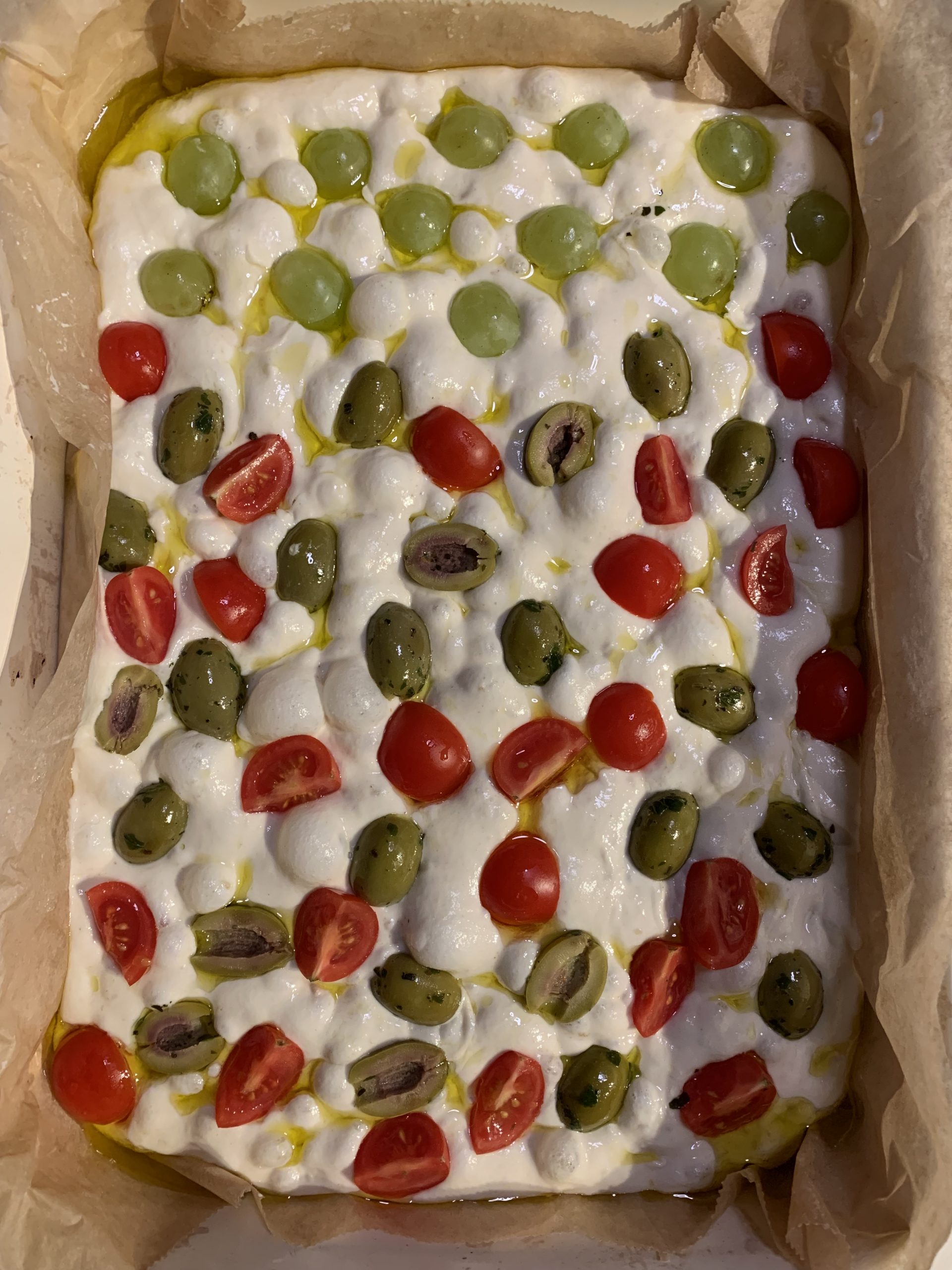
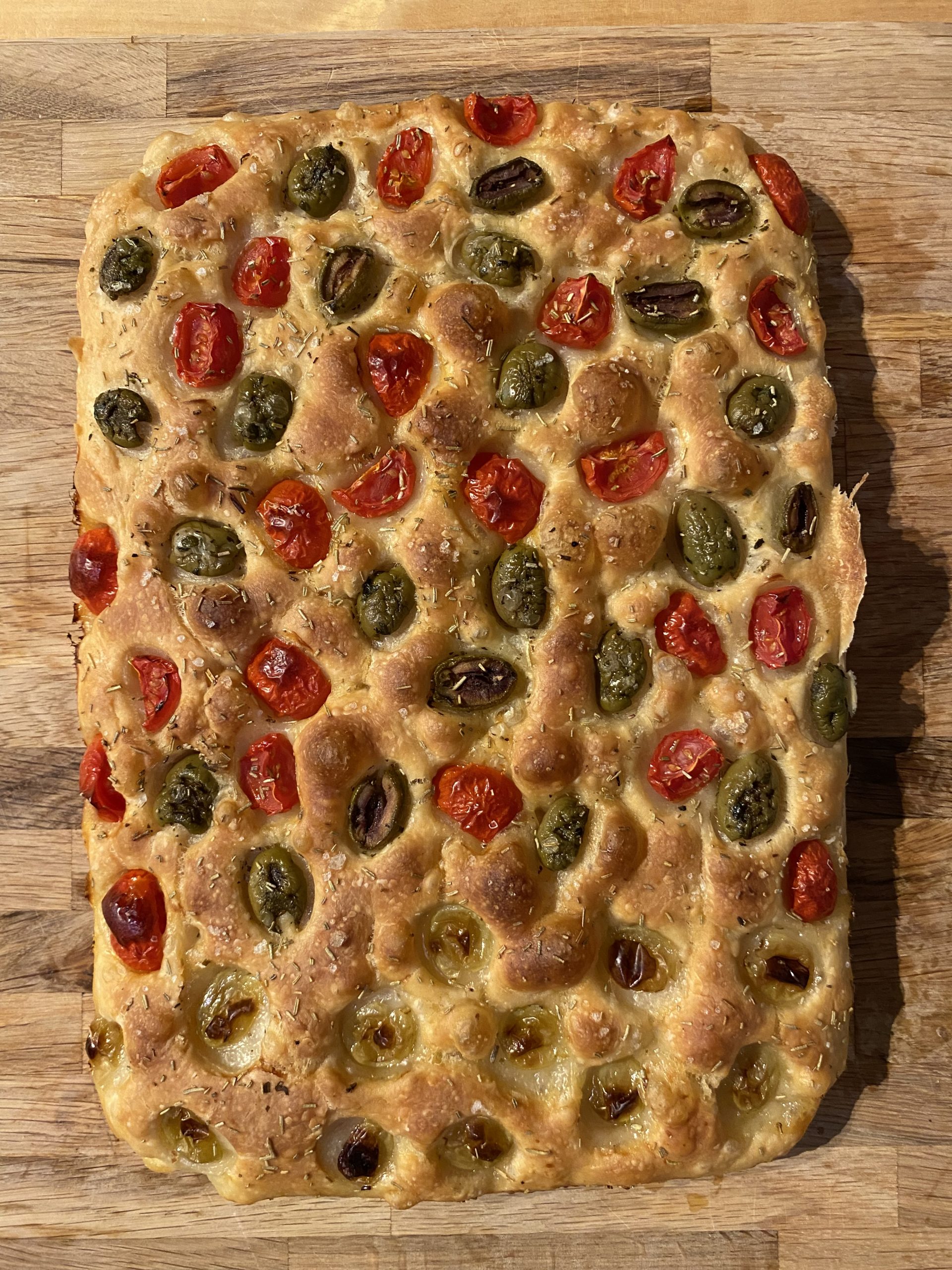
Between folds, we worked together on lunch preparations. Participants chopped tomatoes and olives for the focaccia topping, which paired beautifully with autumnal salads Johanna and I had already prepared. The focaccia was a hit—crispy, flavorful, and the perfect midday treat.
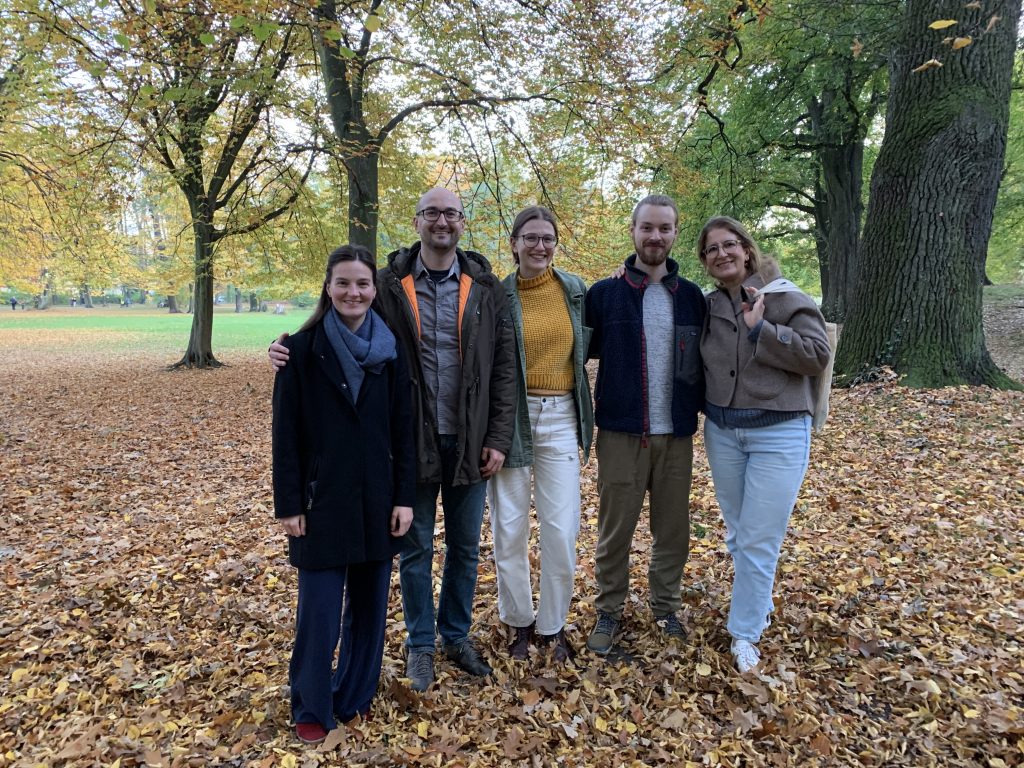
During the bulk fermentation, we took time to share insights about our association and its impactful work. The participants were impressed by our projects. At the same time, they became aware of some of the challenges and were motivated to help out in the future. Blessed with golden October weather, we also enjoyed a relaxing walk through a nearby park in Berlin.
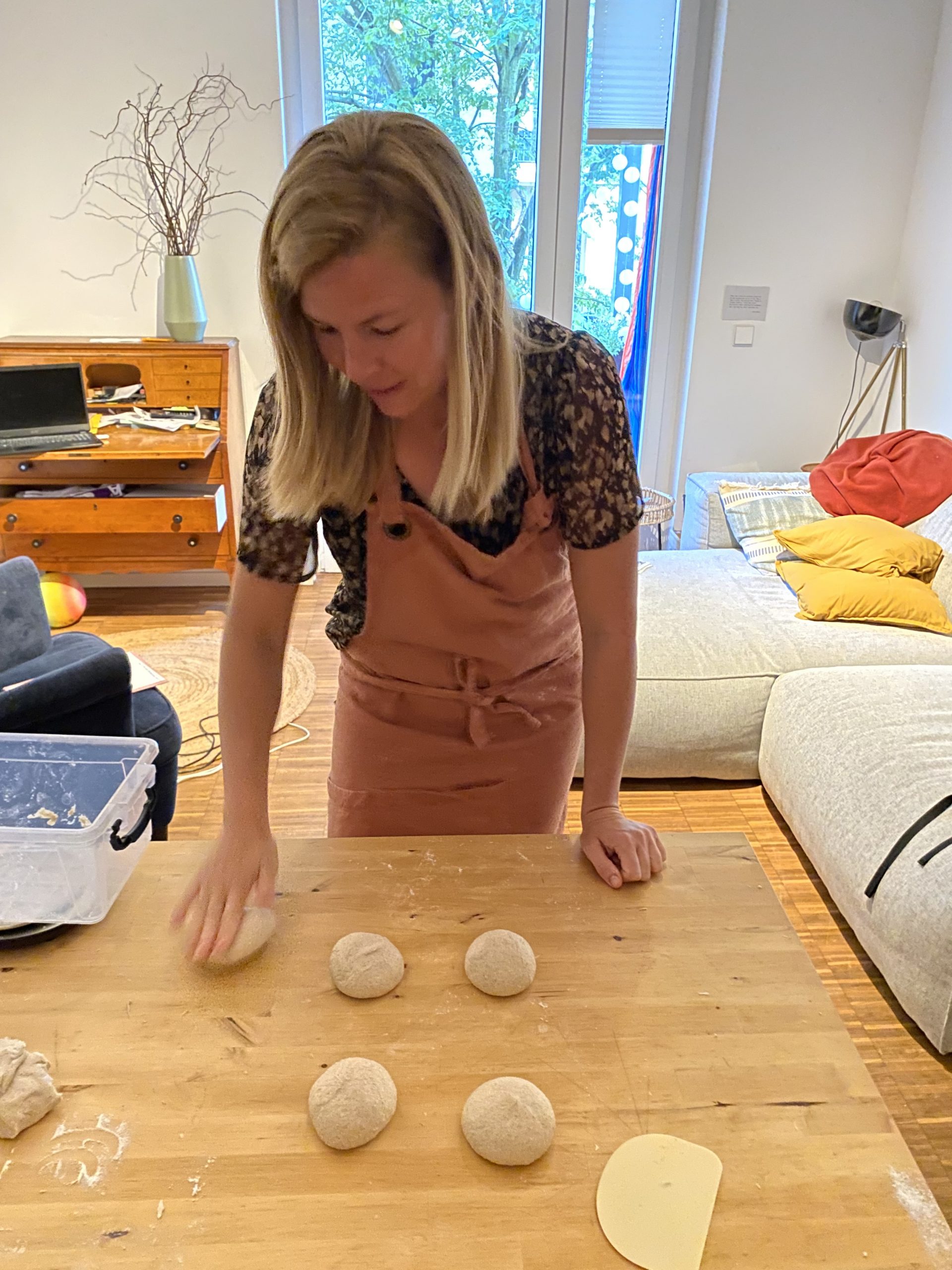
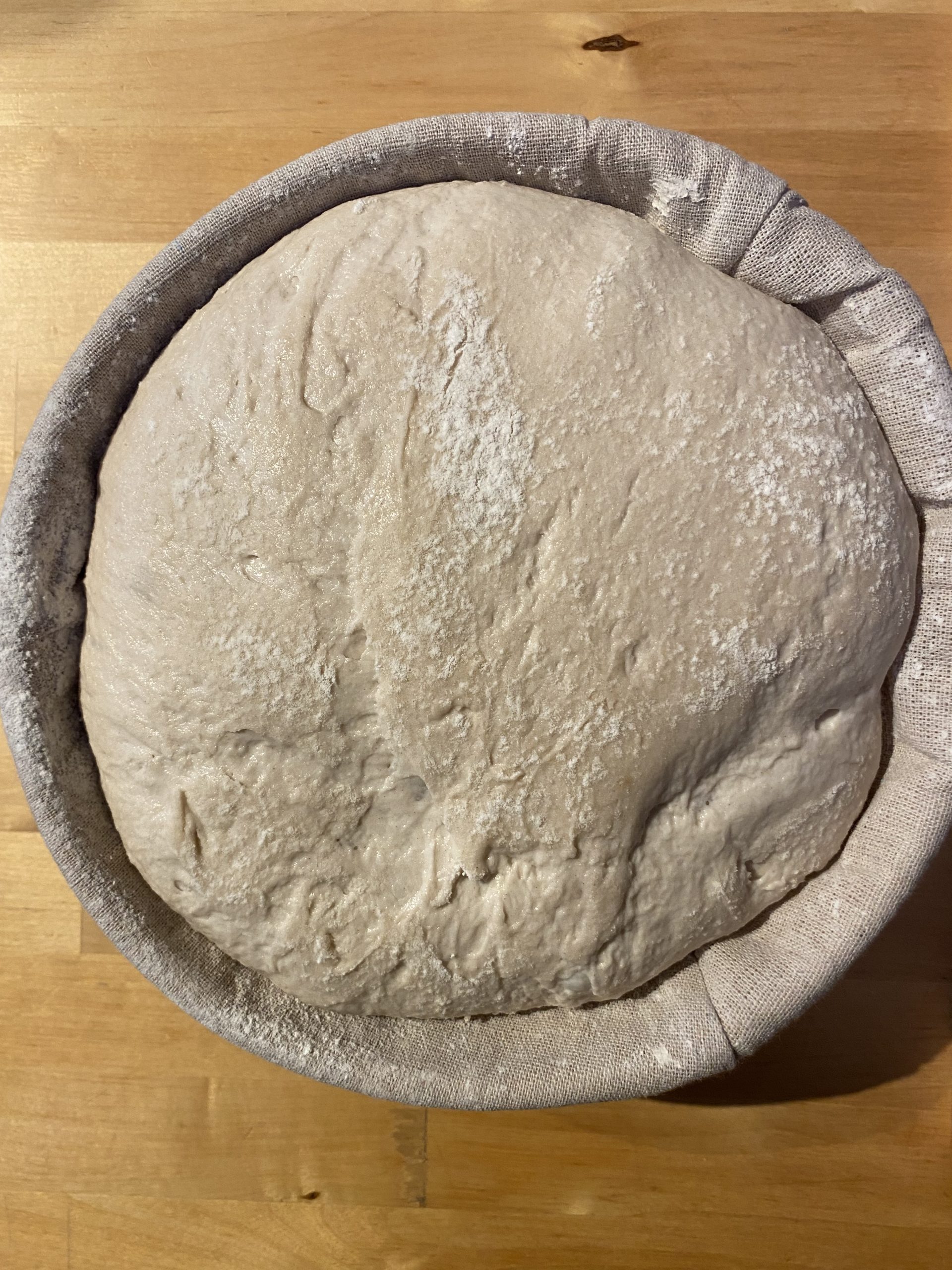
After the walk, it was time to shape the dough. With some guidance, everyone managed to shape their loaves and place them into baskets or forms. We also pre-shaped the dough balls for the Moroccan bread, which would proof overnight in the fridge alongside the loaves. By 6 p.m., the first day came to an official close—but for Johanna and me, the work continued as we cleaned and prepared for Day 2.
Day 2: Baking and Celebrations
Sunday was all about baking! When the participants arrived, the oven was already preheated at 250 degrees Celsius. The apartment space was extra toasty – a fitting invitation for workshop participants to return from the early morning chill outside. We scored the French loaves and baked them in two rounds.
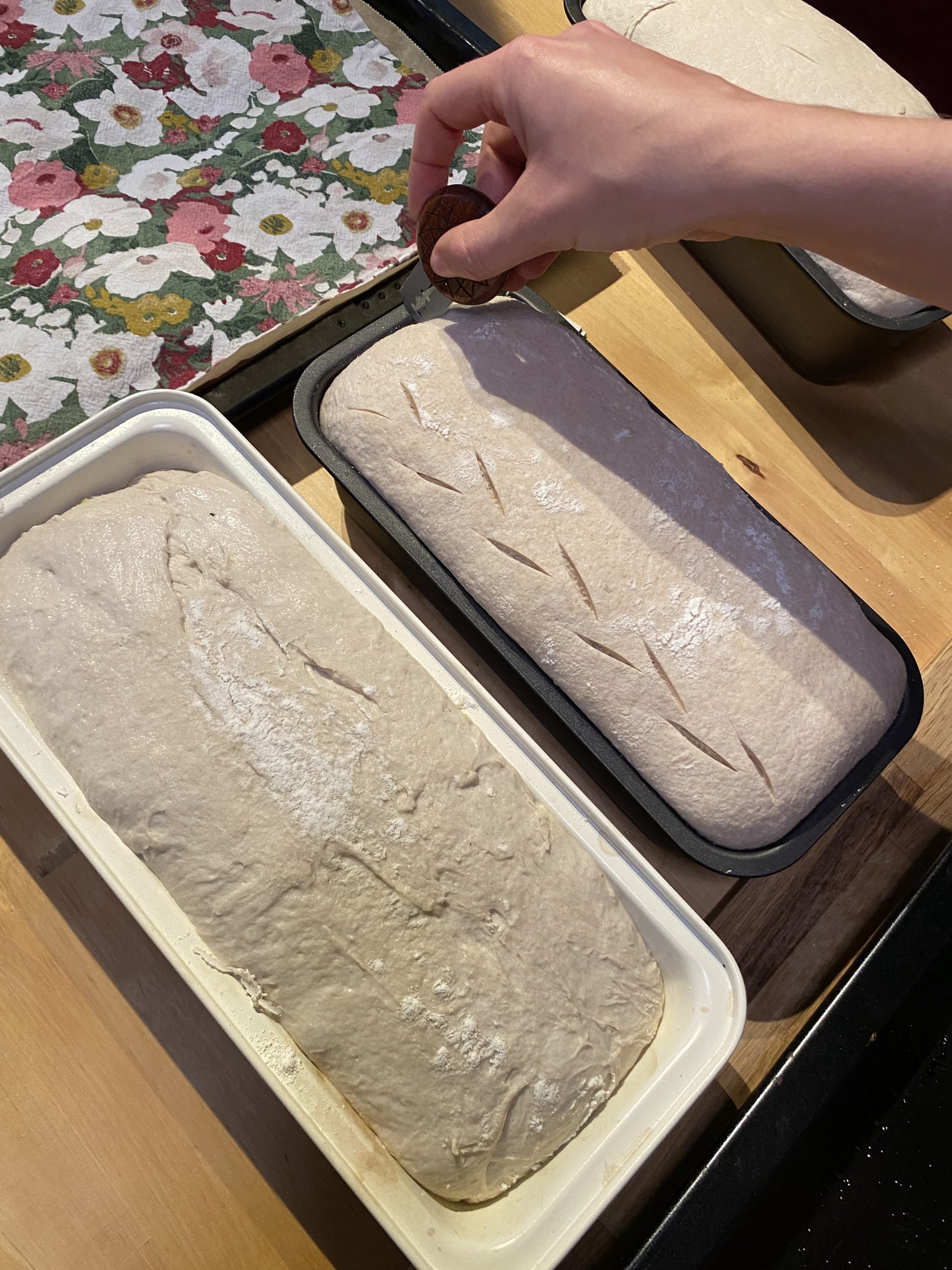
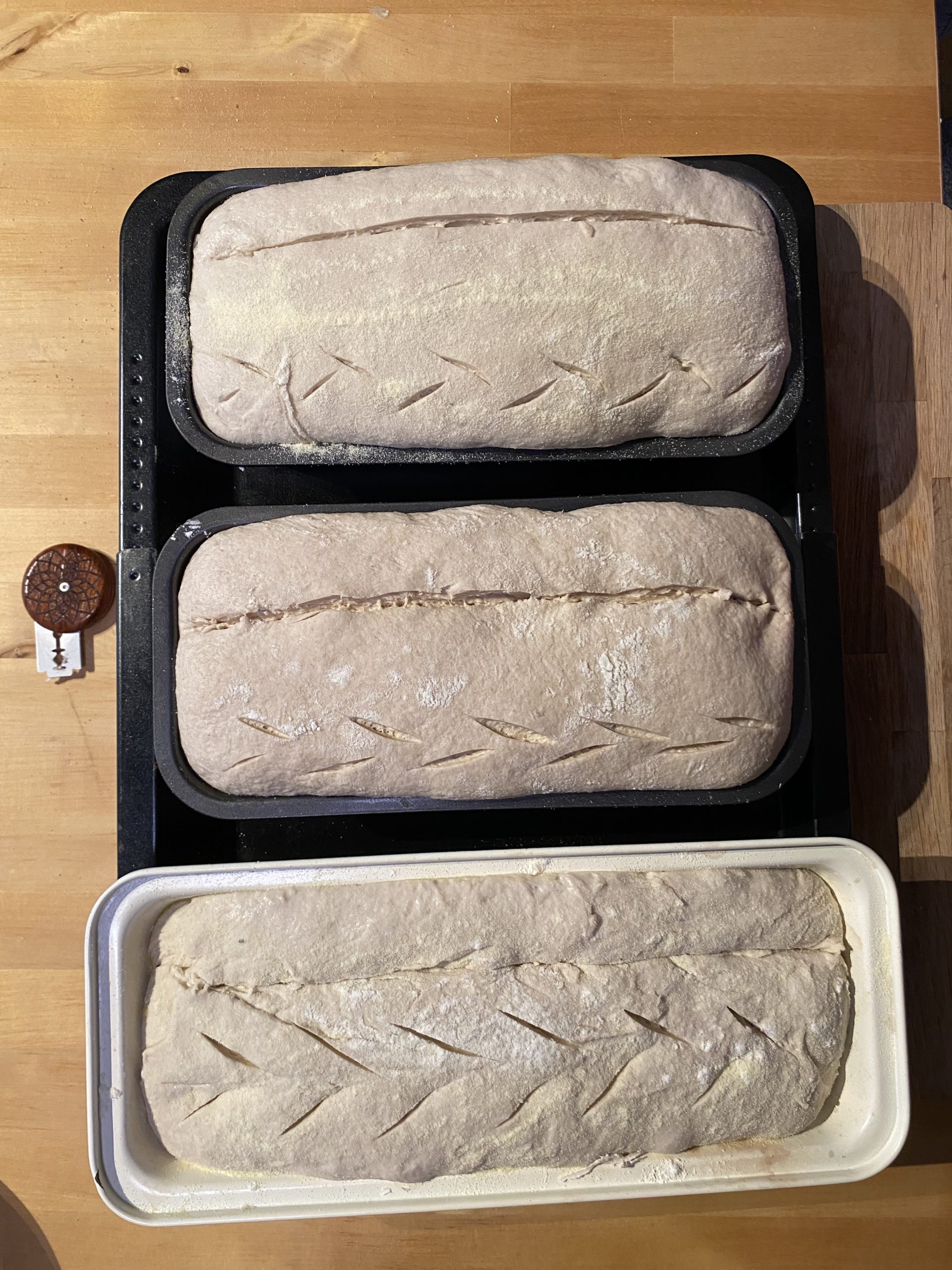
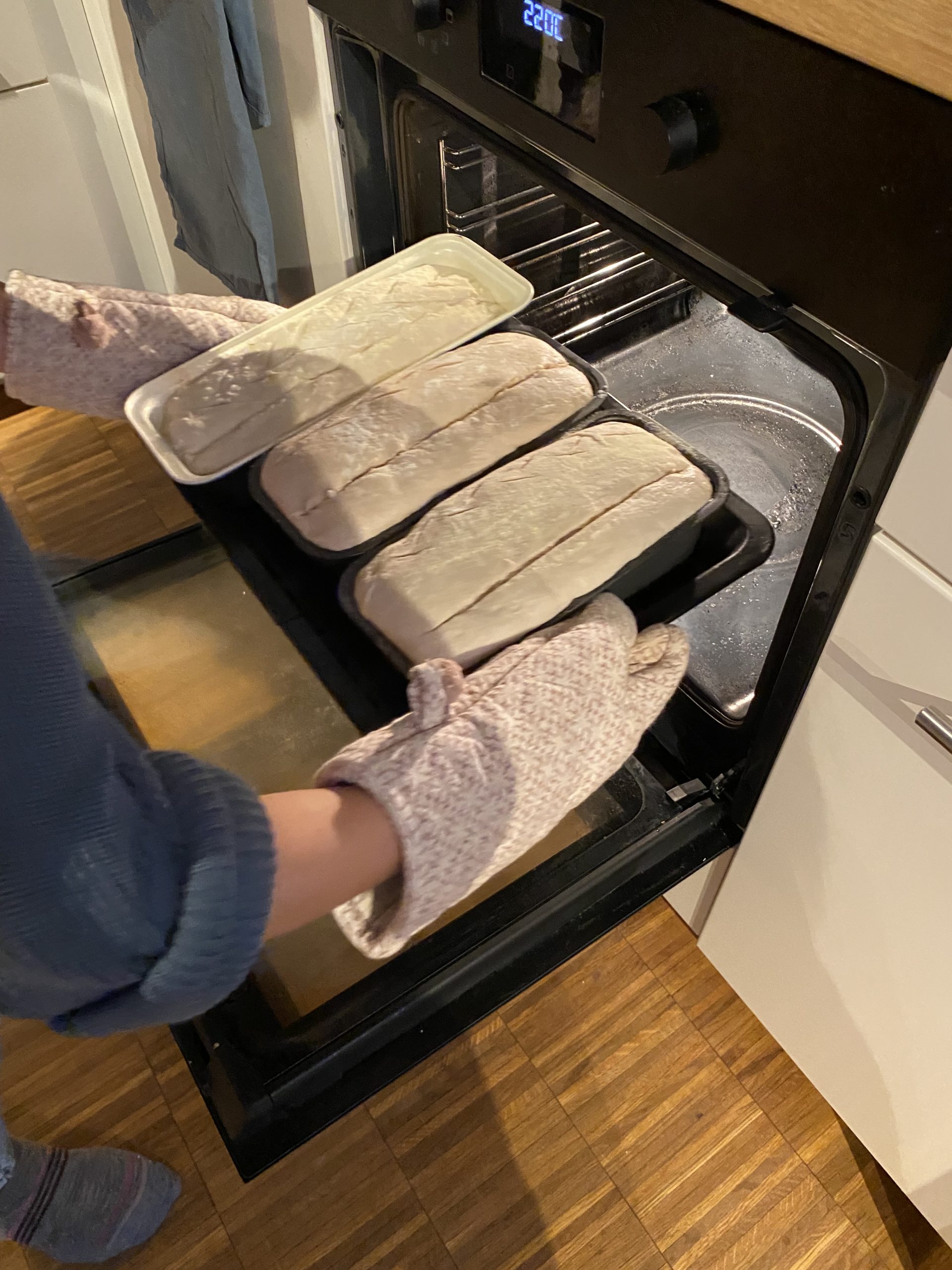
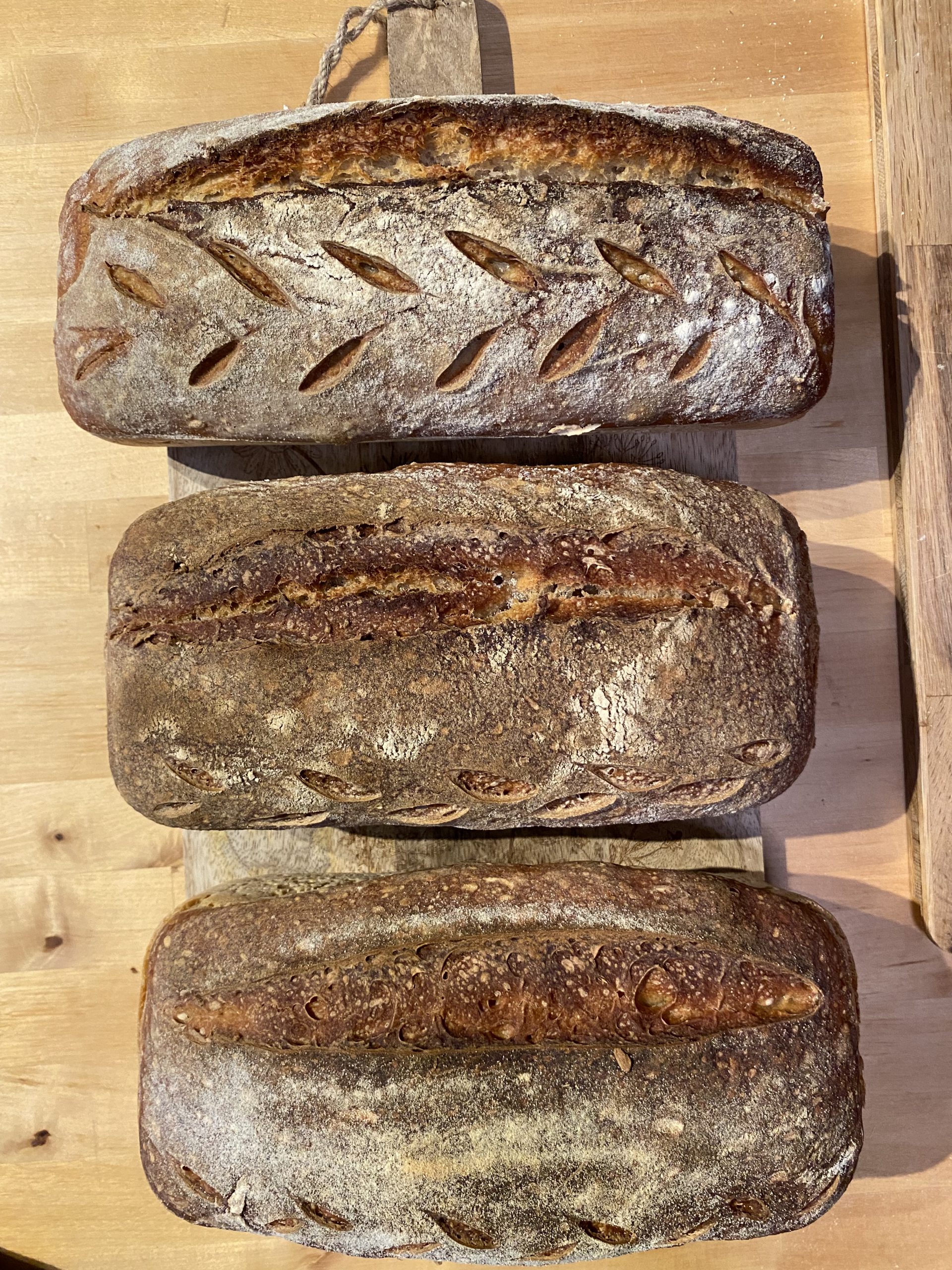
In the meantime we shaped the Khobz dough and let it proof until the beads came of the oven.
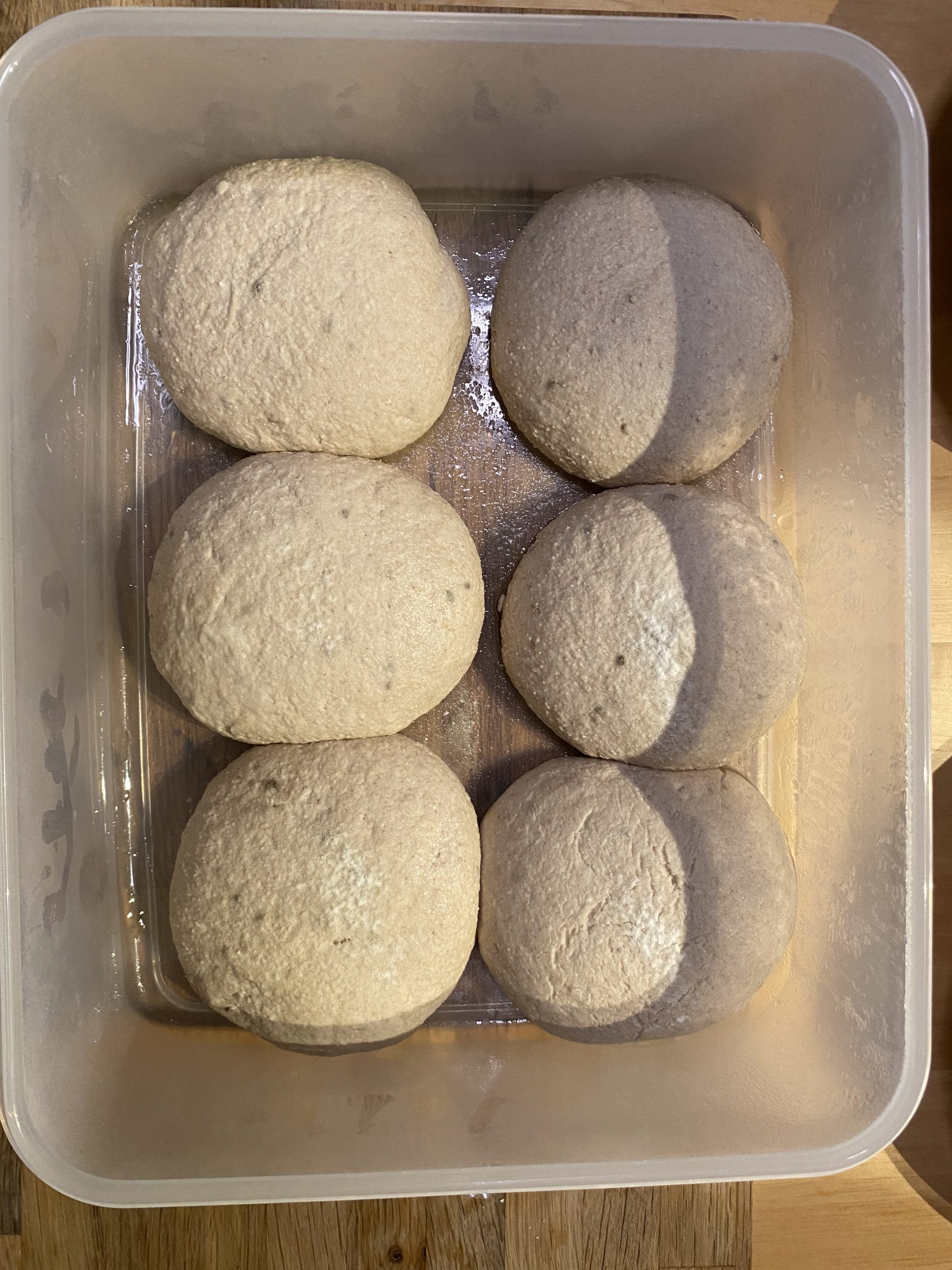
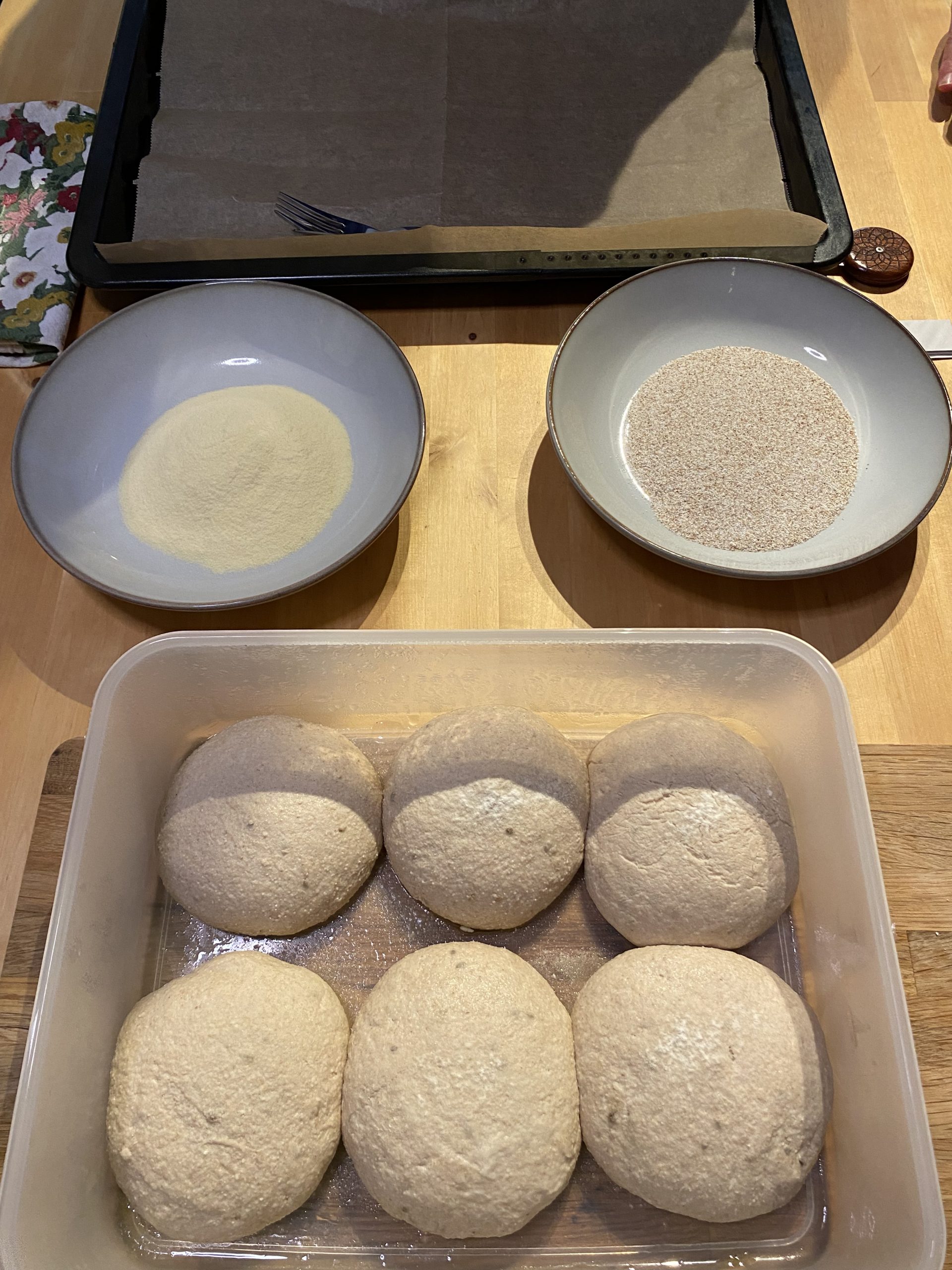
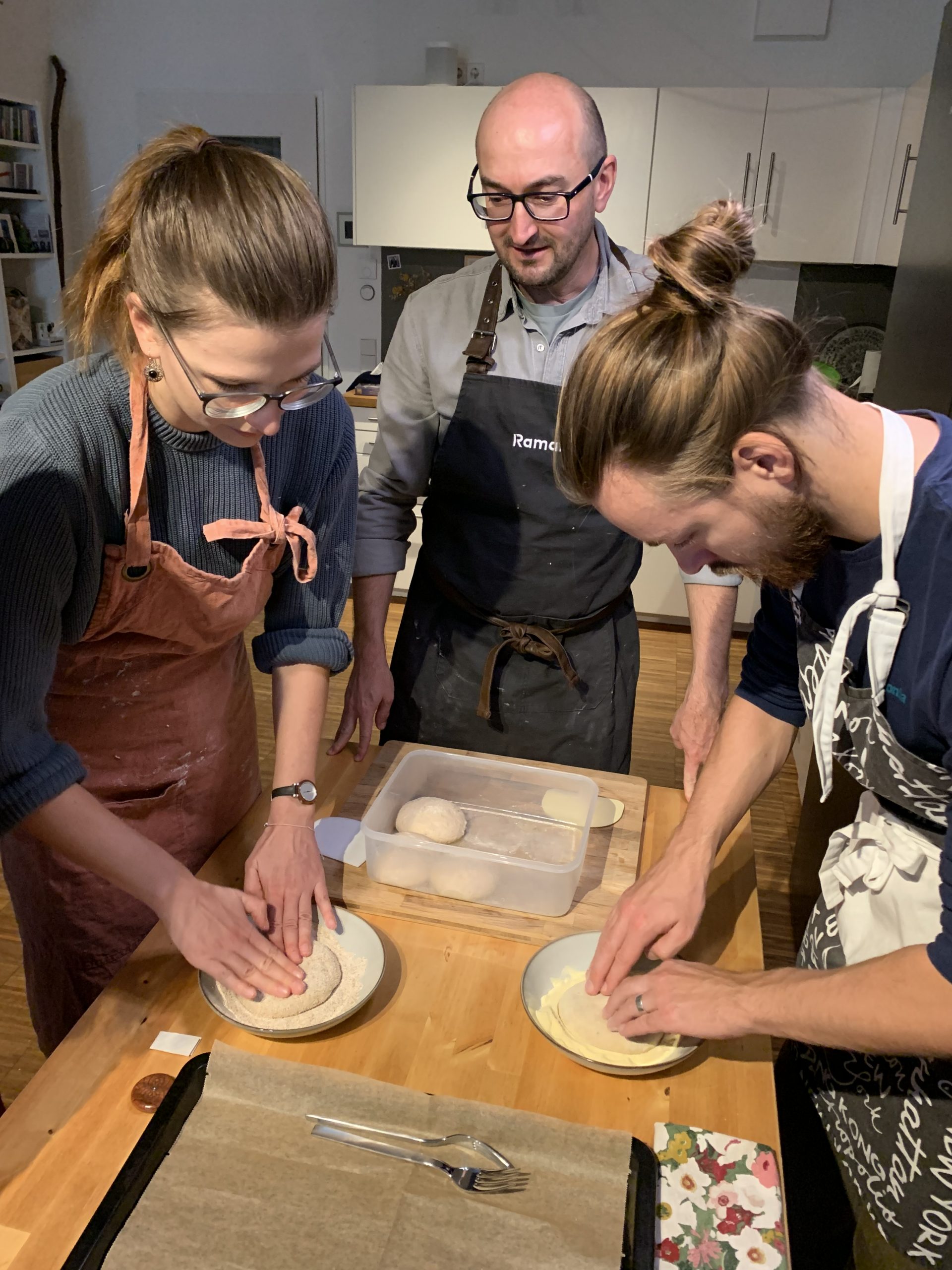
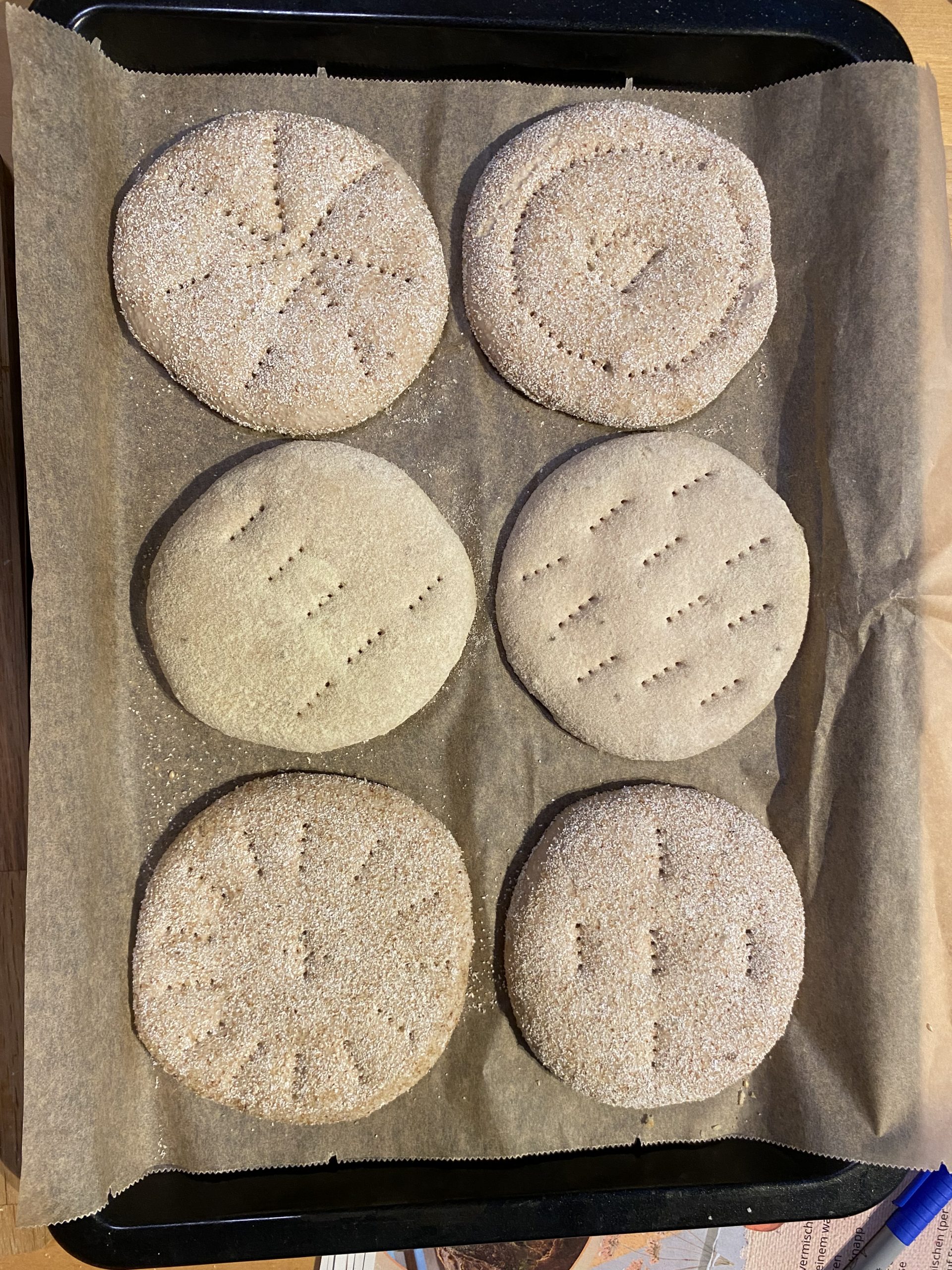
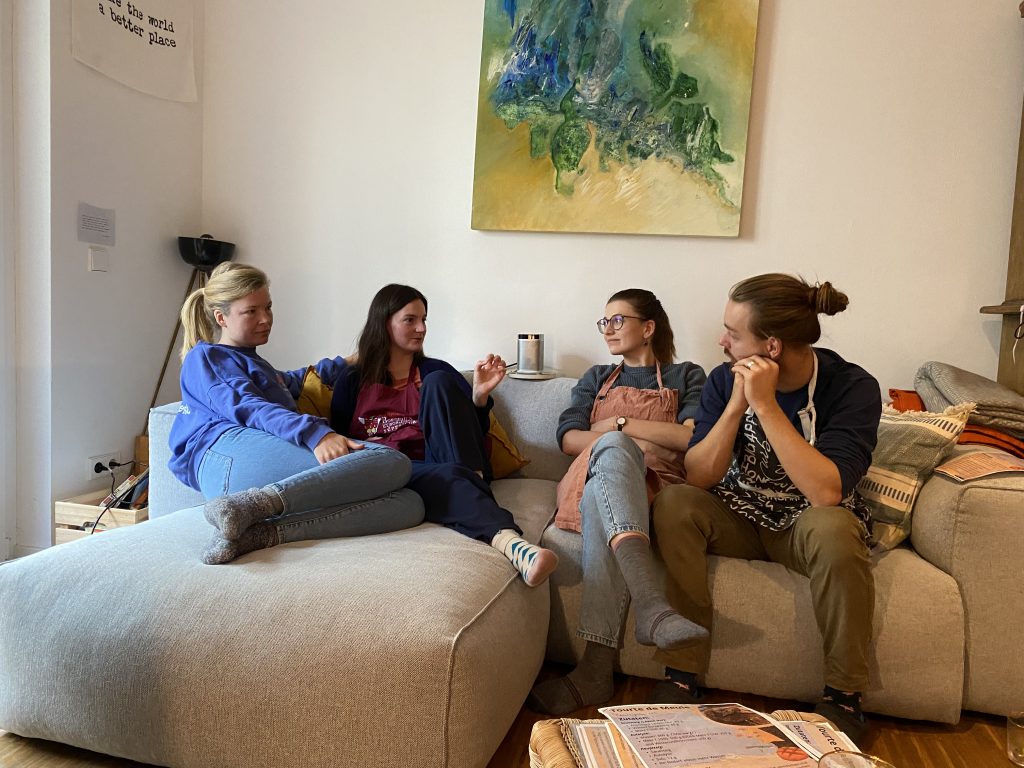
While waiting for the bread to bake, we helped to answer any lingering sourdough questions, shared stories about baking and fermentation, and brainstormed ideas to collectively support our association’s activities.
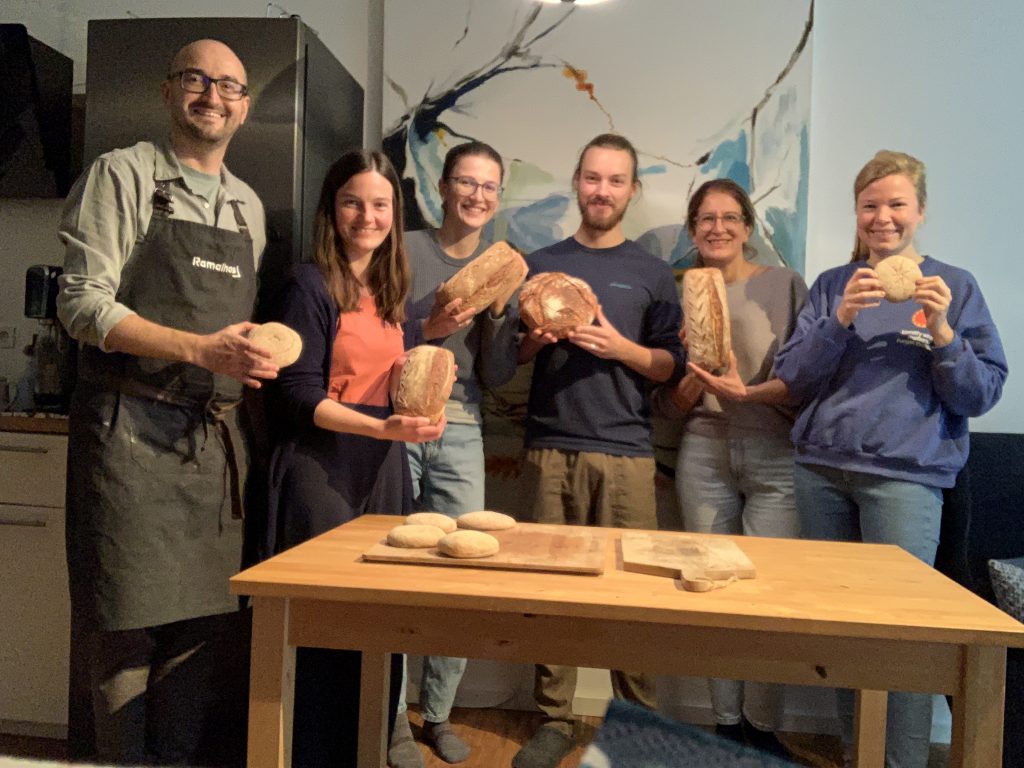
Finally, the moment everyone had been waiting for arrived. As the loaves emerged golden and fragrant from the oven, participants proudly displayed their creations for the camera. The sense of accomplishment was palpable!
Looking Ahead
Encouraged by the success of our pilot workshop, Johanna and I are excited to continue this journey. We’re exploring different formats, durations, and locations for future events. If you have any ideas or would like to join one of our upcoming workshops, we’d love to hear from you!
Together, let’s bake the world a better place—one sourdough loaf at a time.