
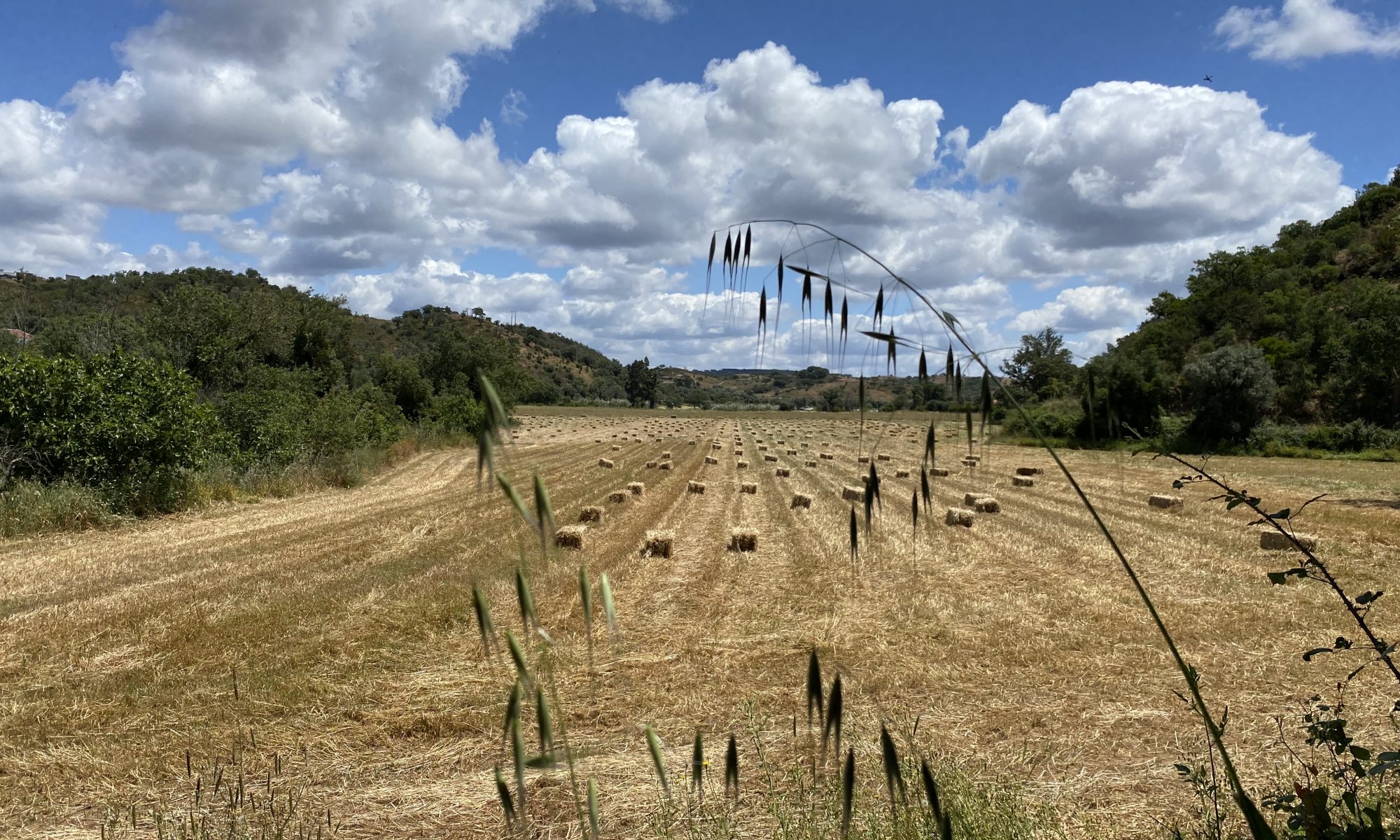
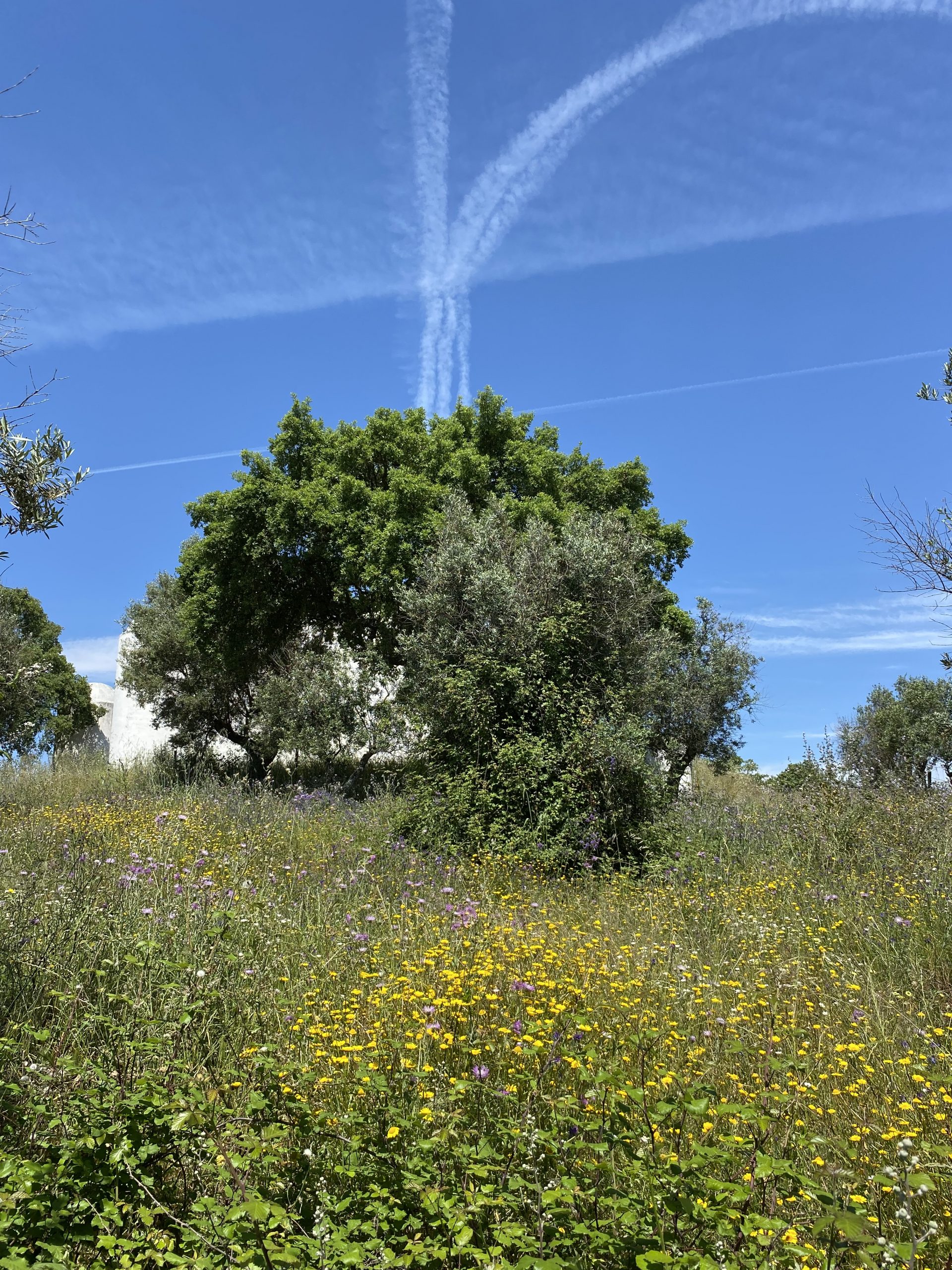
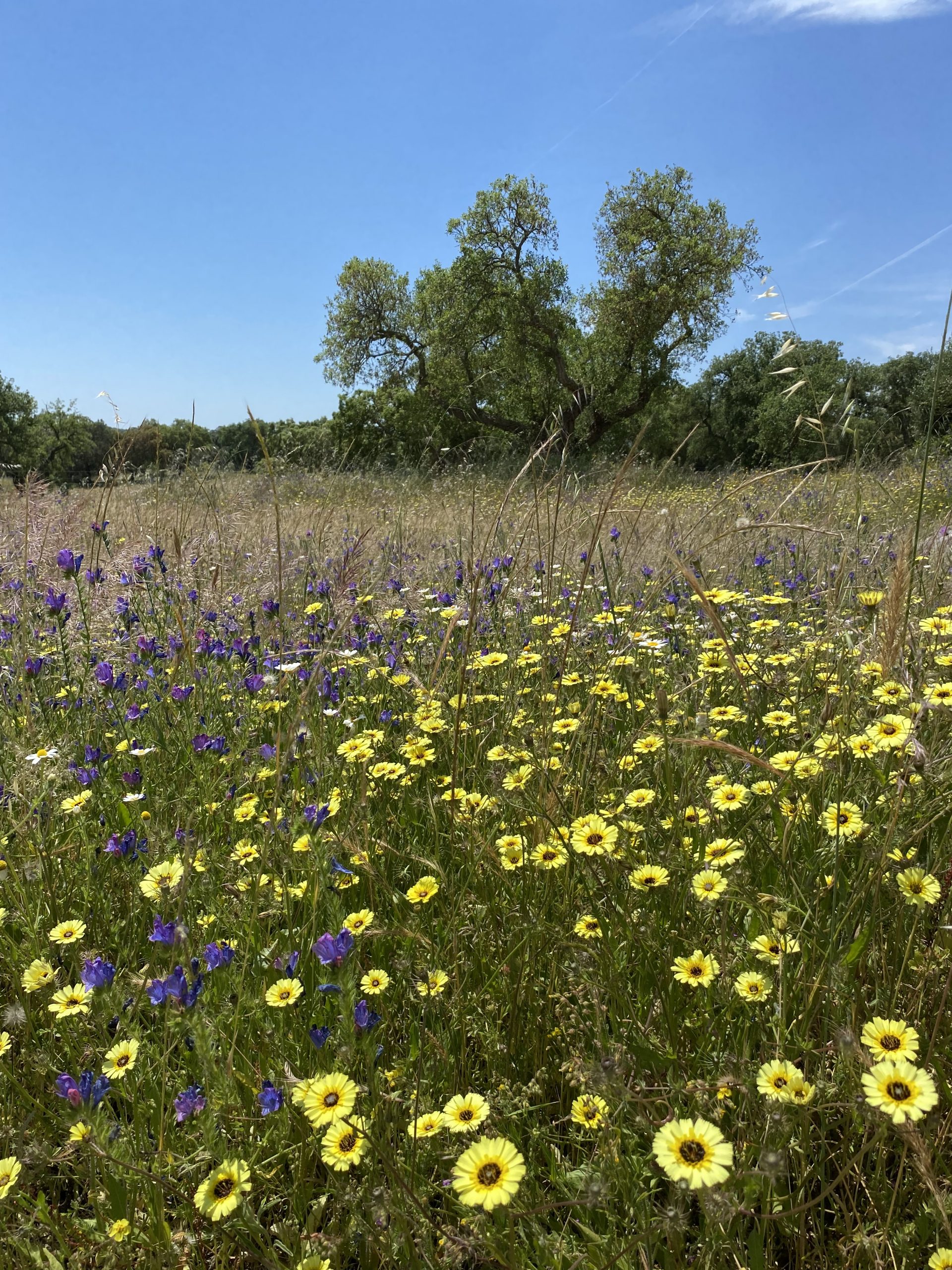
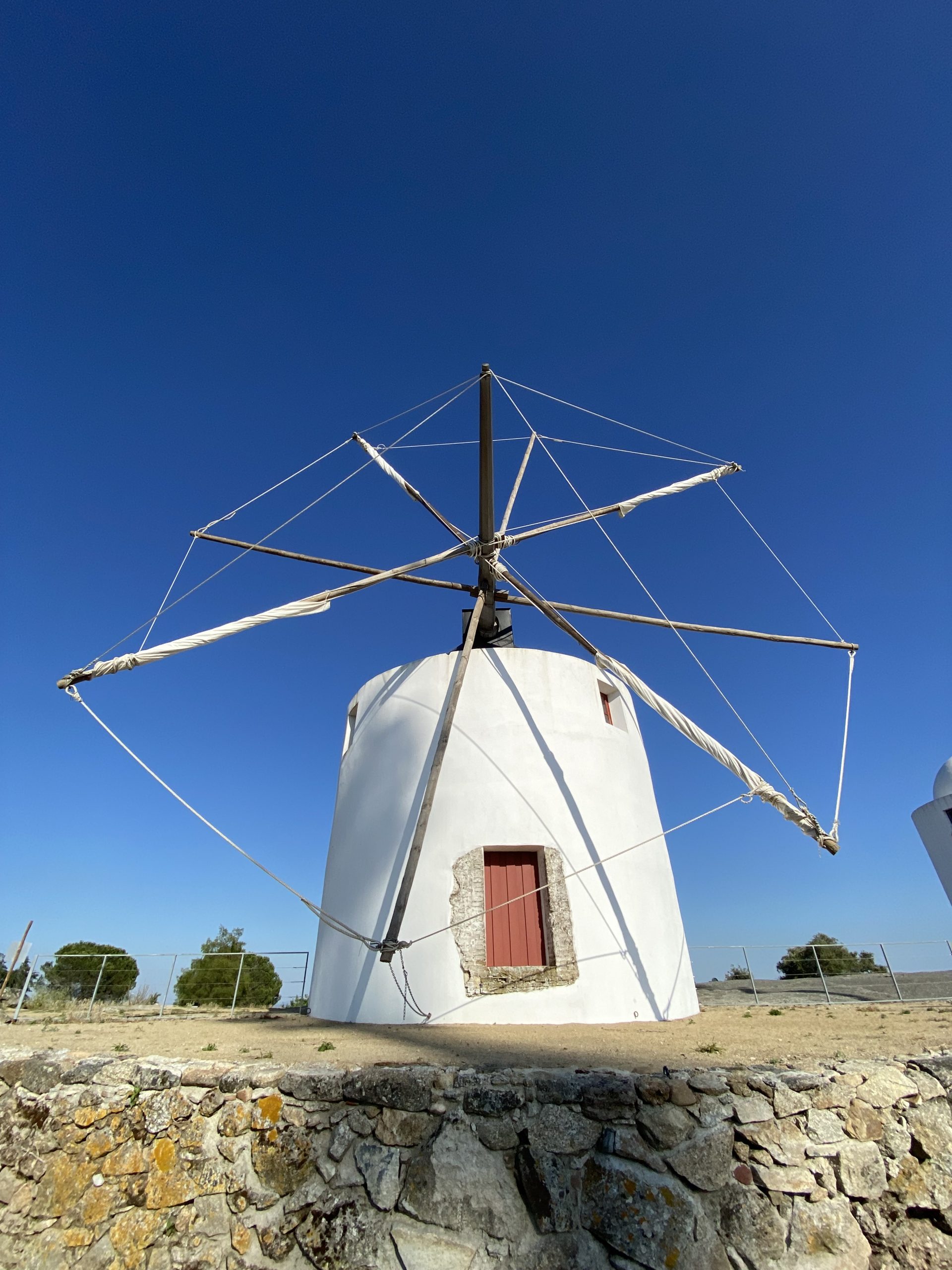
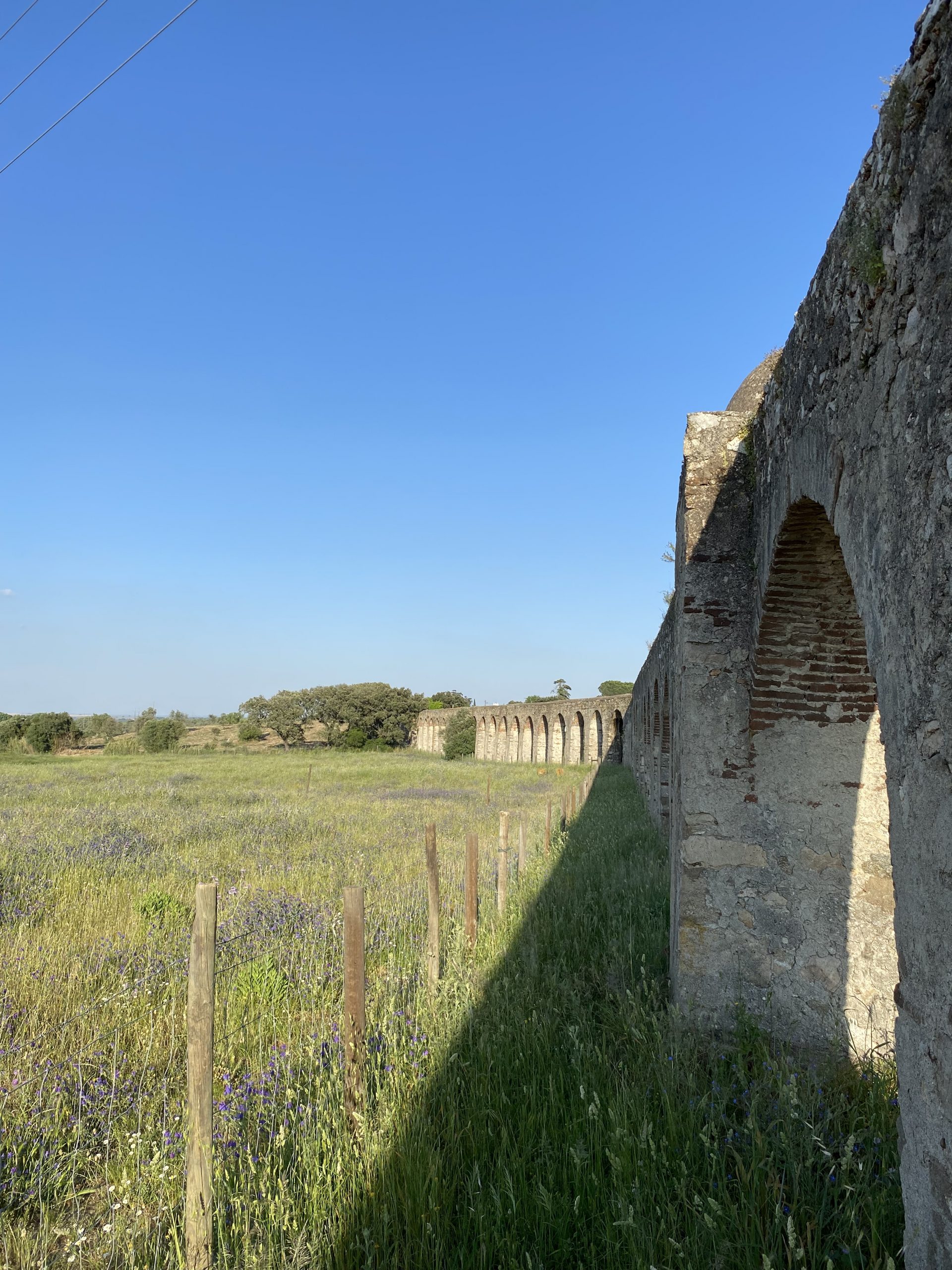
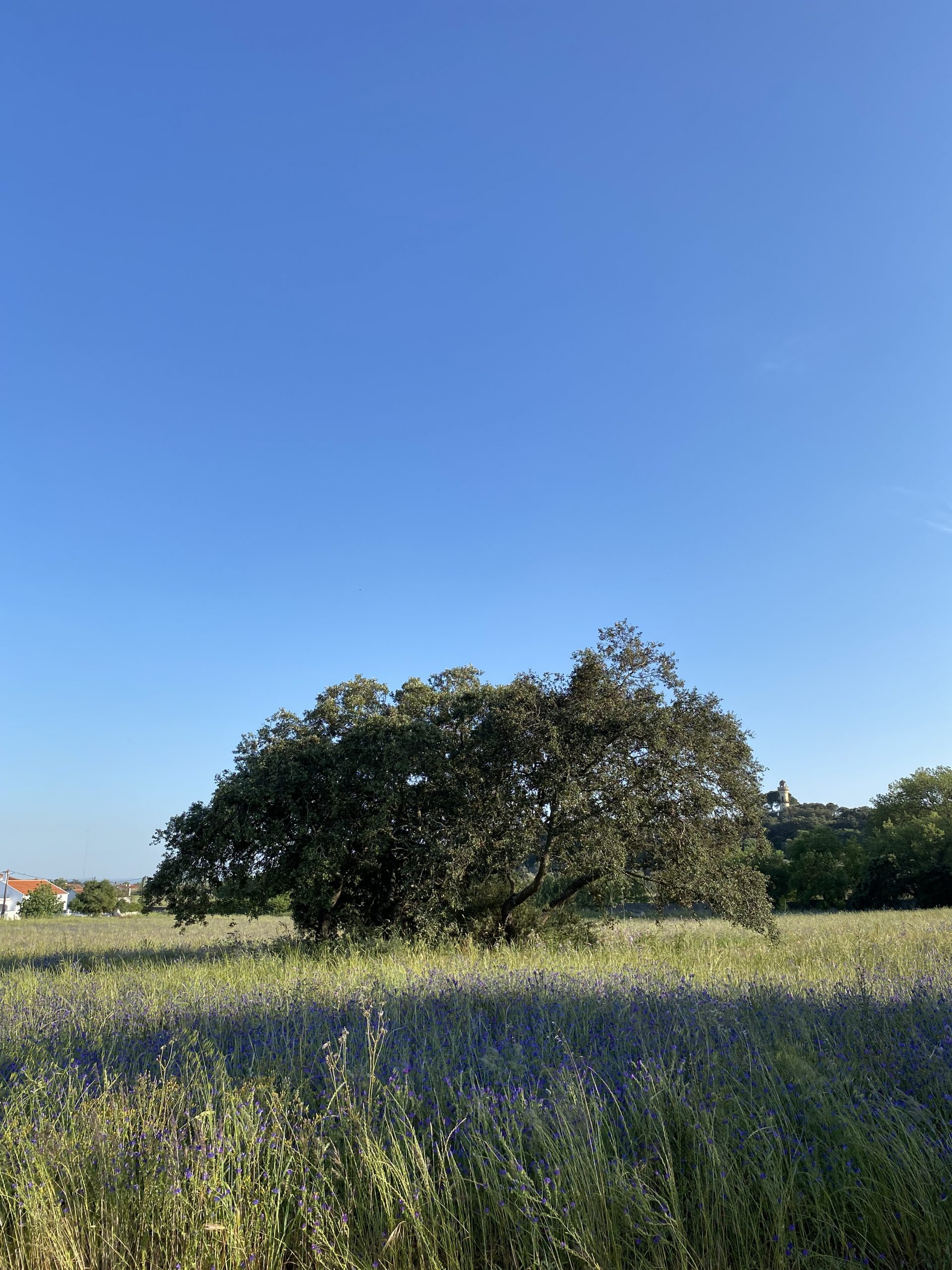
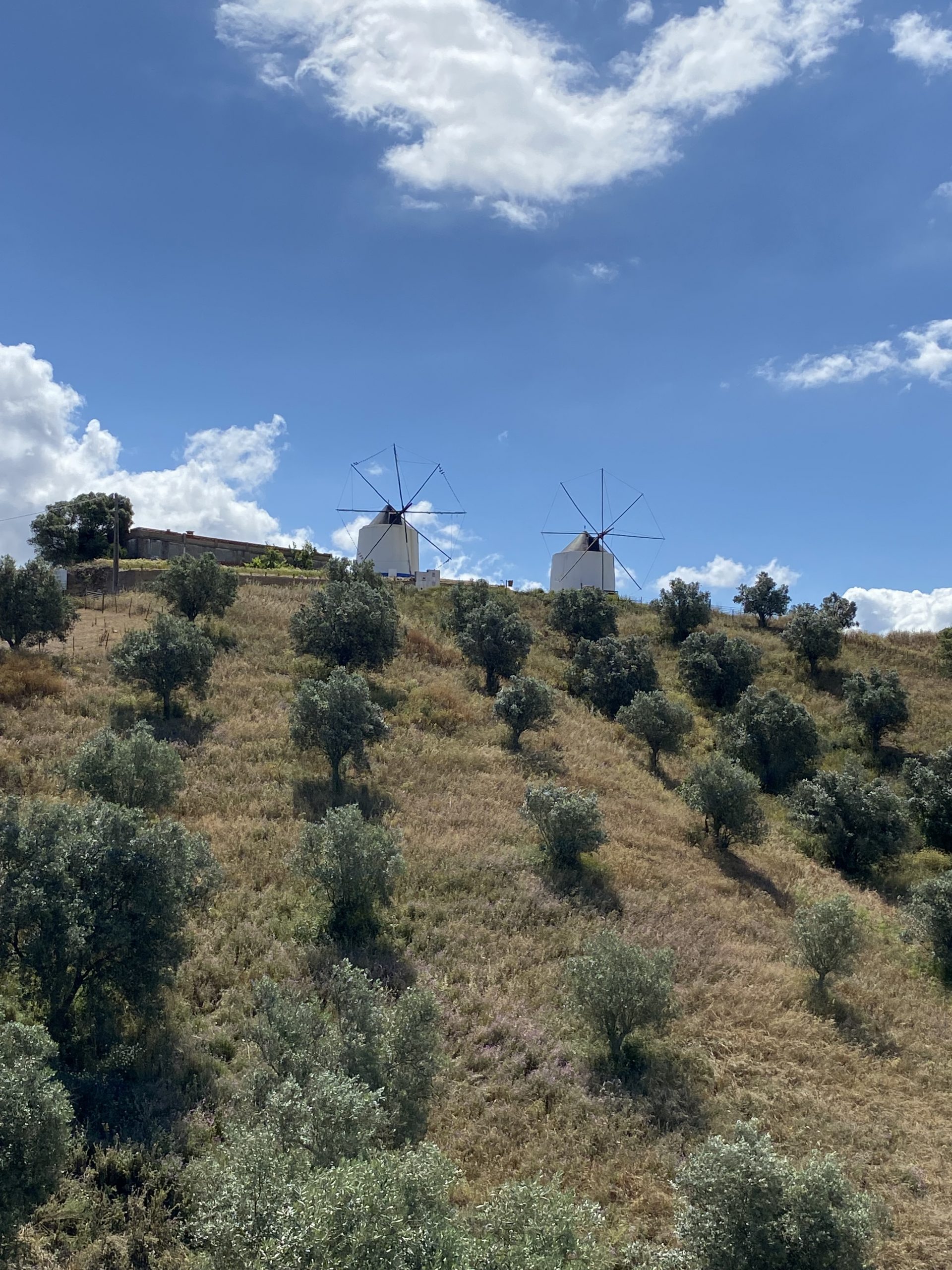
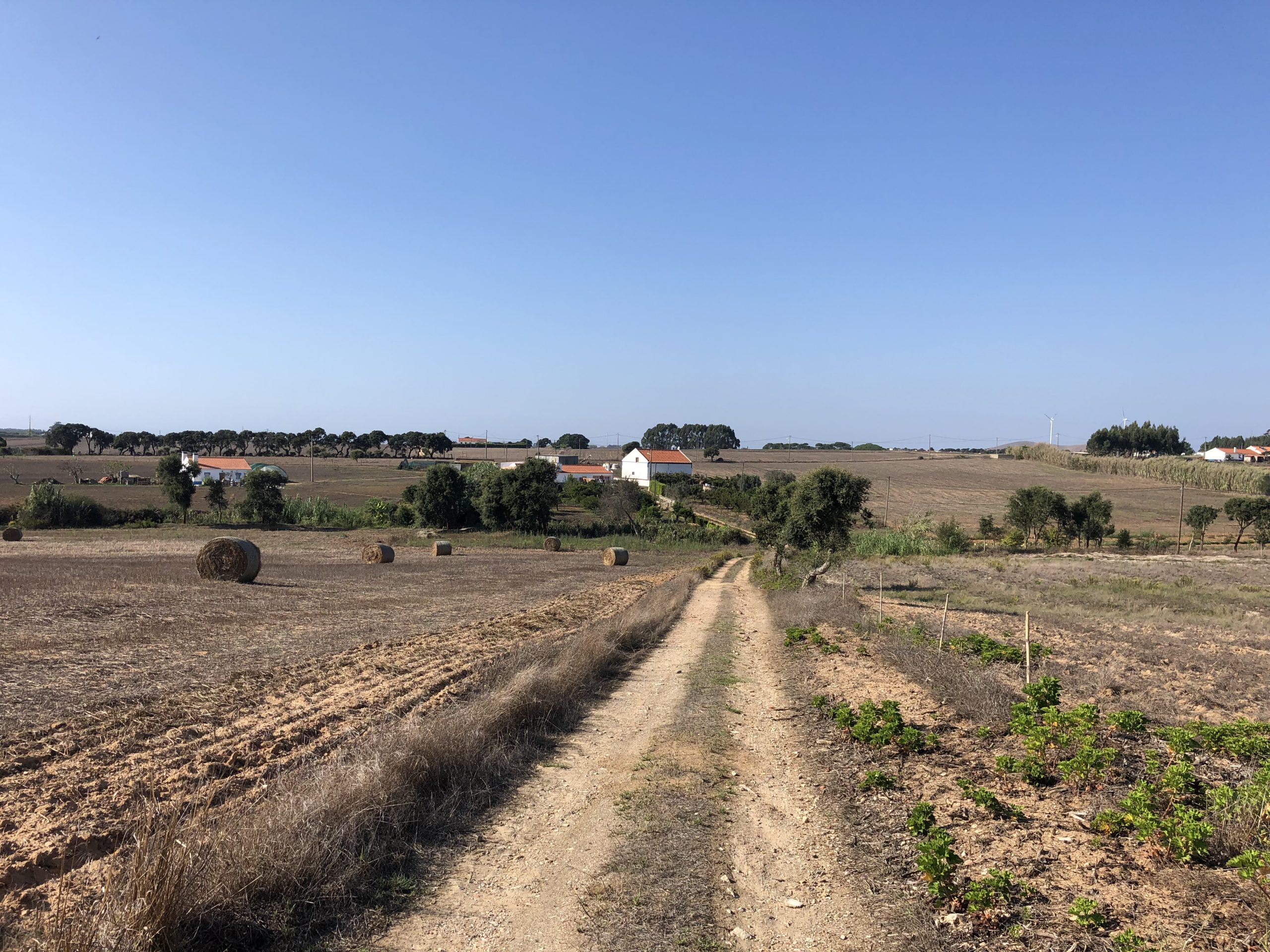
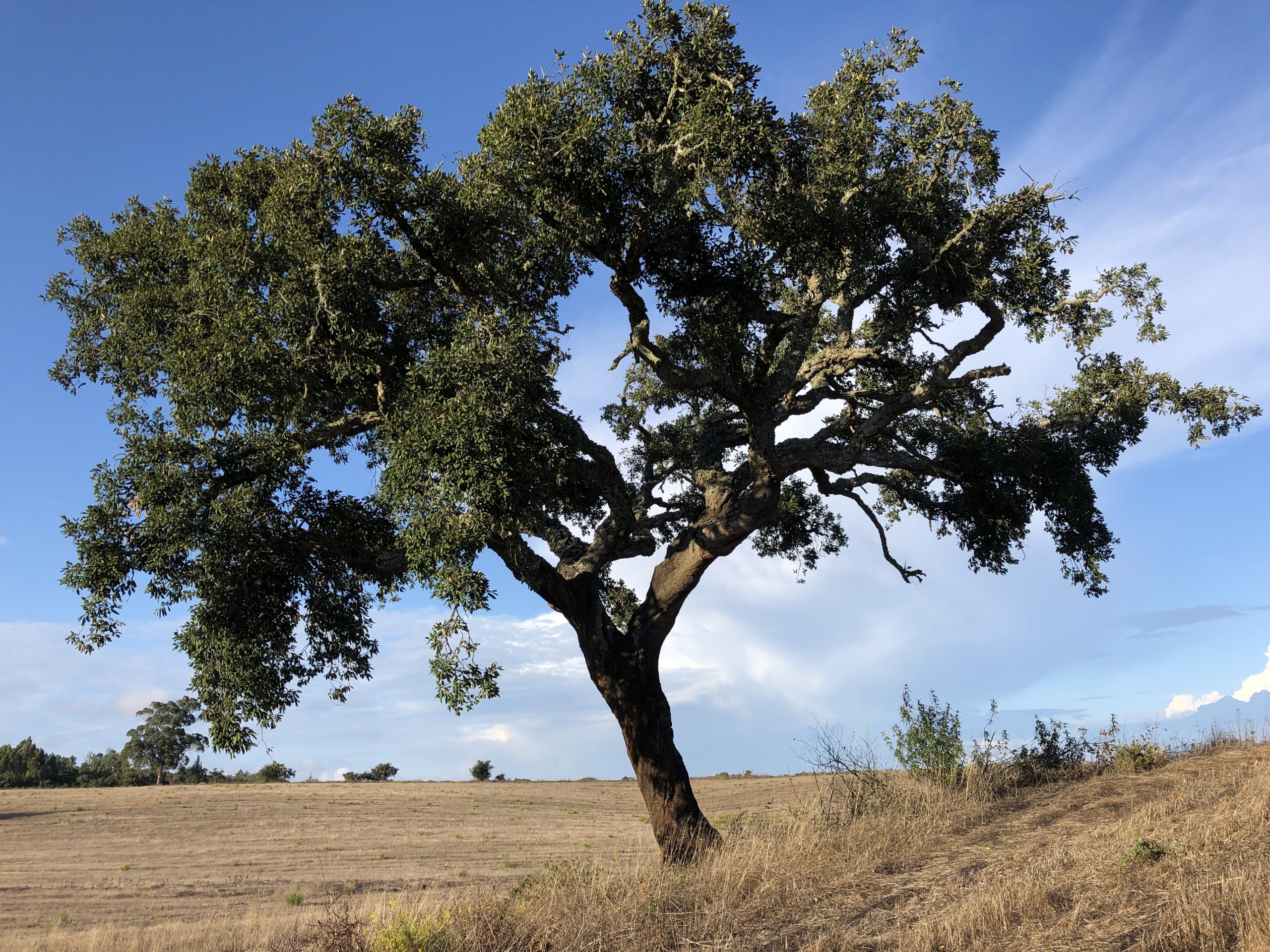
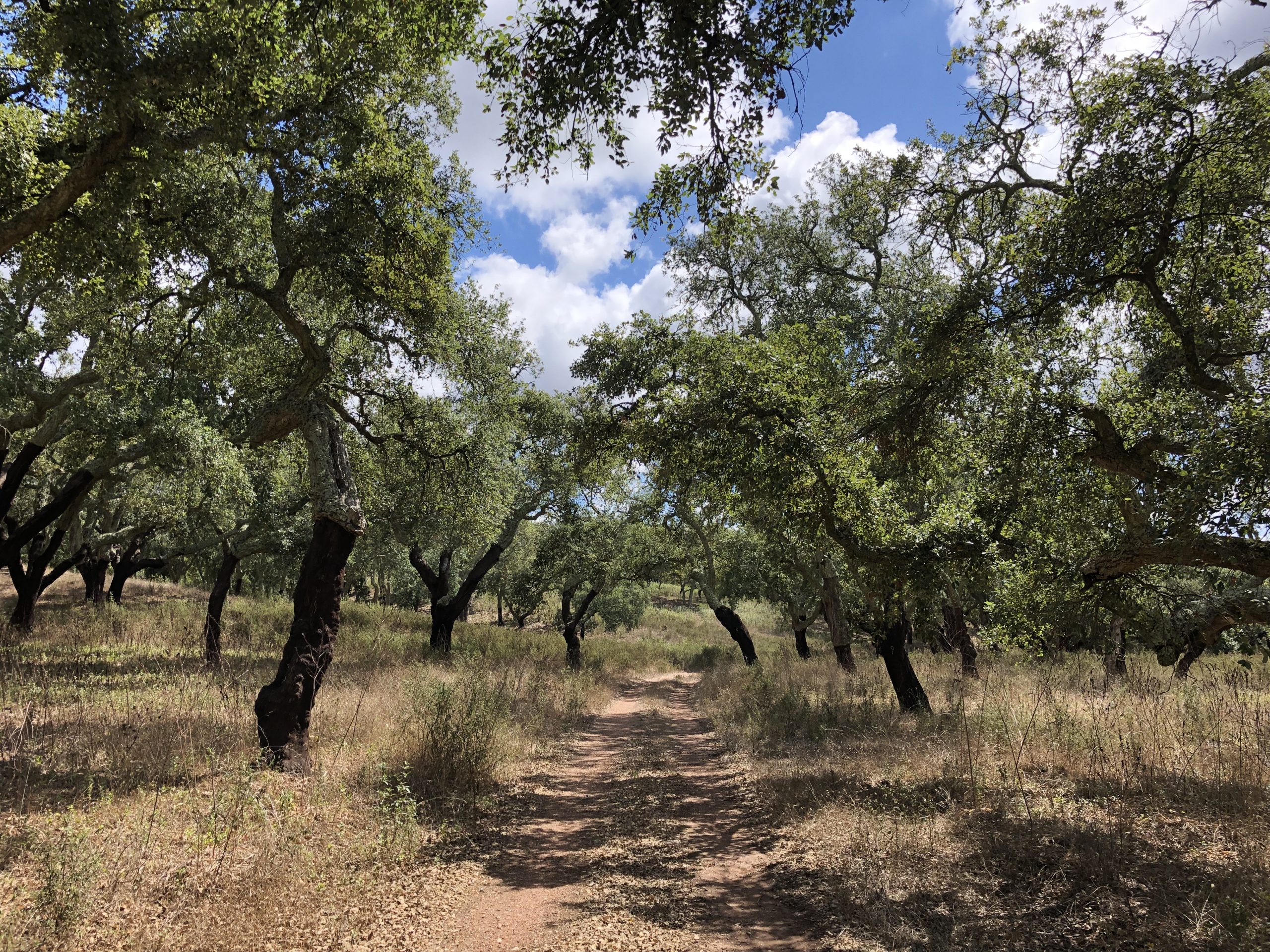
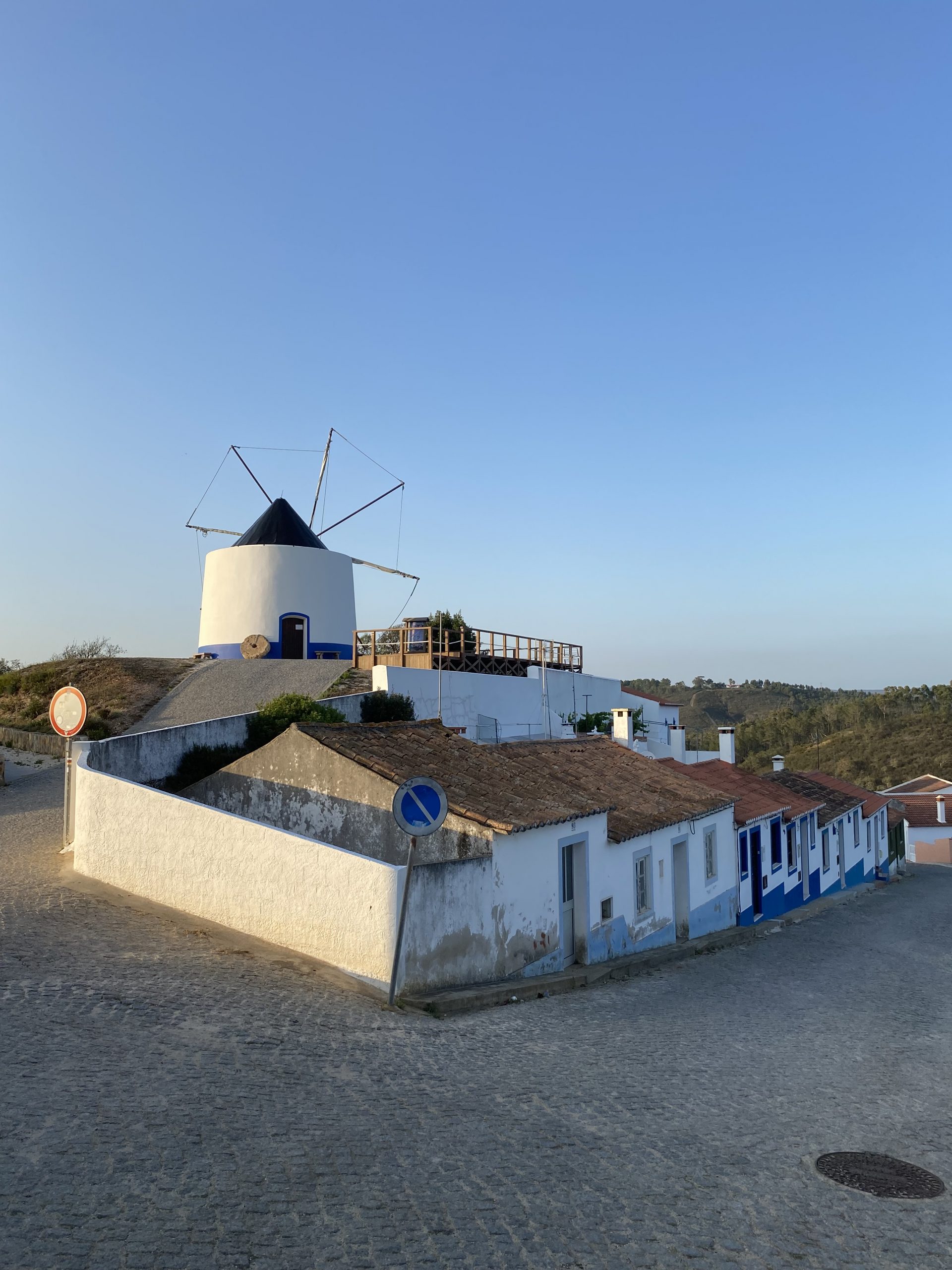
Traveling through the Alentejo region of Portugal feels like stepping into a different world. One where the pace of life slows down, and the landscape tells the story of centuries of human interaction with nature. The rolling plains are dotted with cork trees, their bark harvested every few years in a practice that has shaped the landscape for generations. With their knotted trunks, these trees stand as silent witnesses to the region’s history and symbolize Alentejo’s agricultural heritage.
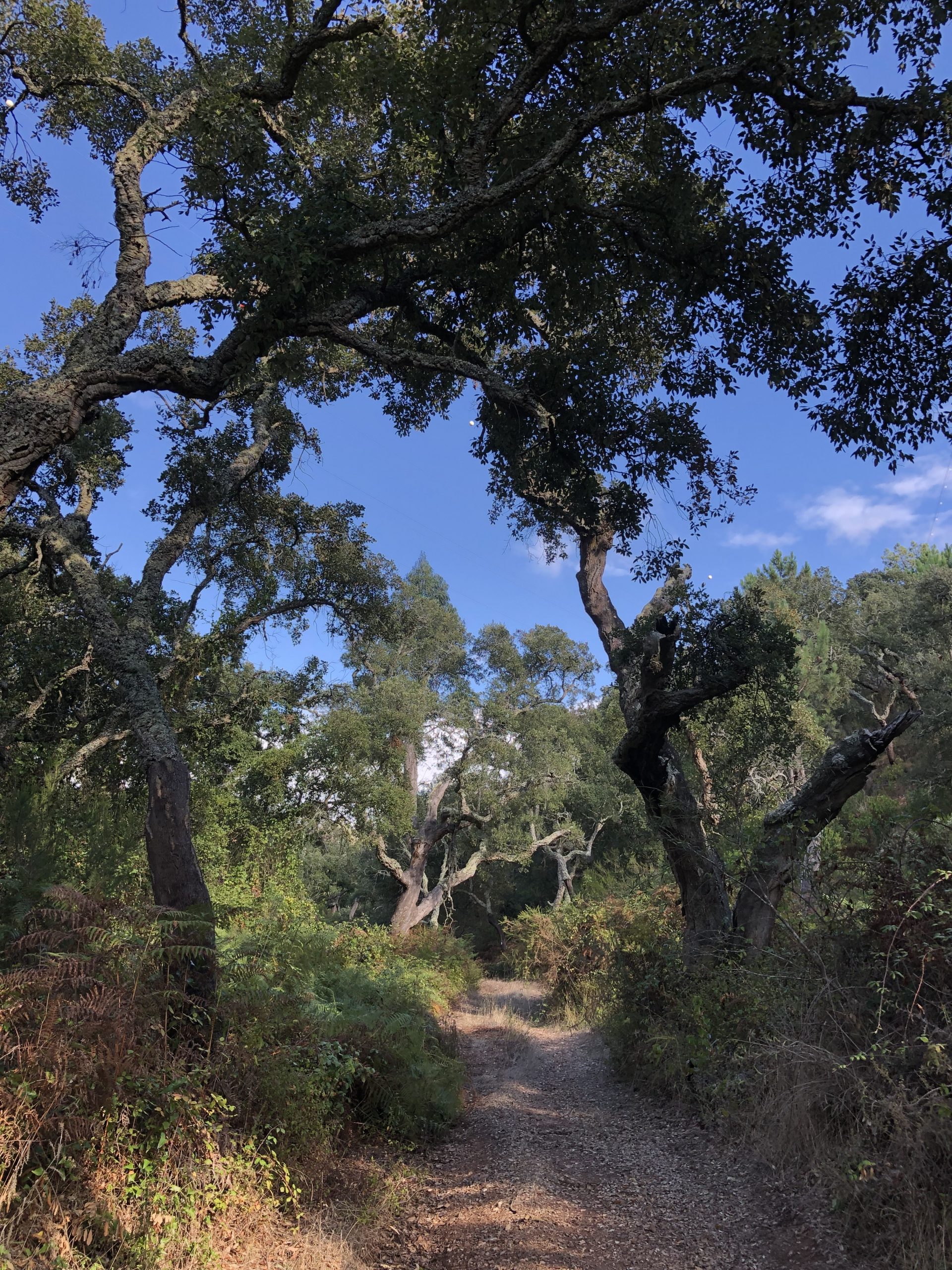
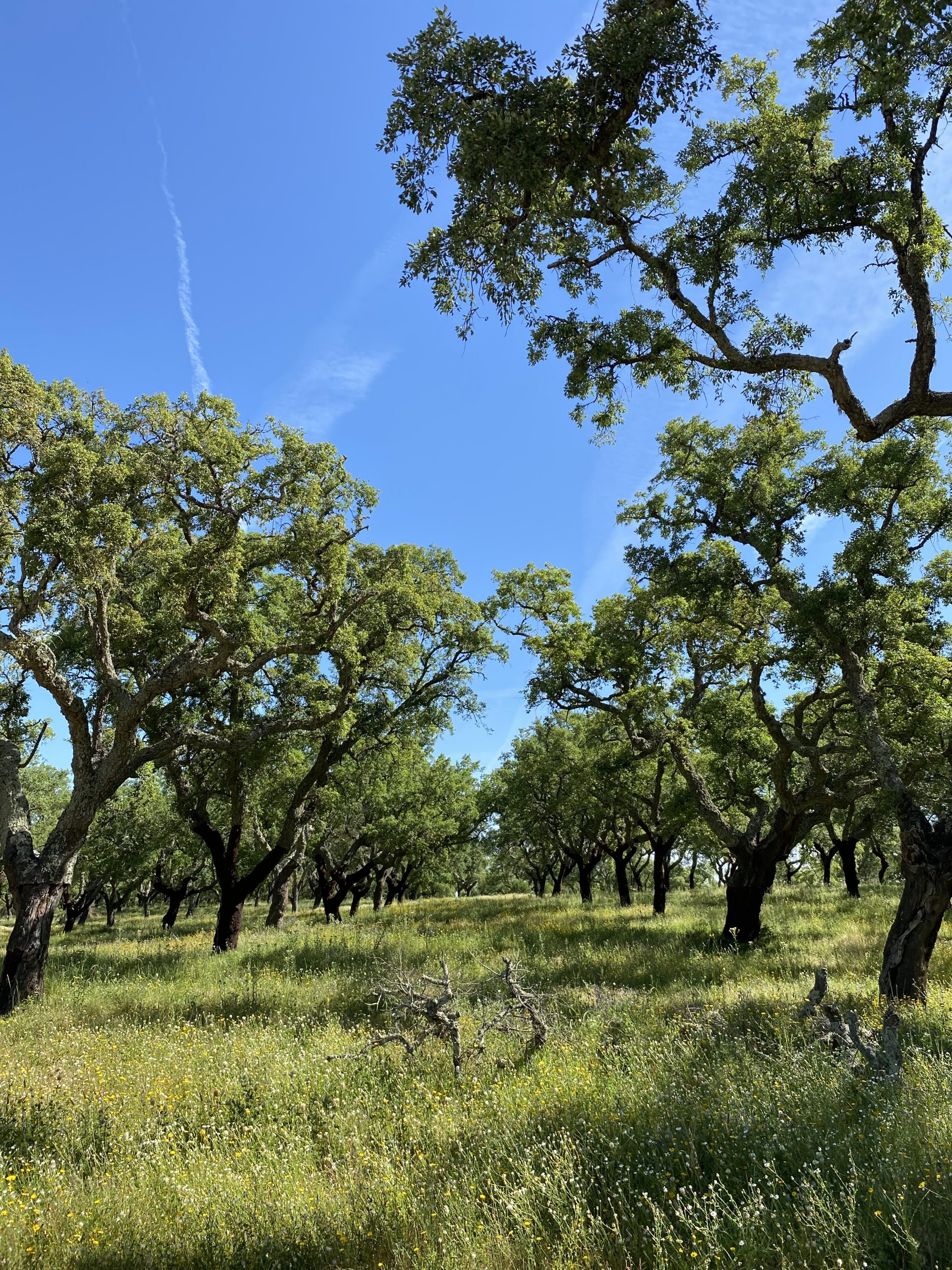
The fields are neatly divided by low stone walls, and you can often spot black pigs—Alentejo’s famous black pork—roaming freely among the oak groves. These pigs feed on acorns, giving the meat a rich, nutty flavor prized in Portuguese cuisine.
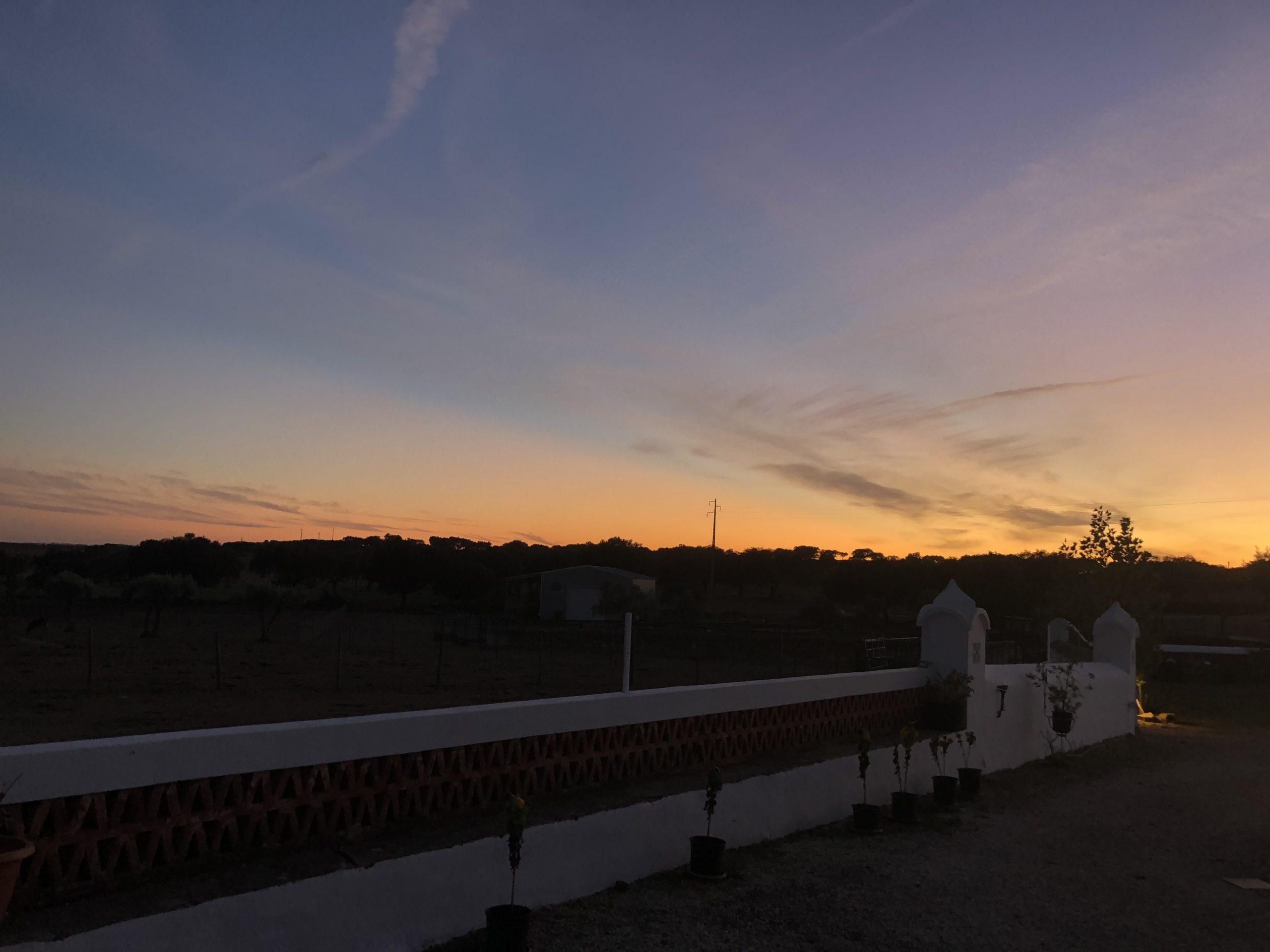
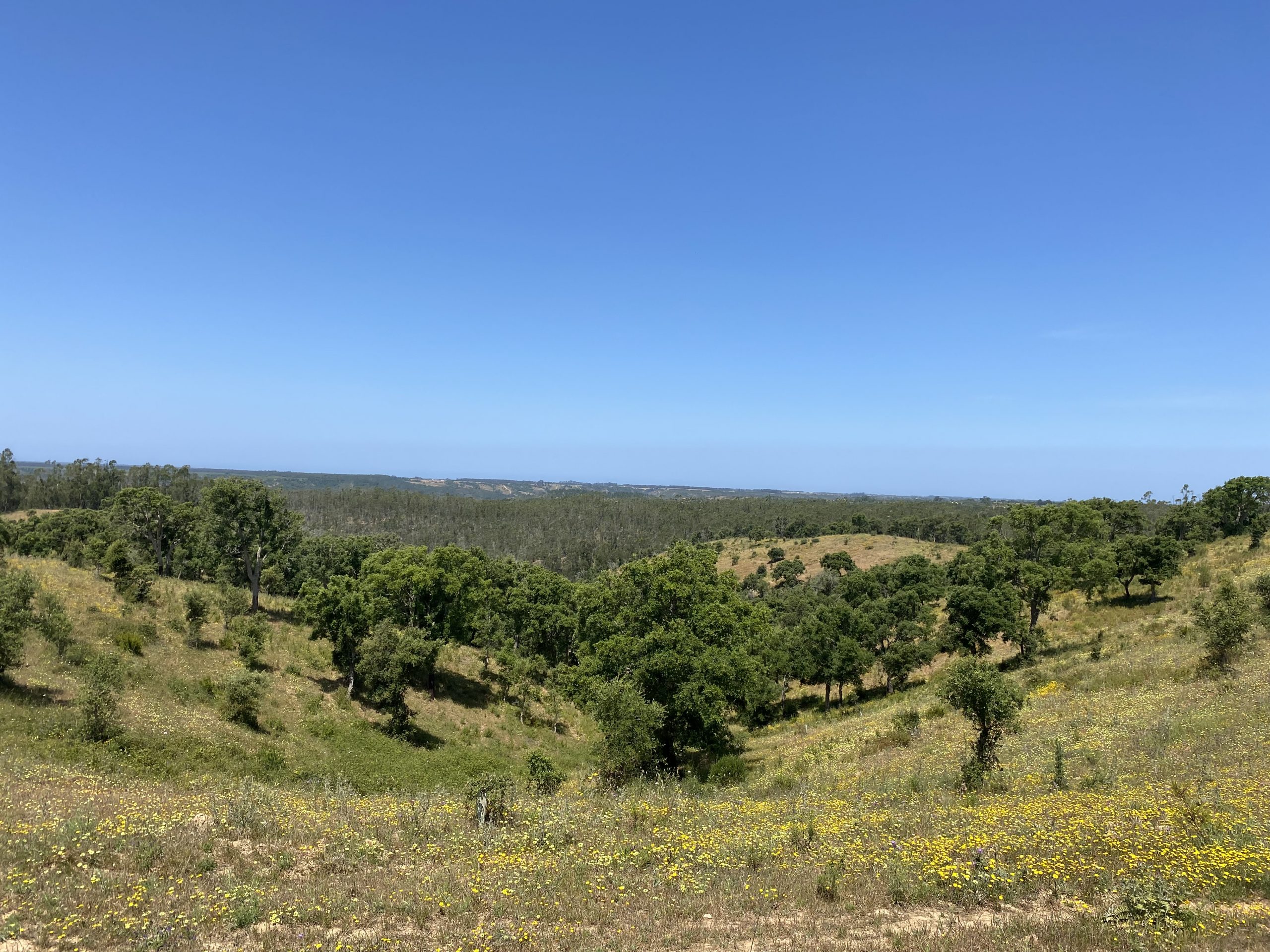
A distinctive landscape
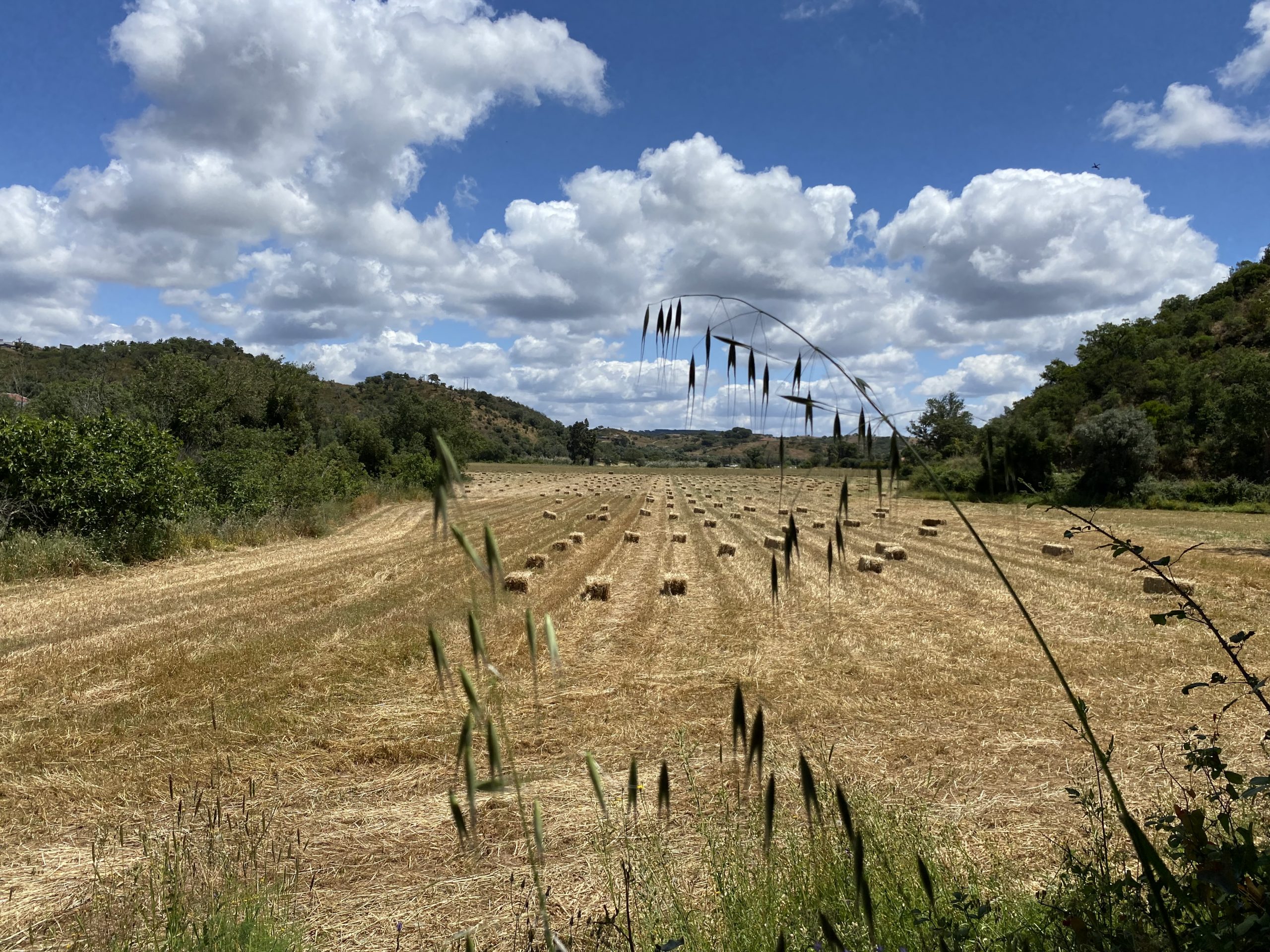
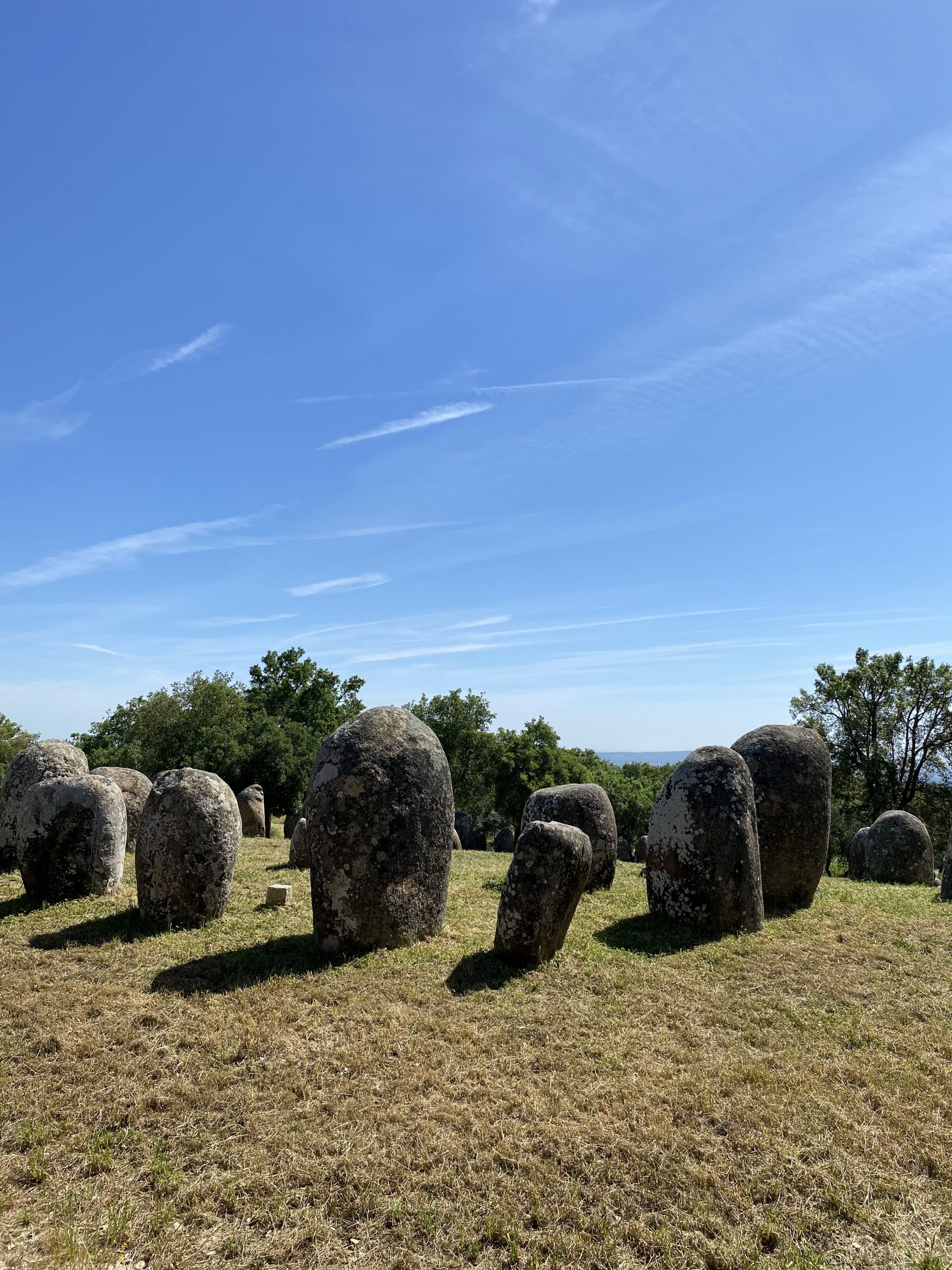
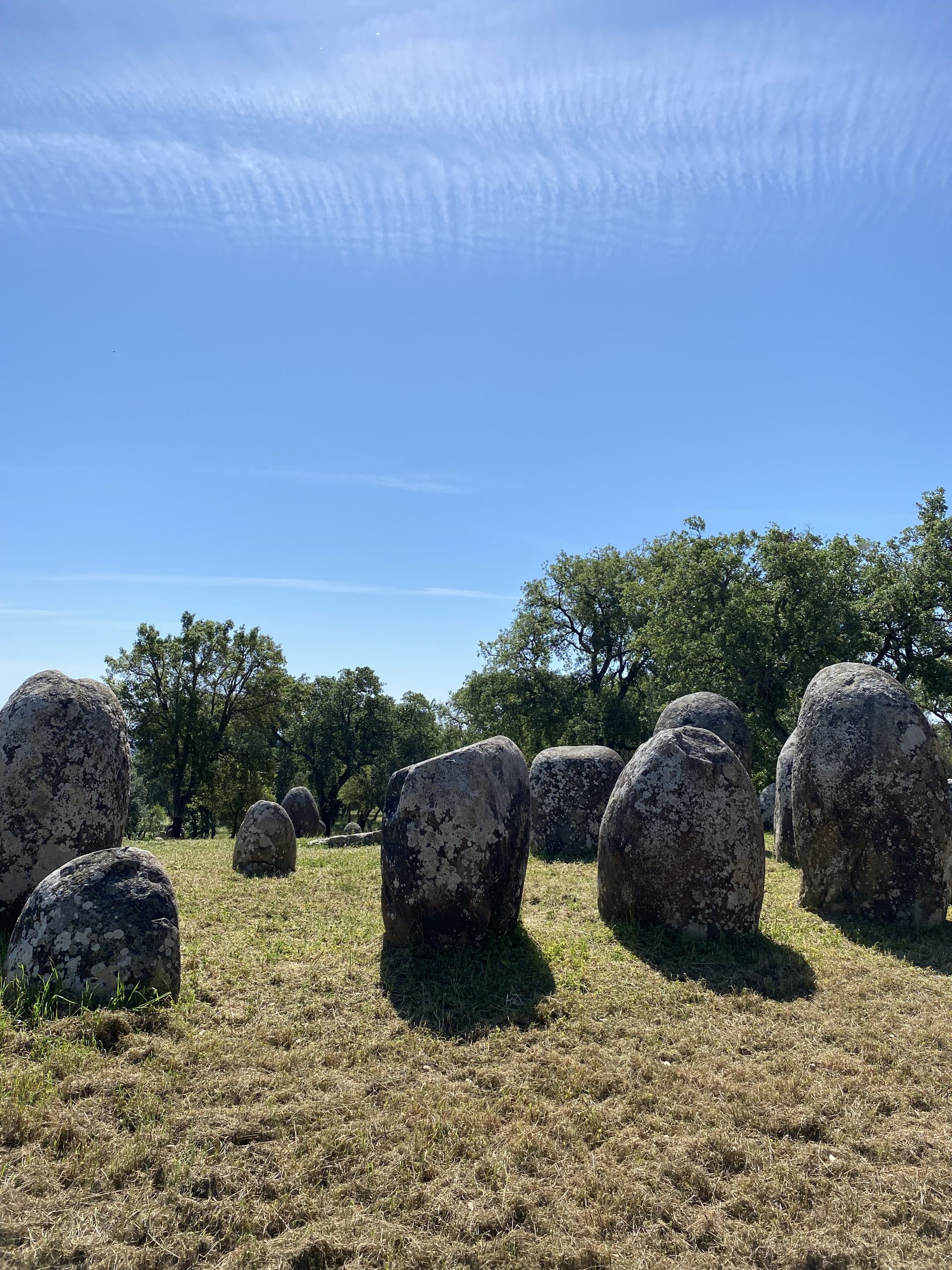
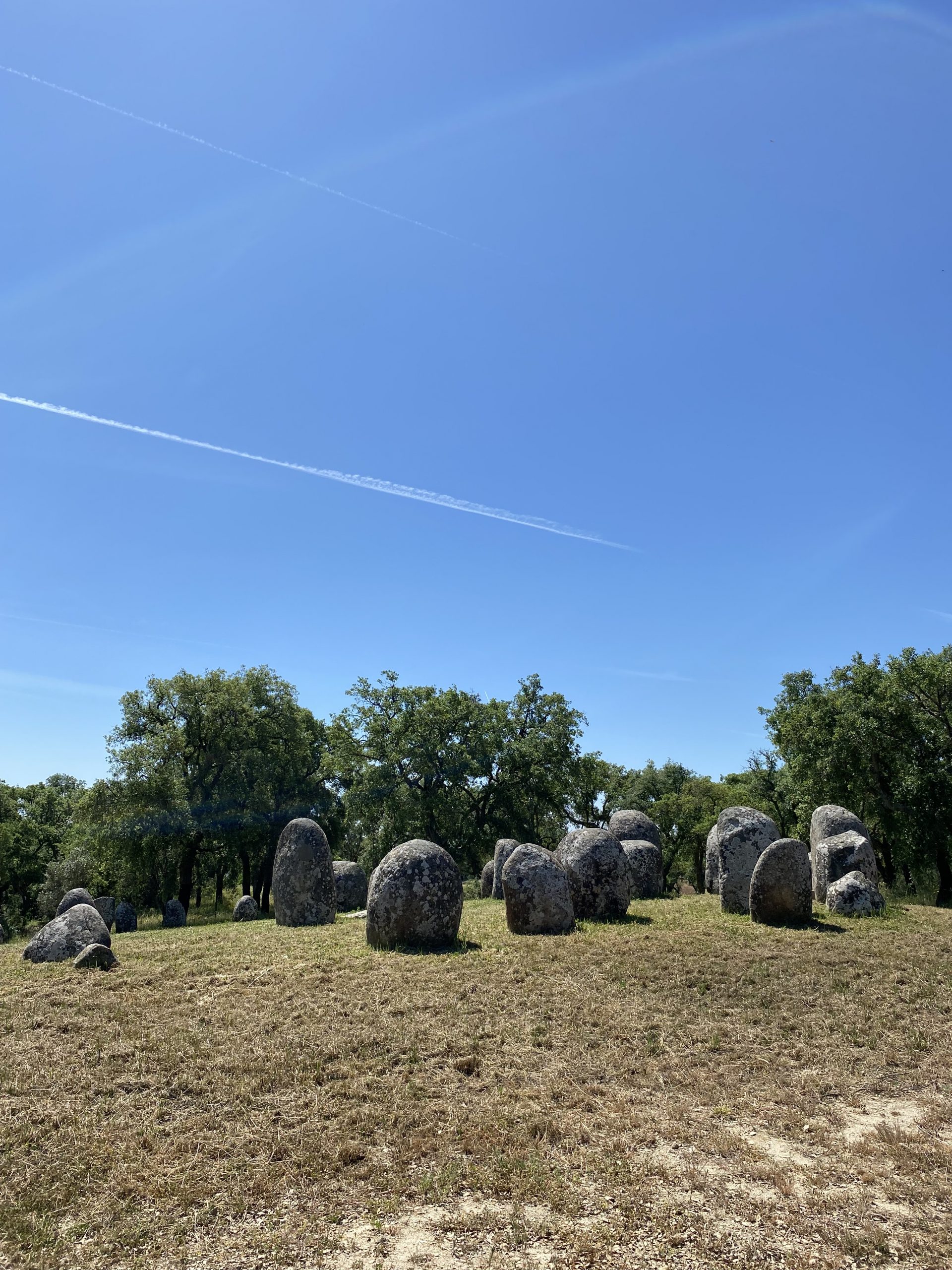
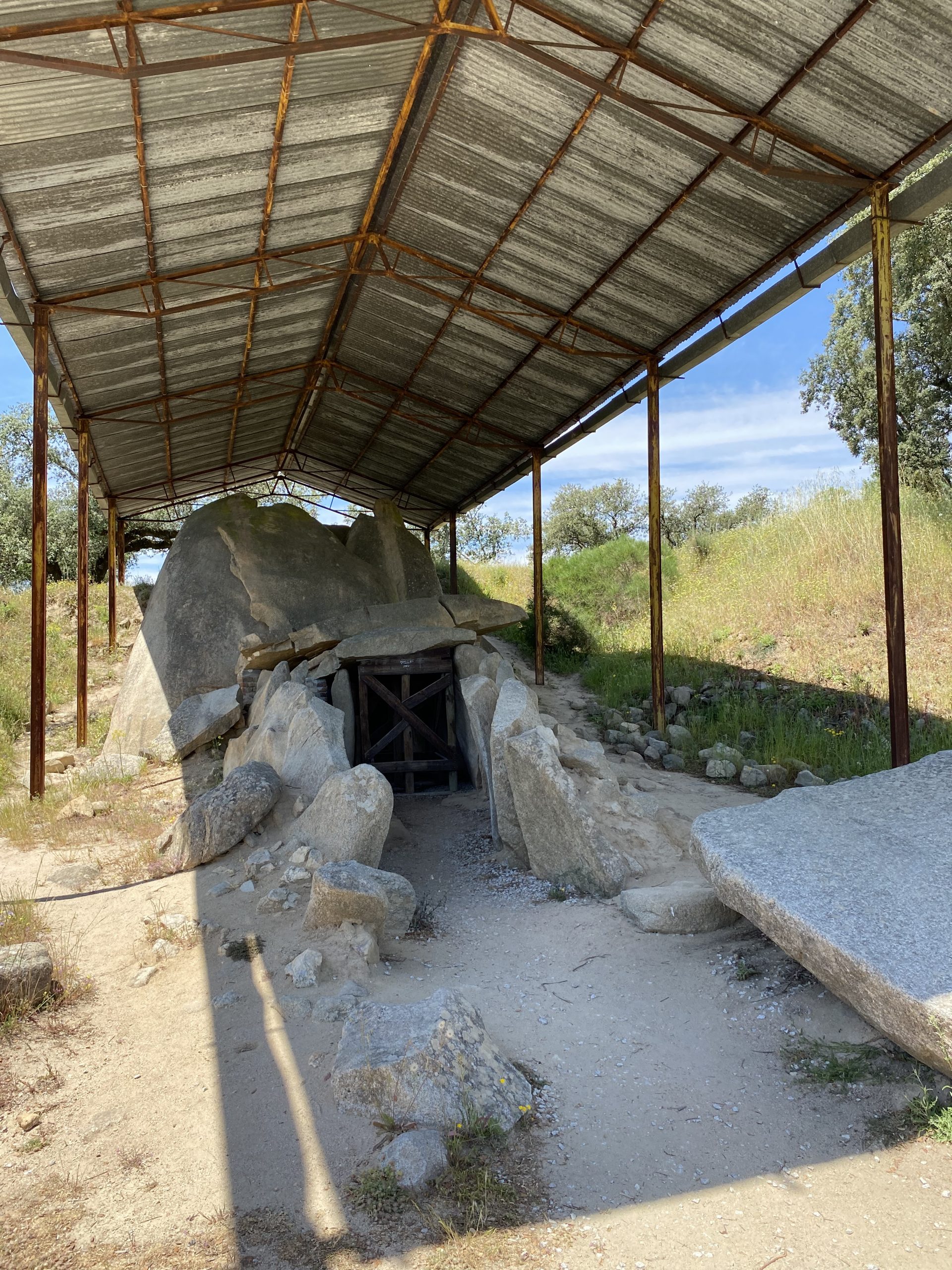
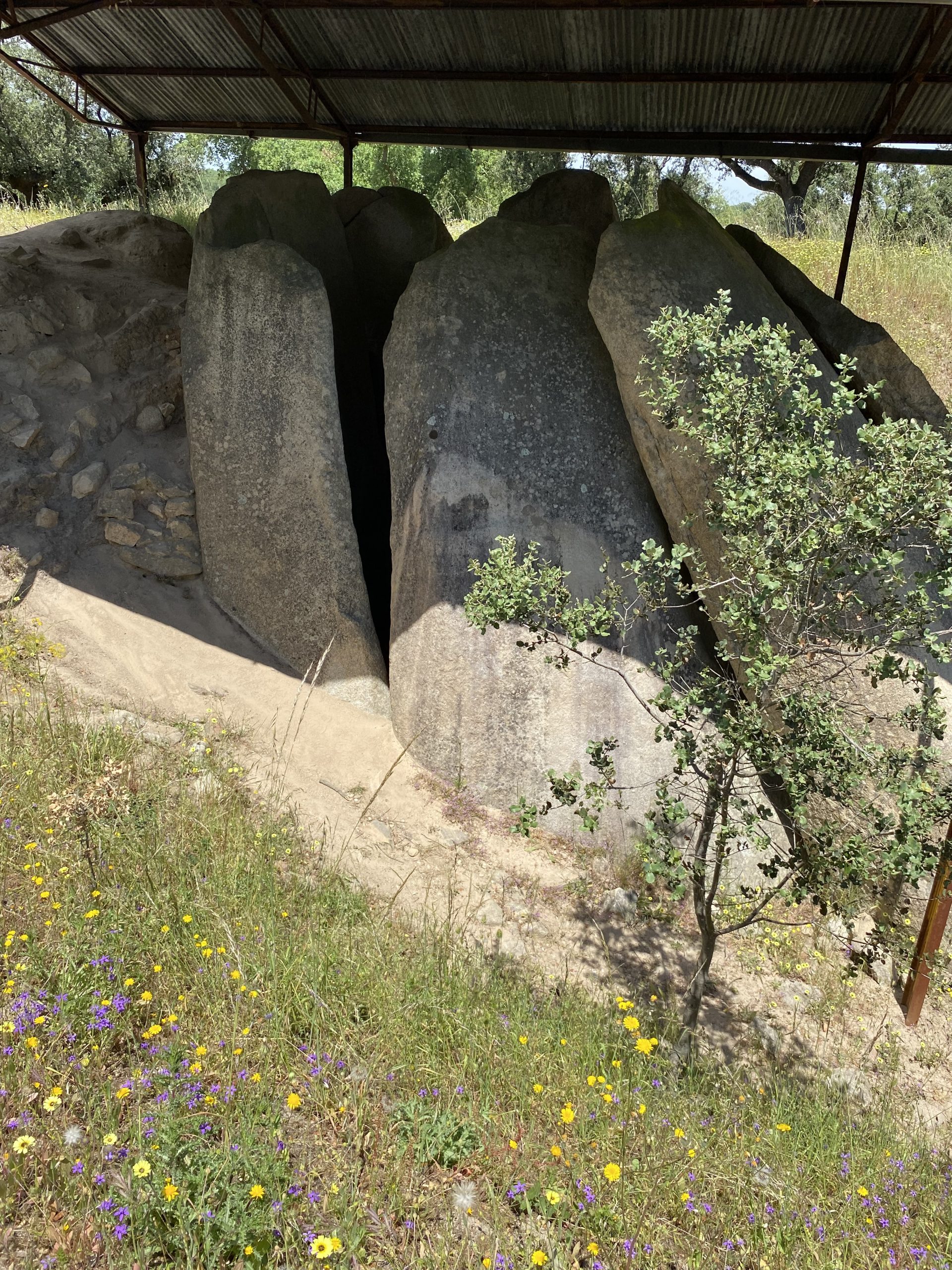
The landscape here is distinctly human-shaped, resulting from centuries, even millennia of farming and grazing. Scattered across its plains, you’ll discover mysterious stone formations—cromlechs, menhirs, and dolmens. They stay eventually for the roots of the pastoralist culture that evolved in the late Stone Age in this part of the world.
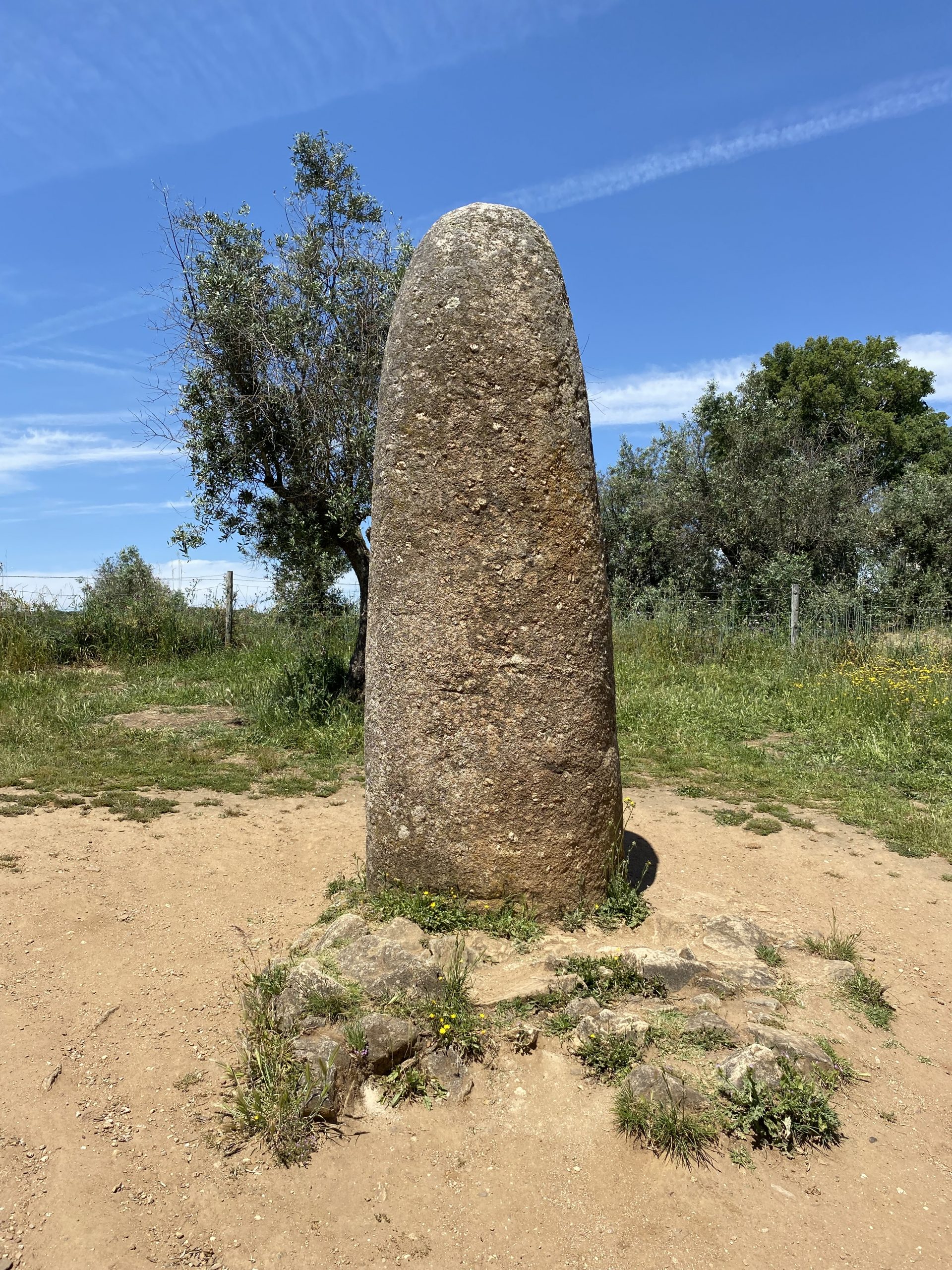
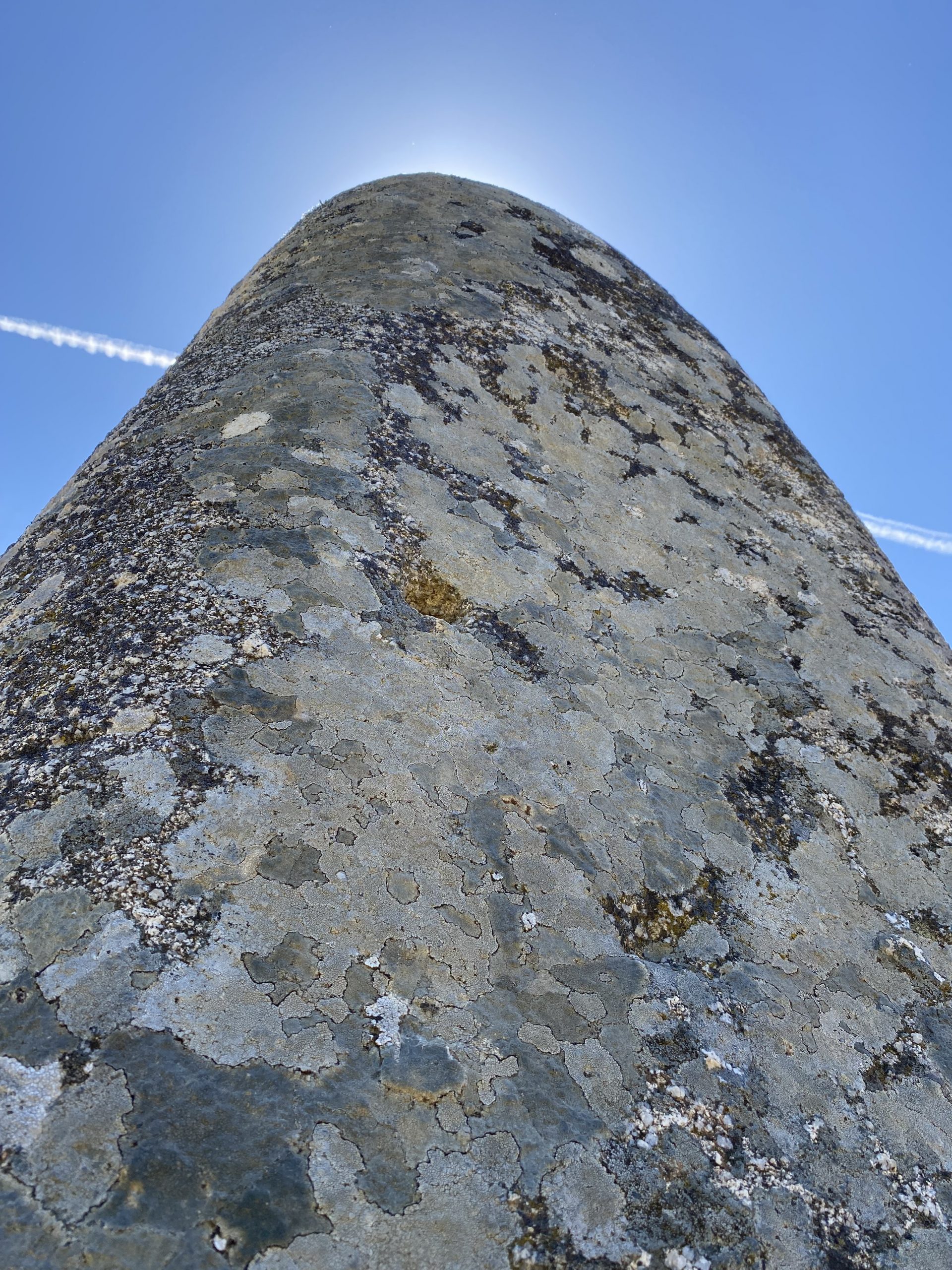
The cromlechs (group of monoliths), menhirs (single standing stones) and dolmens (burial chambers built of megaliths) discovered here were dated back to 5.000-3.000 BC. They are part of a wider megalithic culture in Central Alentejo and the Iberic Peninsula.
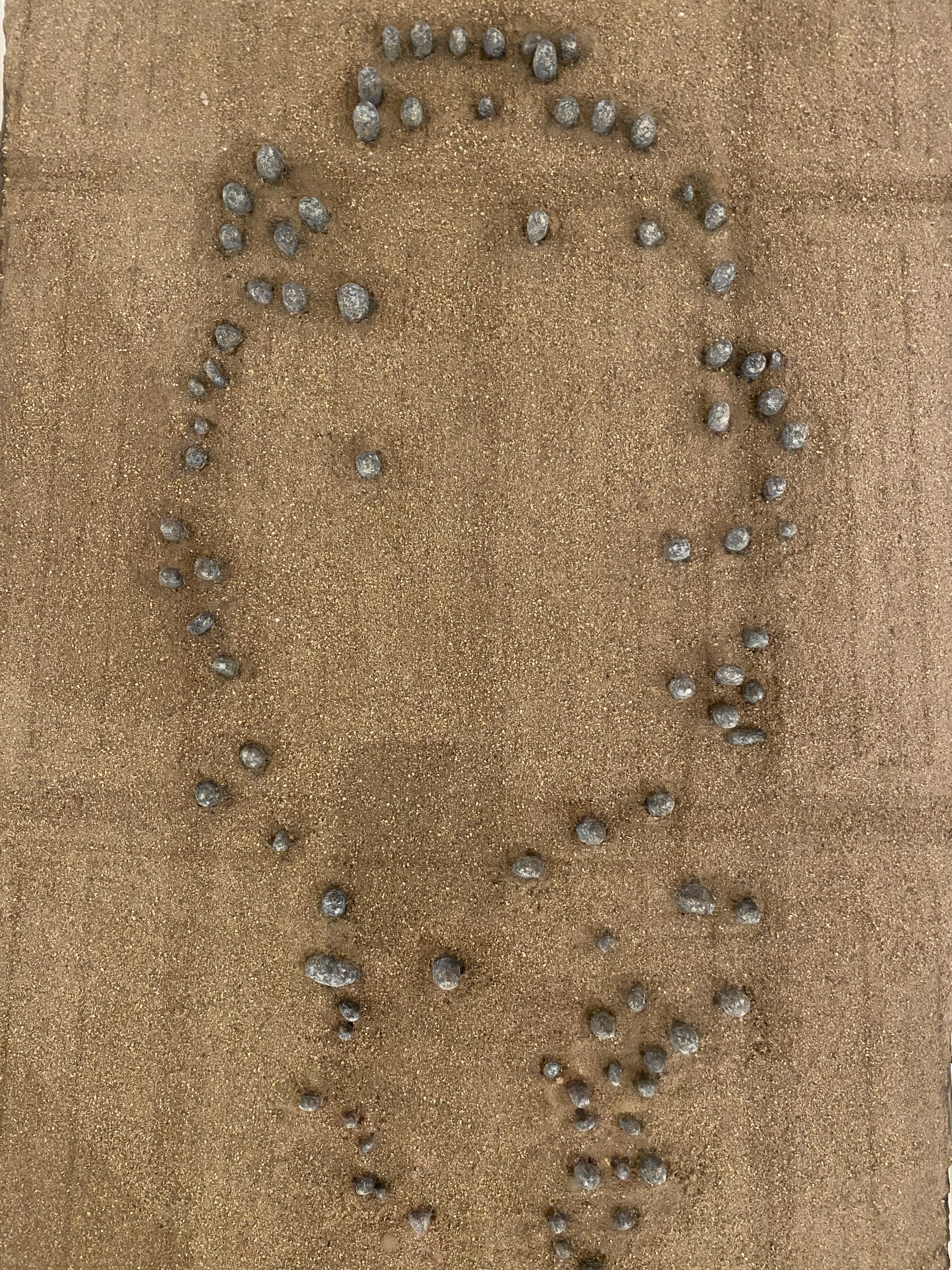
The Cromlech of the Almendres is particularly breathtaking, offering a glimpse into prehistoric times that feels almost otherworldly. The guided tour with Sira from Ebora Megalithica was very informative. I can warmly recommend the tour to anyone interested in diving deeper into the prehistoric in the region.
Who were these people? Why did they erect these monuments? In what did they believe? There is plenty of room for guessing about all the mysteries around these monuments. The most accepted theory is that the cromlechs were gathering and celebration places during important dates of the year, such as equinoxes and solstices.
The Cromlech of Almendres, but generally all of the formations in the area, is oriented eastwards to the point on the horizon where the sun and the moon rise at the spring equinox. There is also an isolated menhir more than 1 km from the main complex. But a line between the cromlech and the menhir points towards the sunrise on the winter solstice!
Hikers and nature lovers paradise
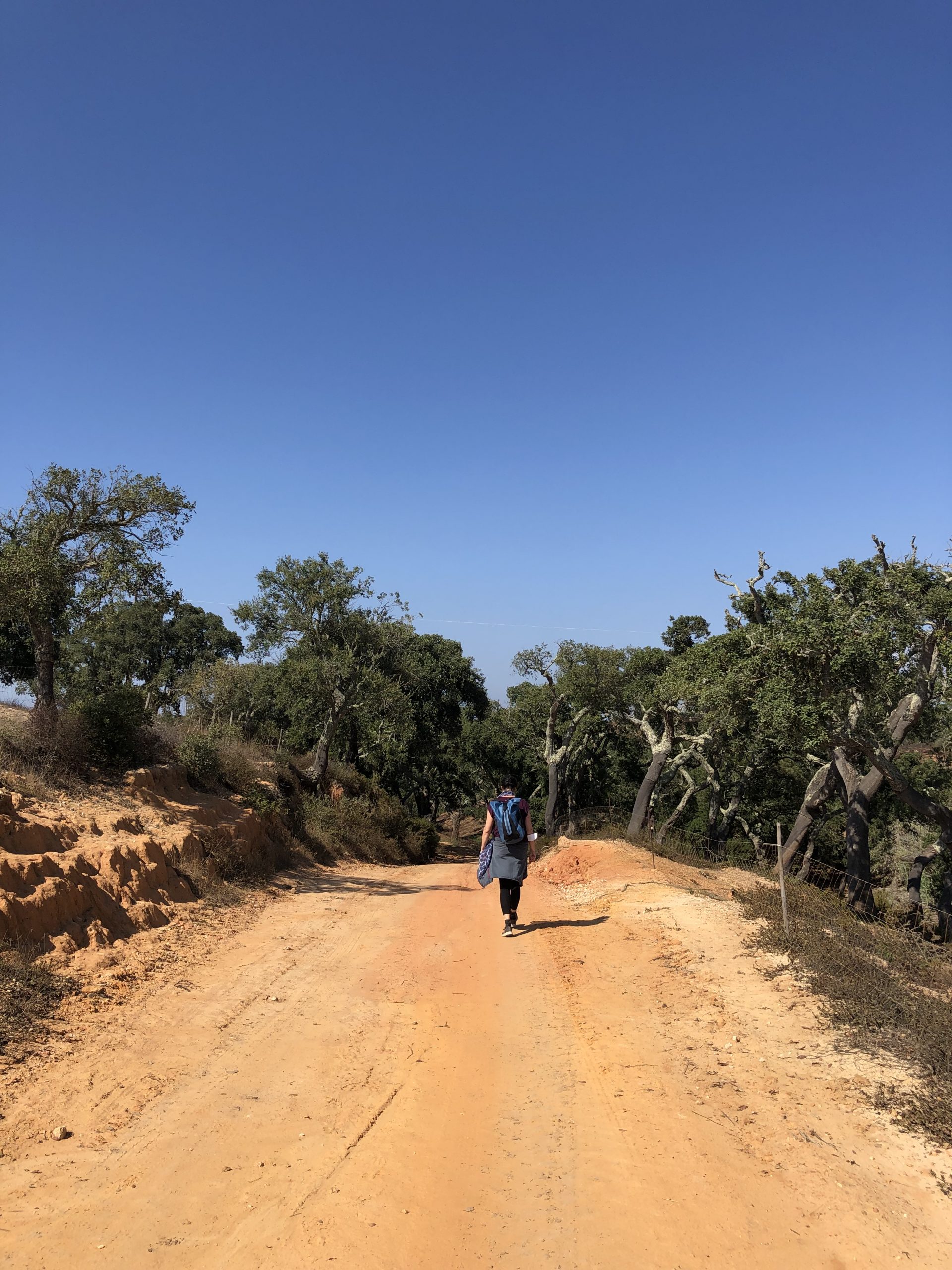
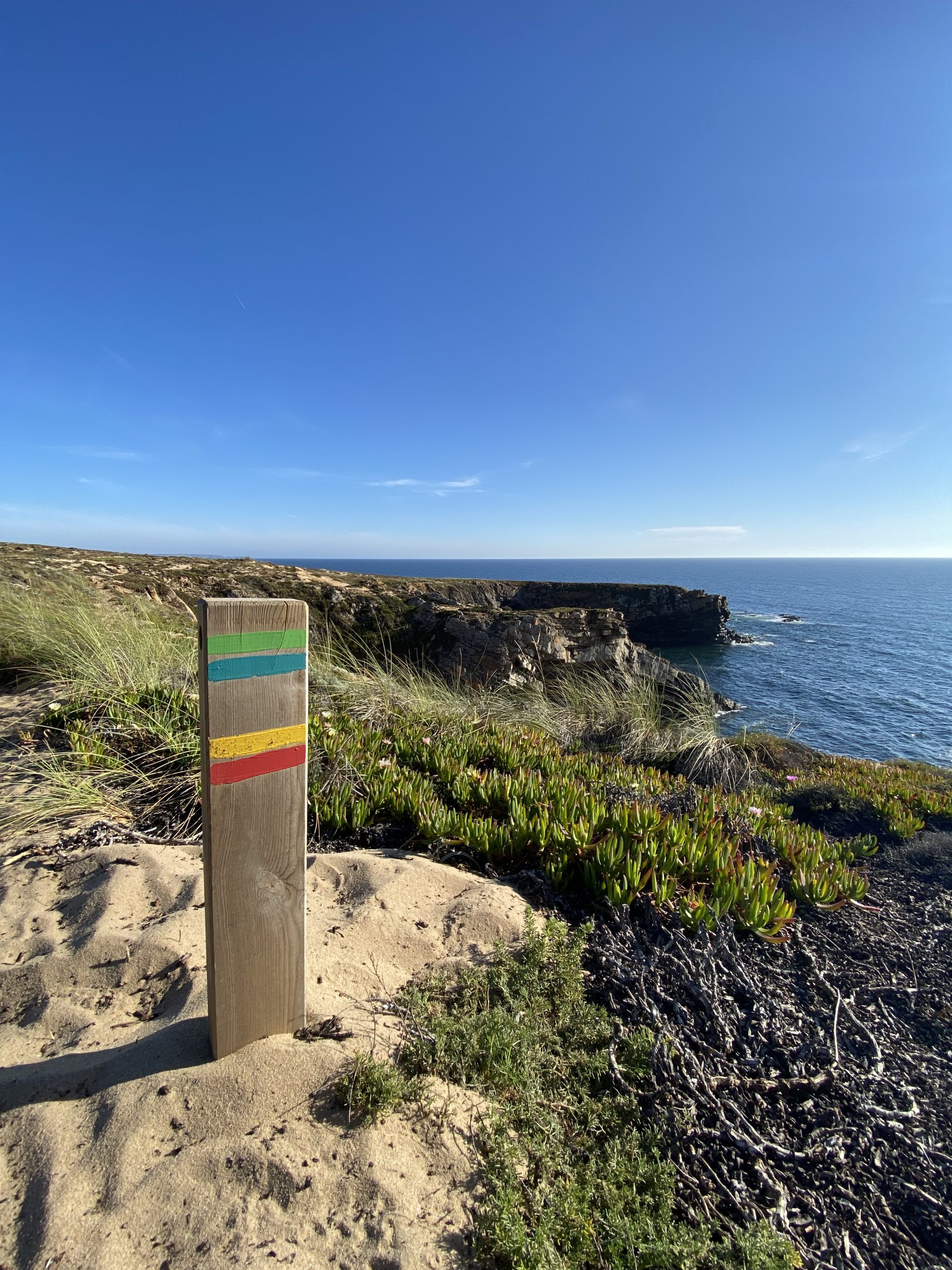
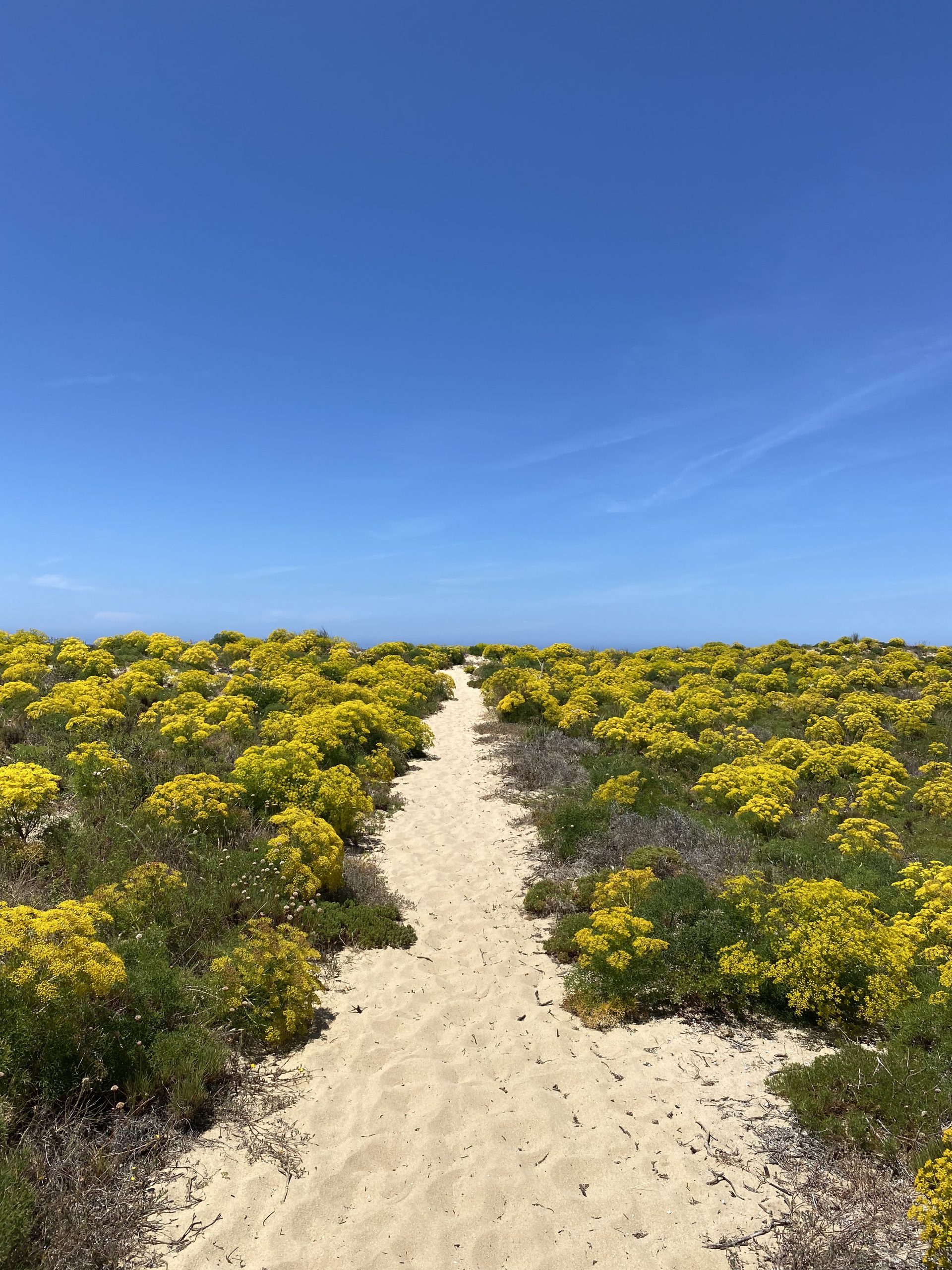
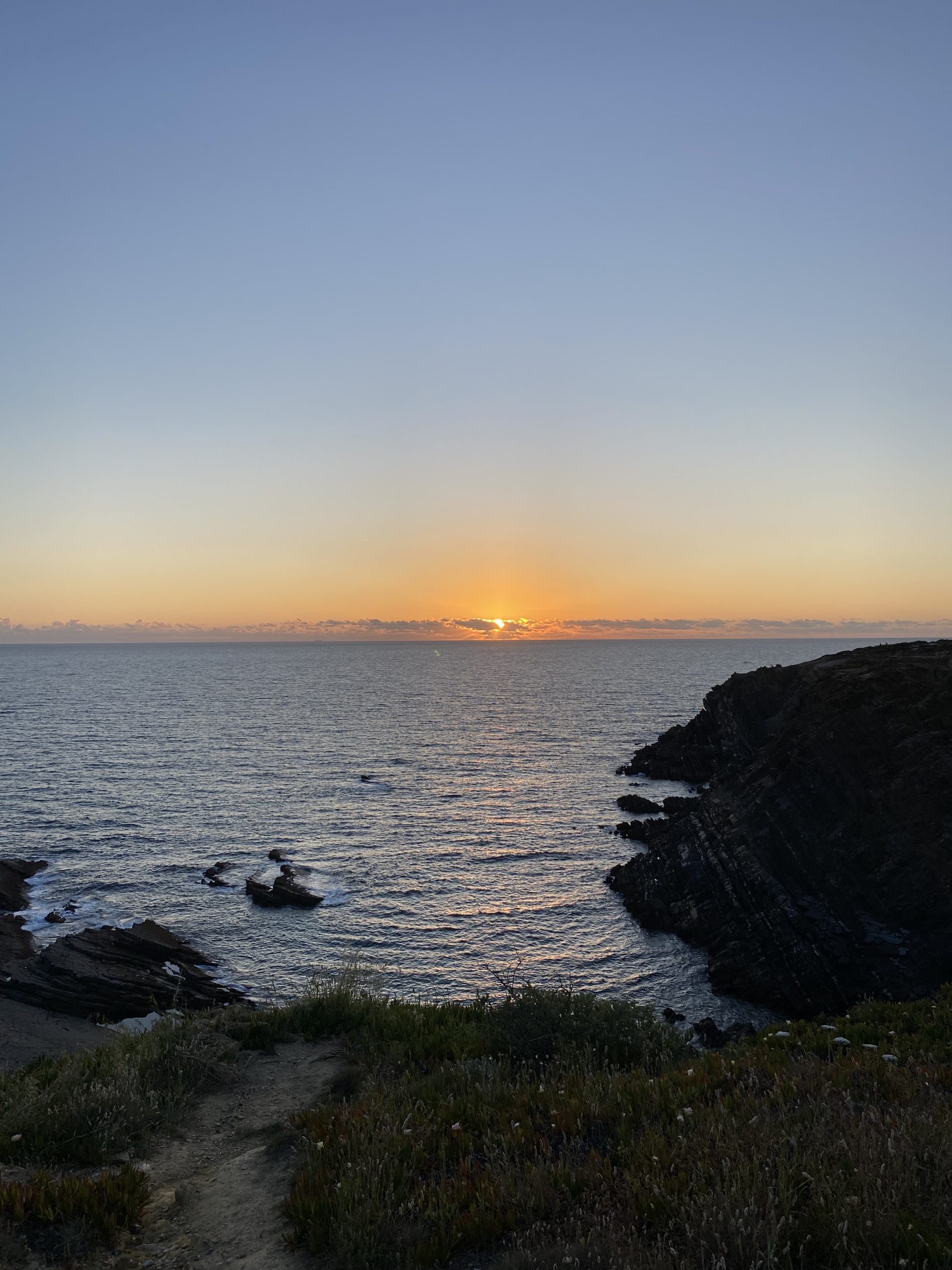
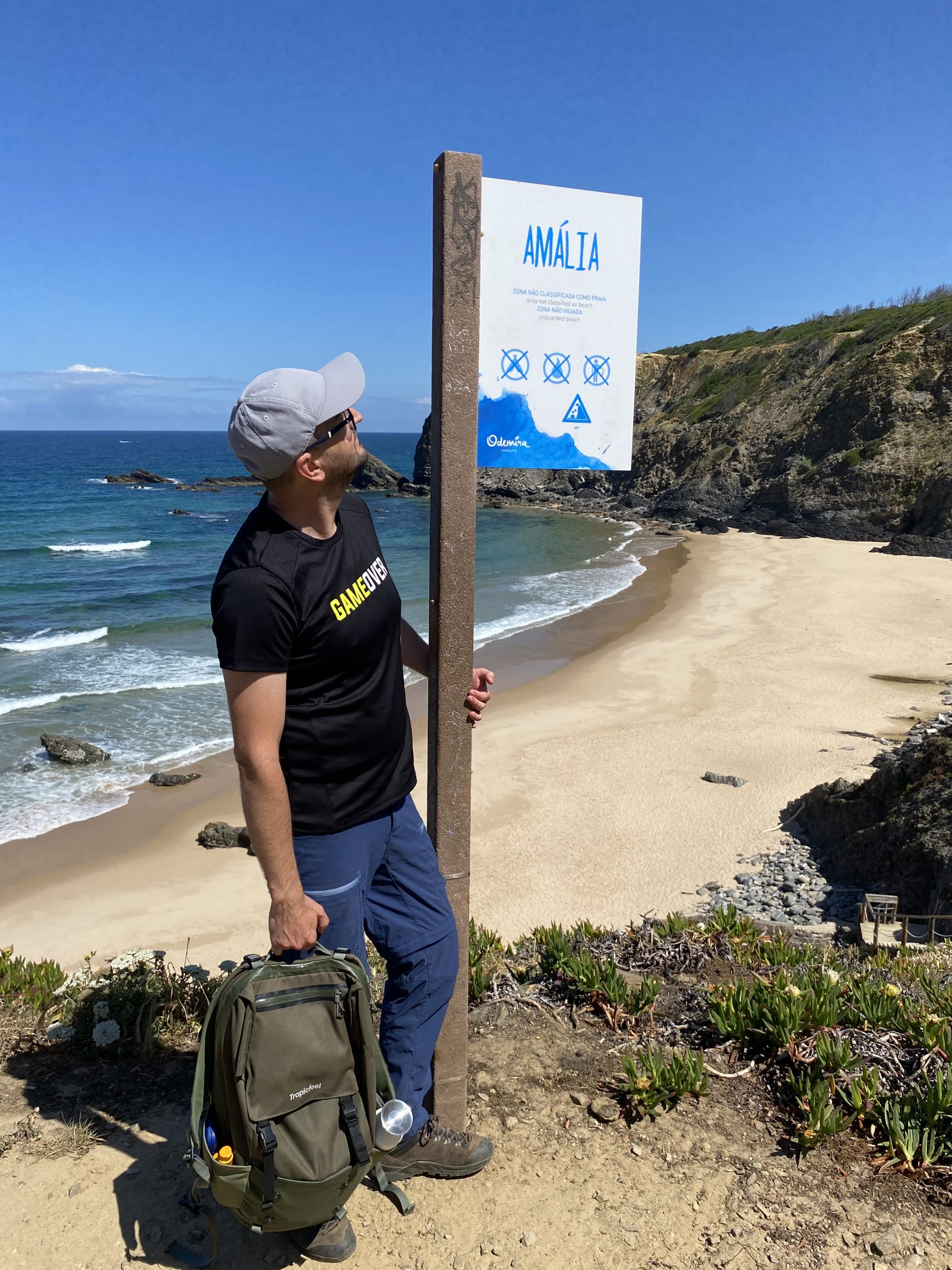
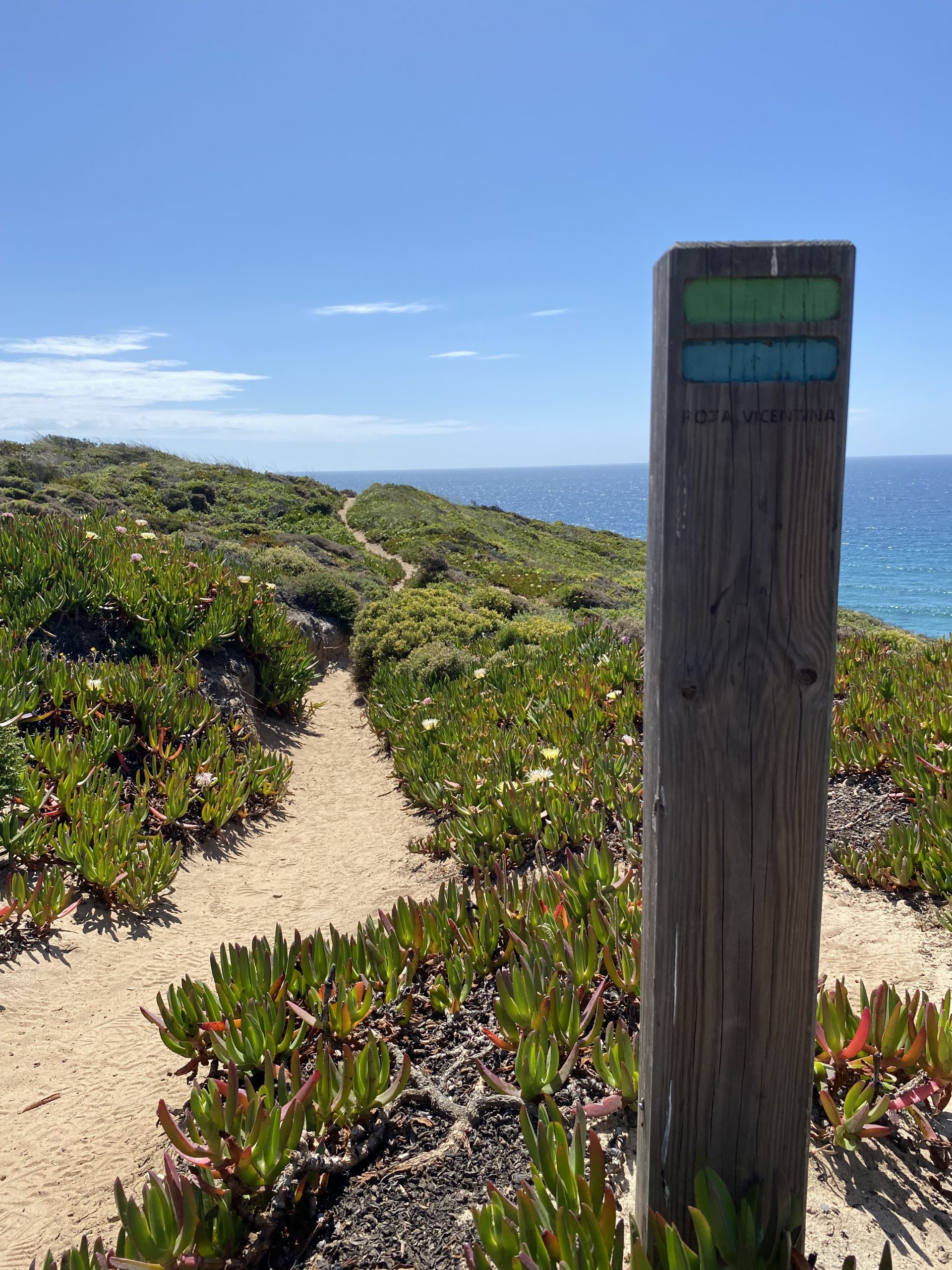
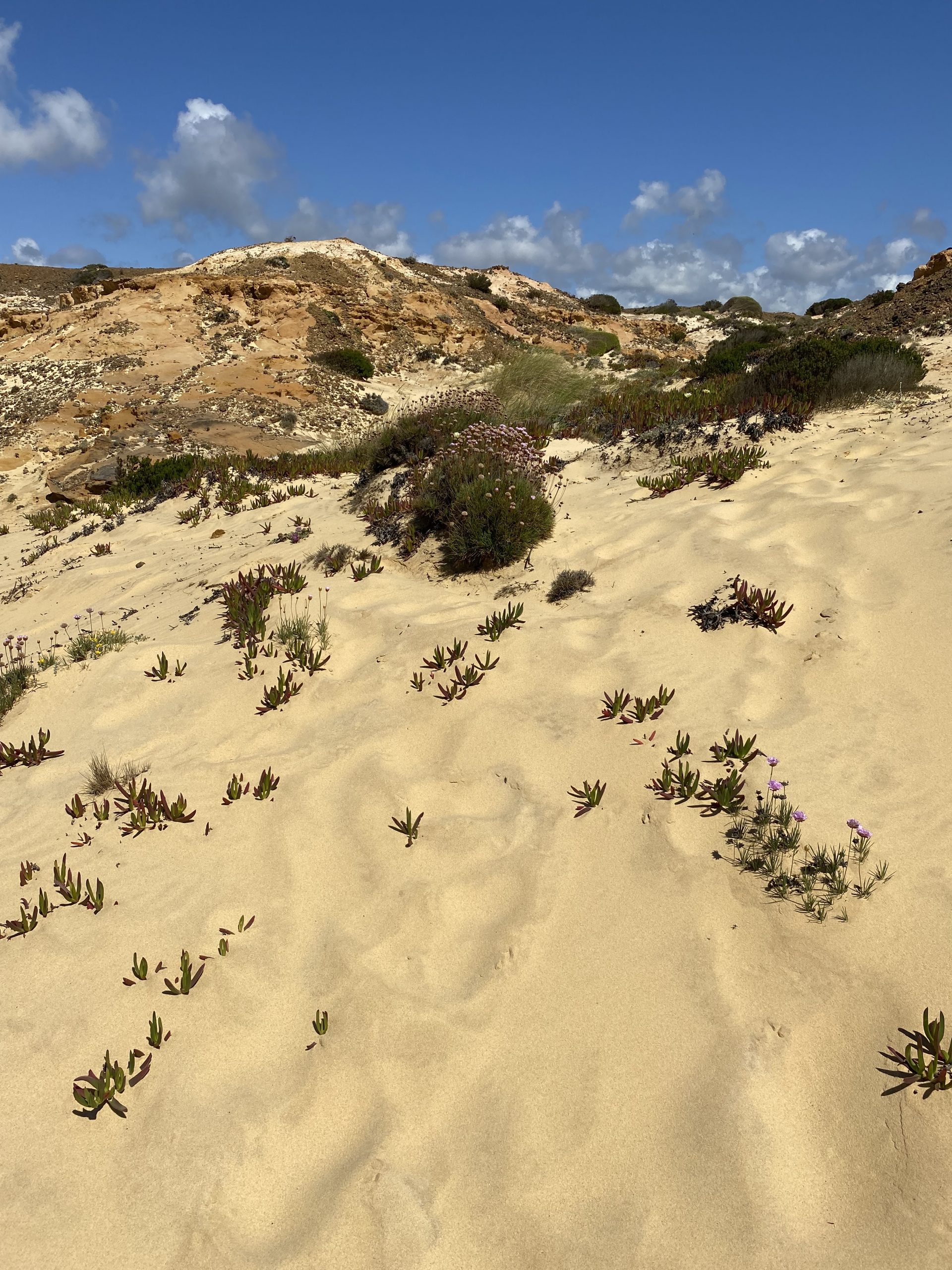
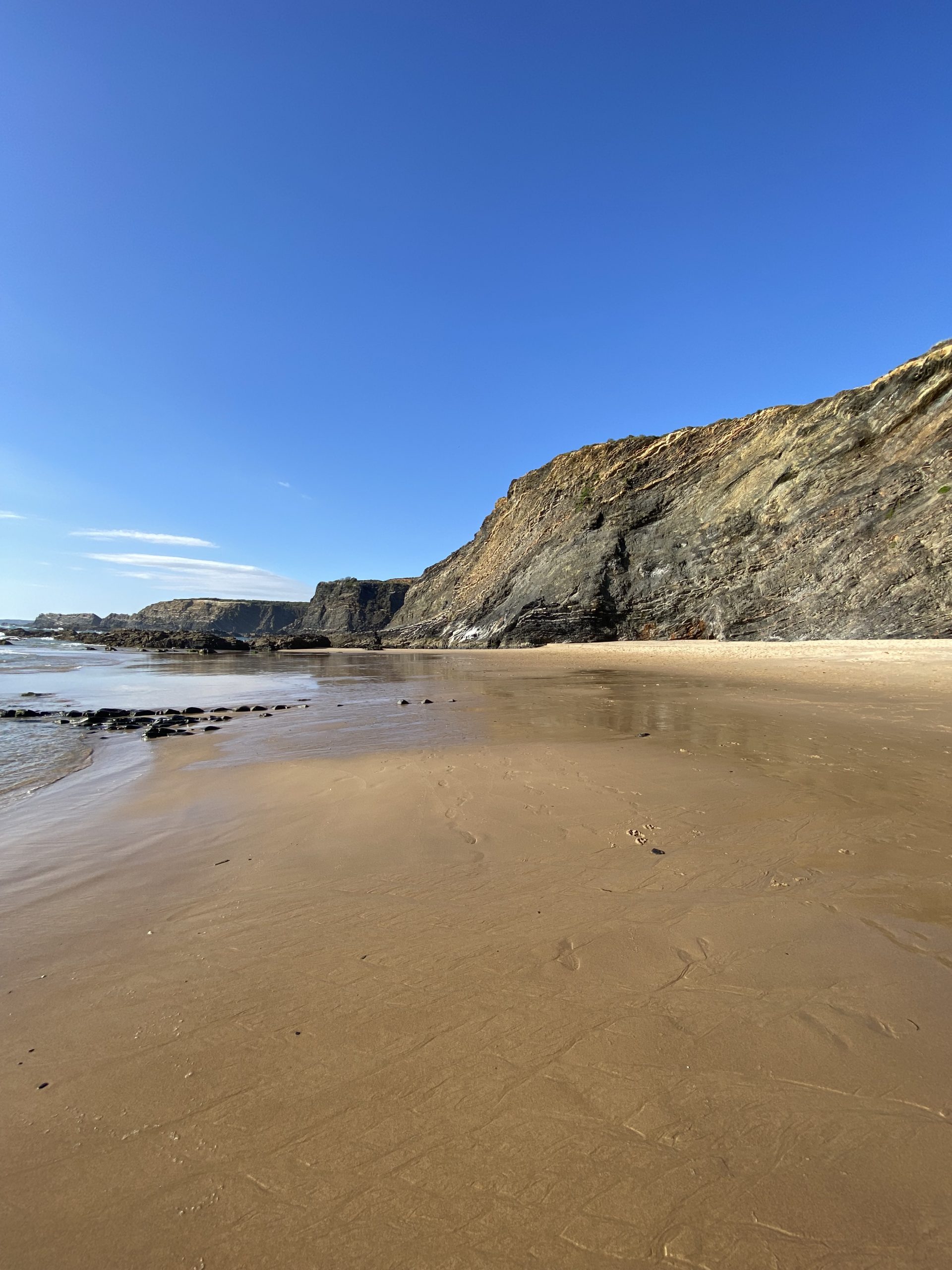
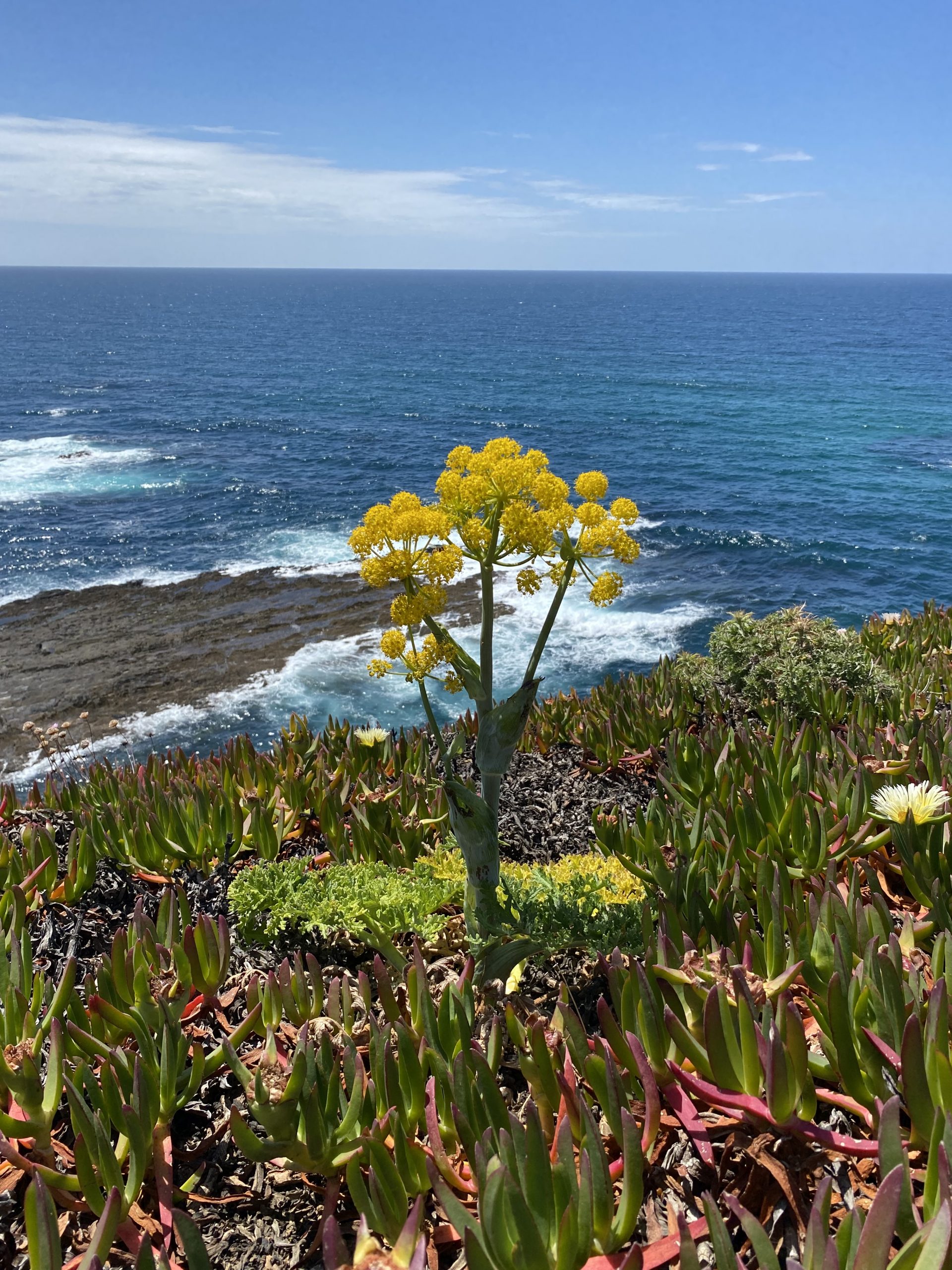
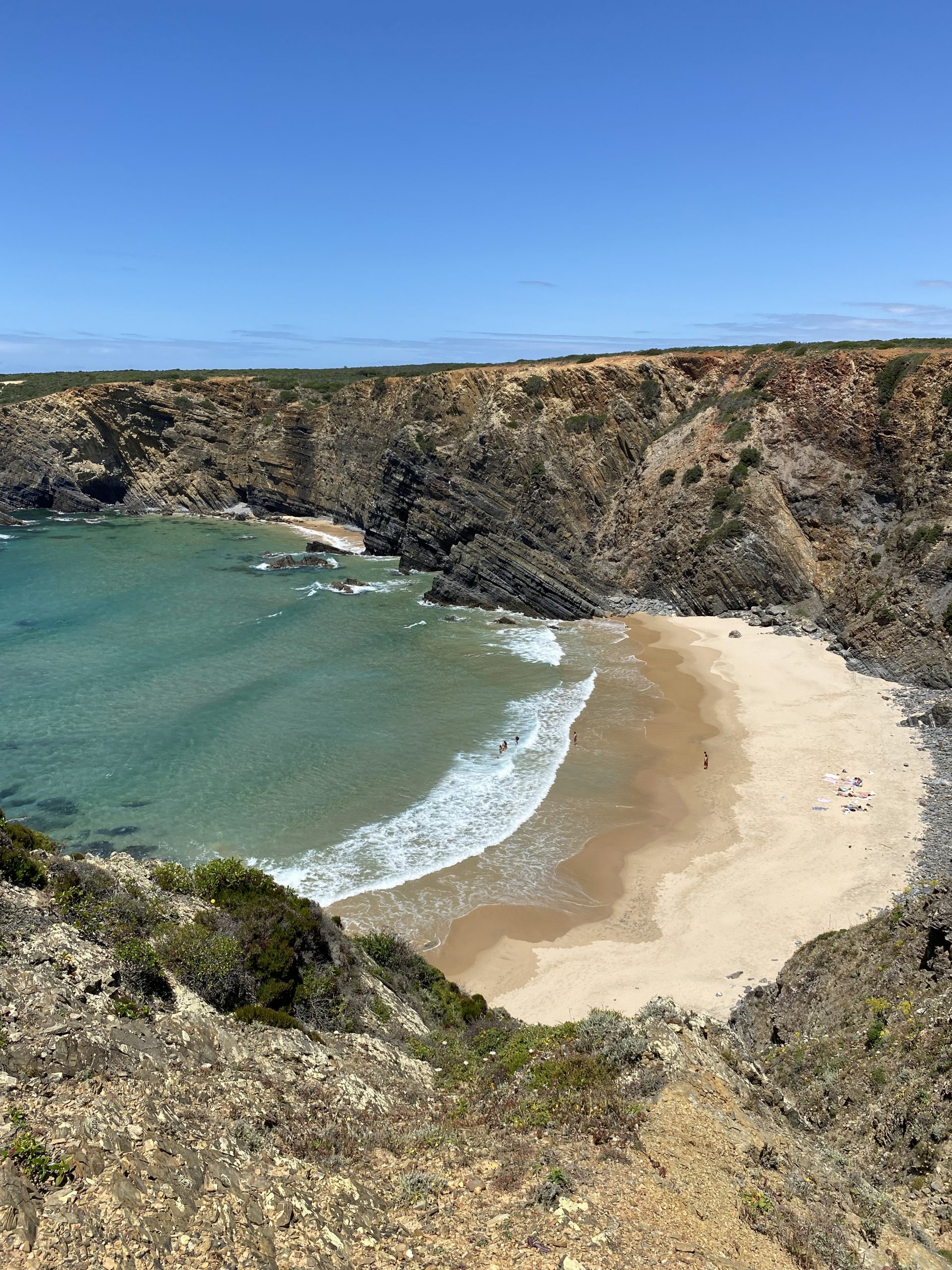
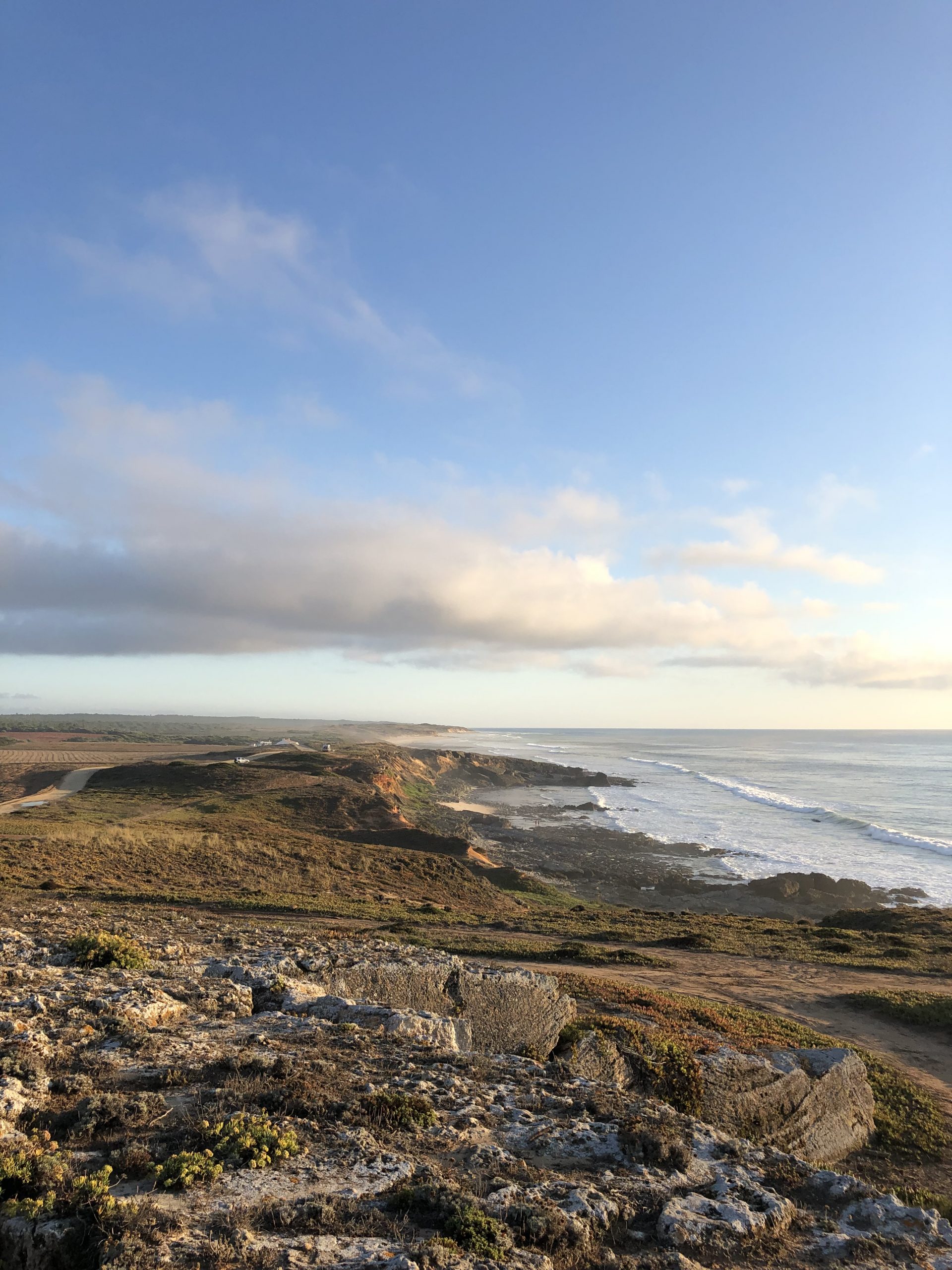
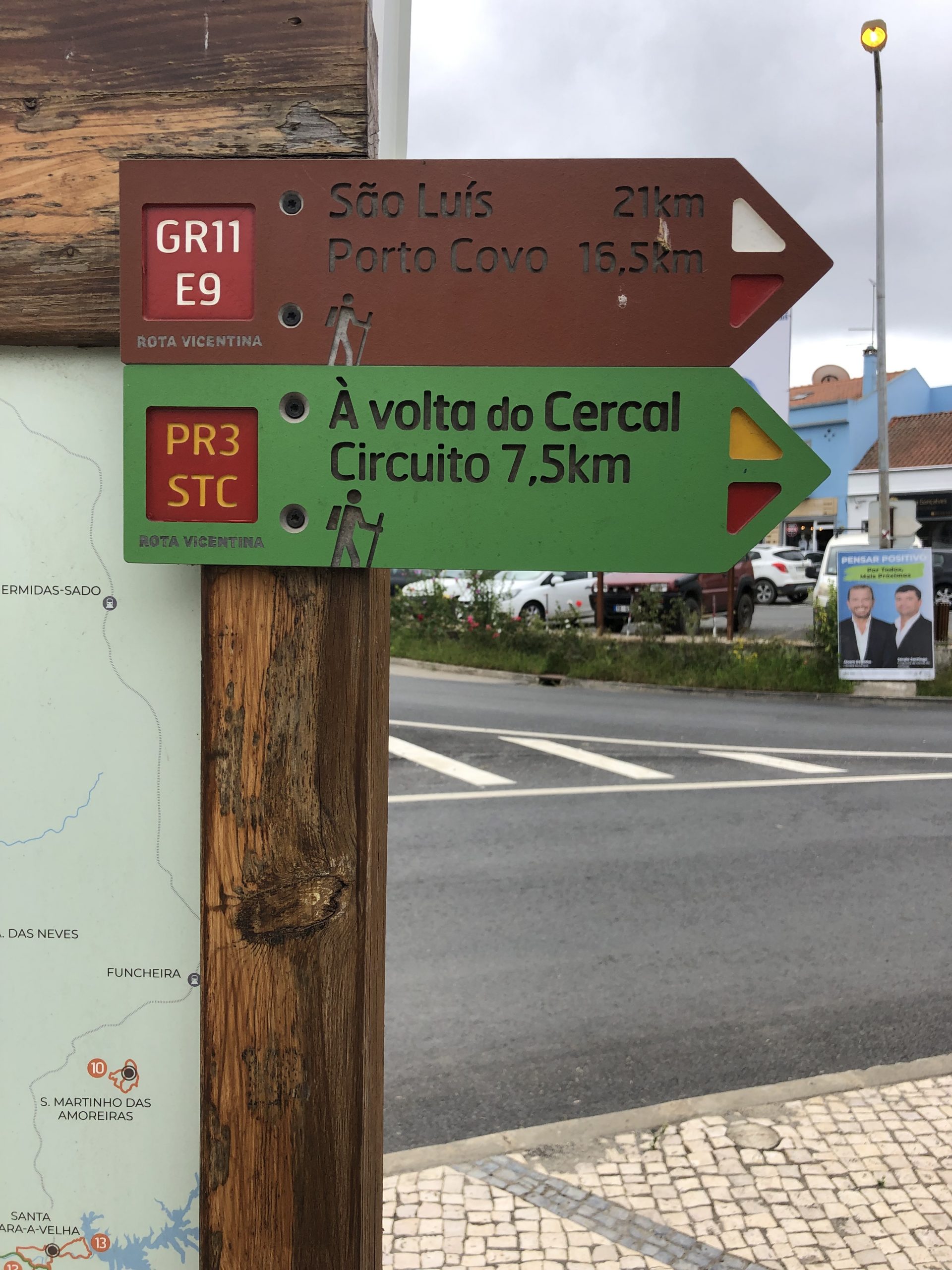
For those who love the great outdoors, the Rota Vicentina is an excellent way to explore the region. This long-distance trail runs along the Alentejo Coast, through the Southwest Alentejo and Vicentine Coast Natural Park. The trail offers stunning views of the rugged coastline, with its dramatic cliffs, hidden beaches, and untouched nature. It’s a chance to experience the wild beauty of Alentejo up close, whether hiking a short section or tackling the entire route. I already walked several sections and was never disappointed!
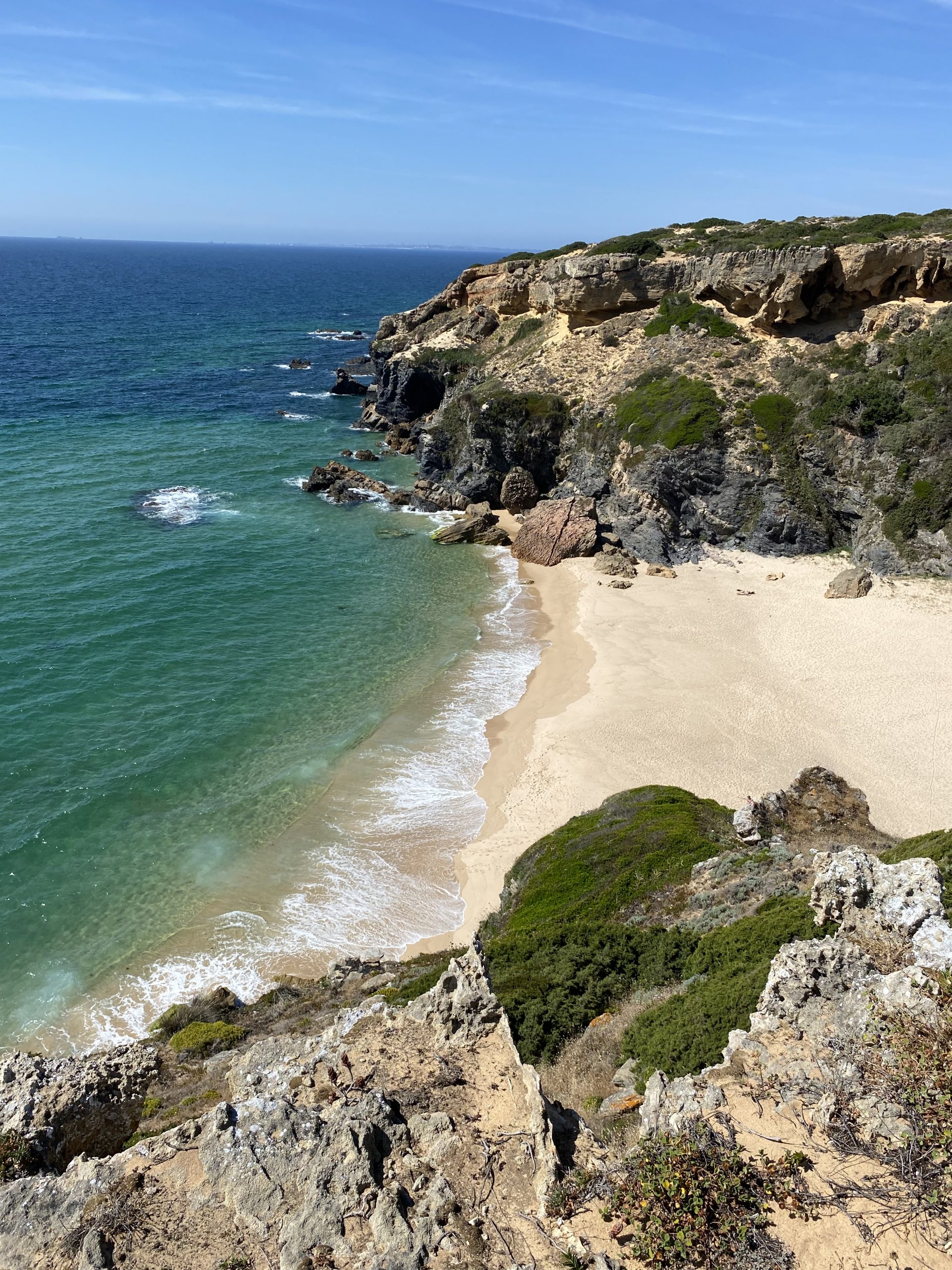
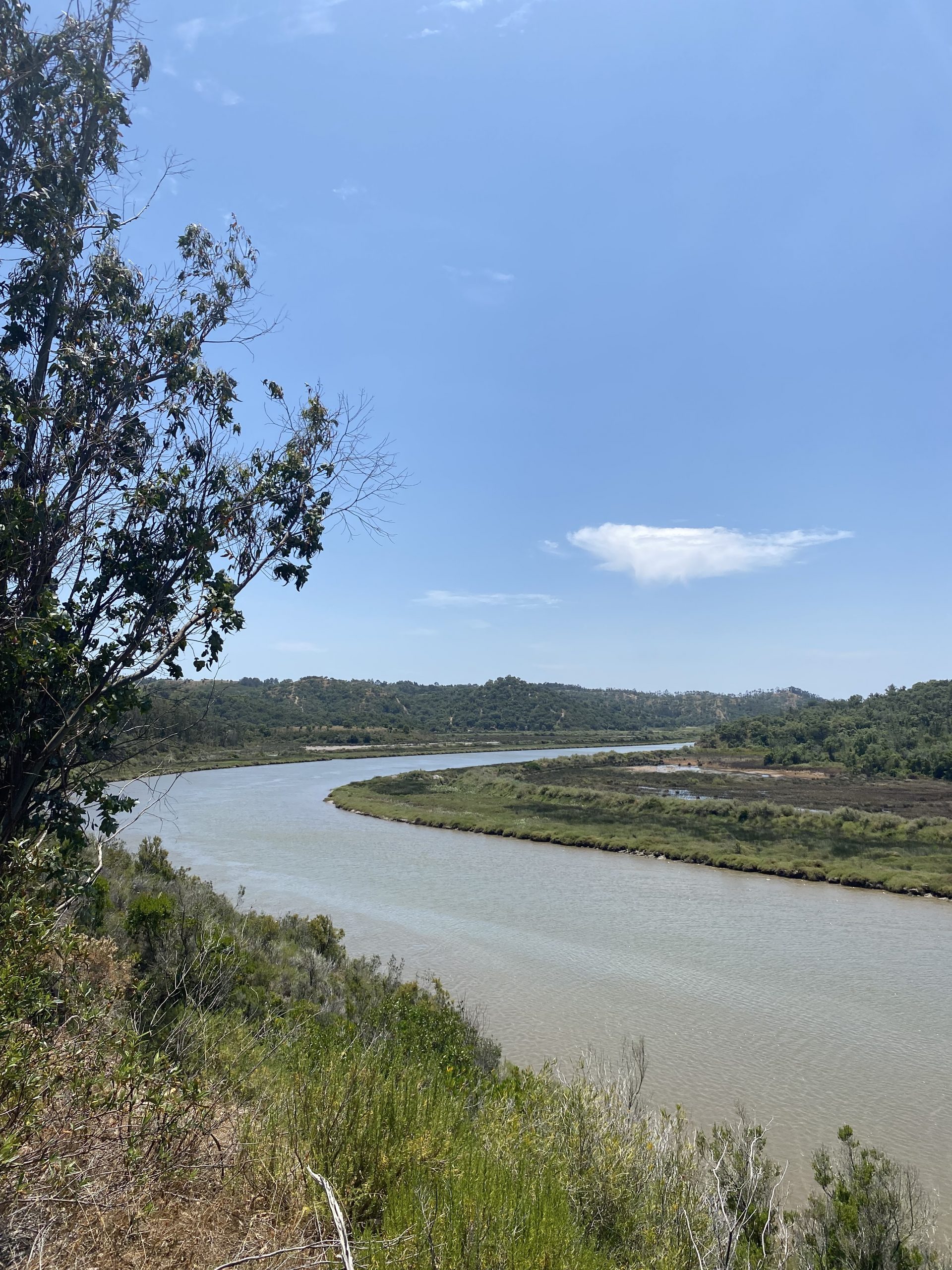
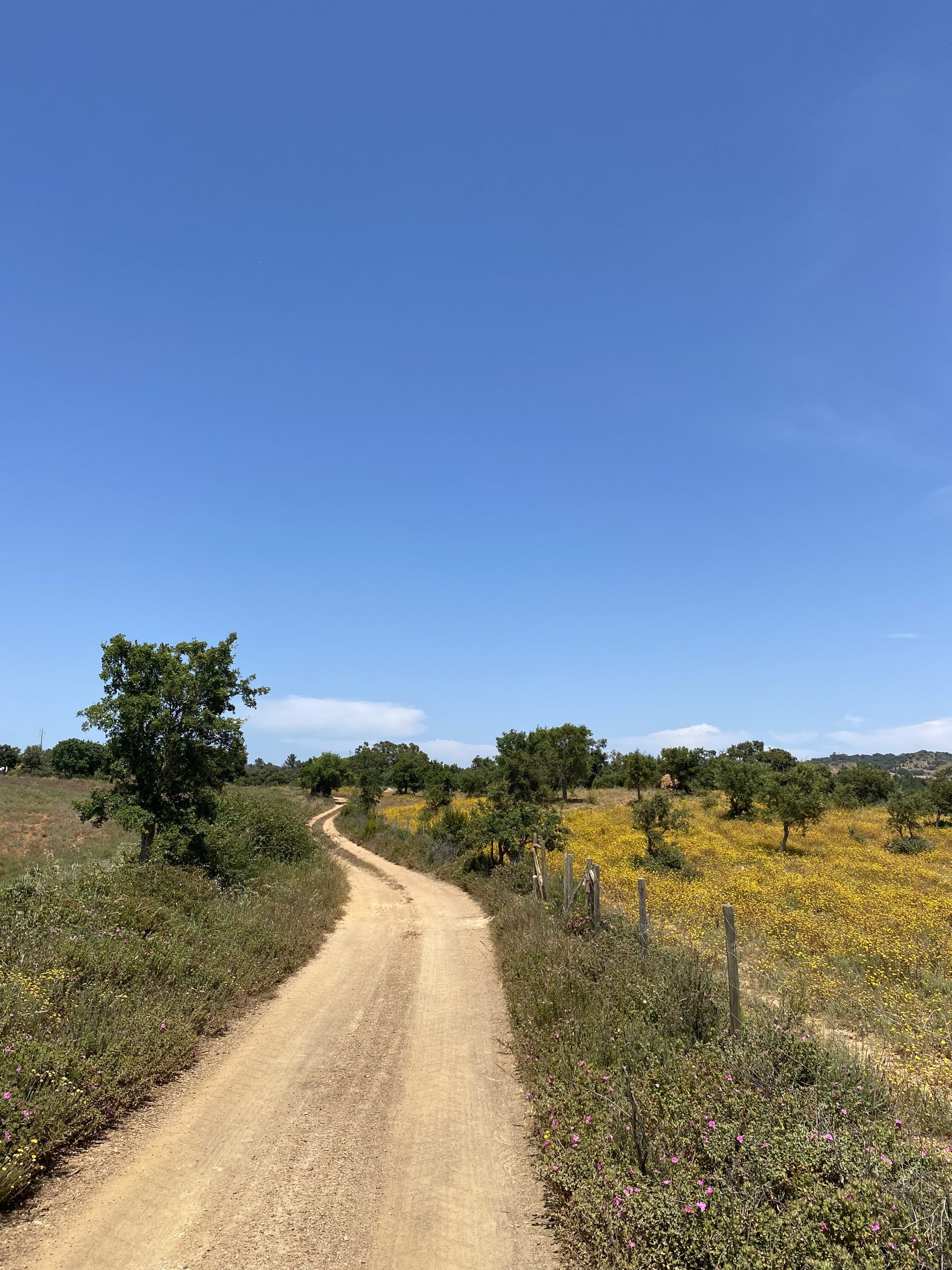
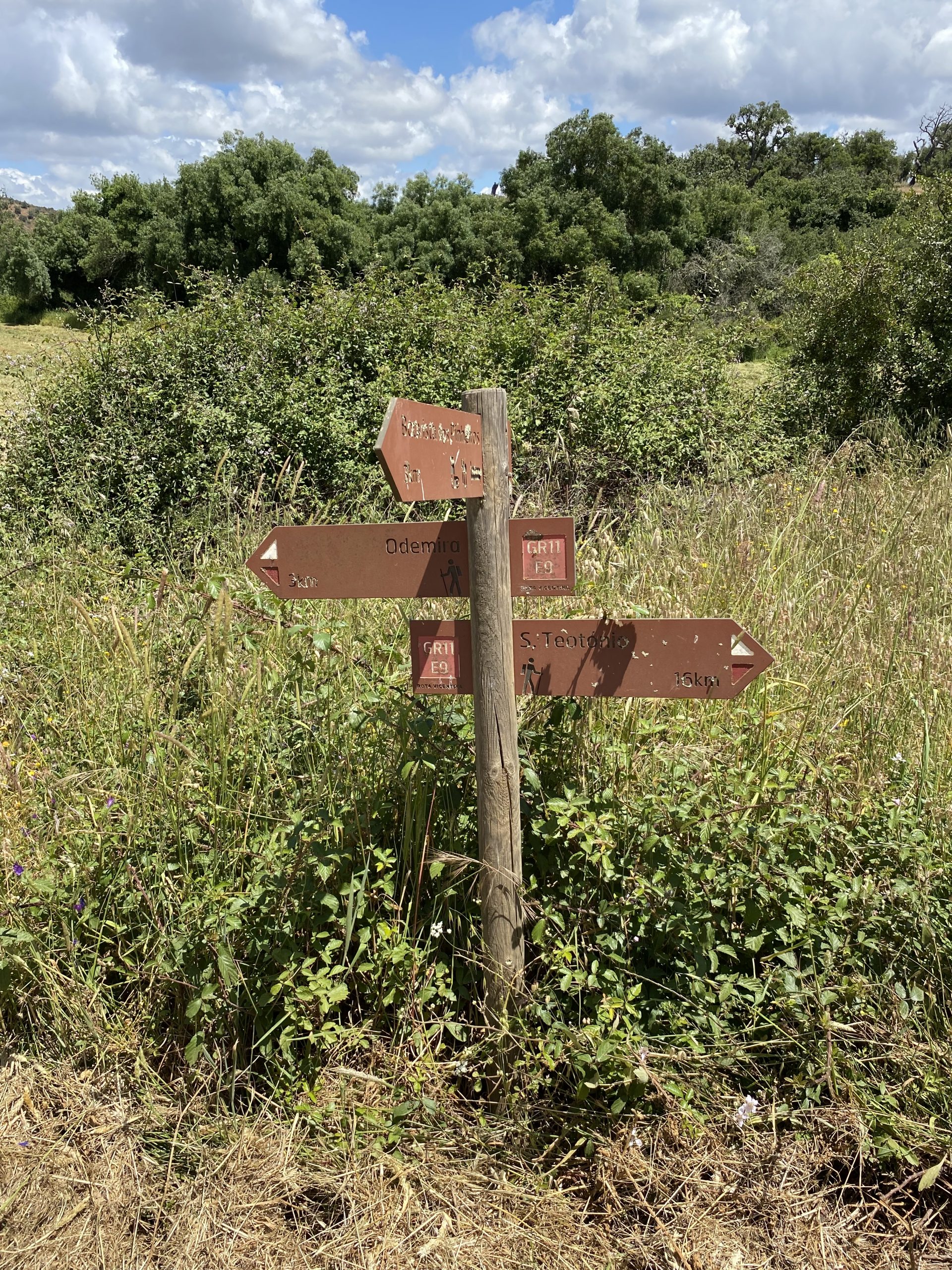
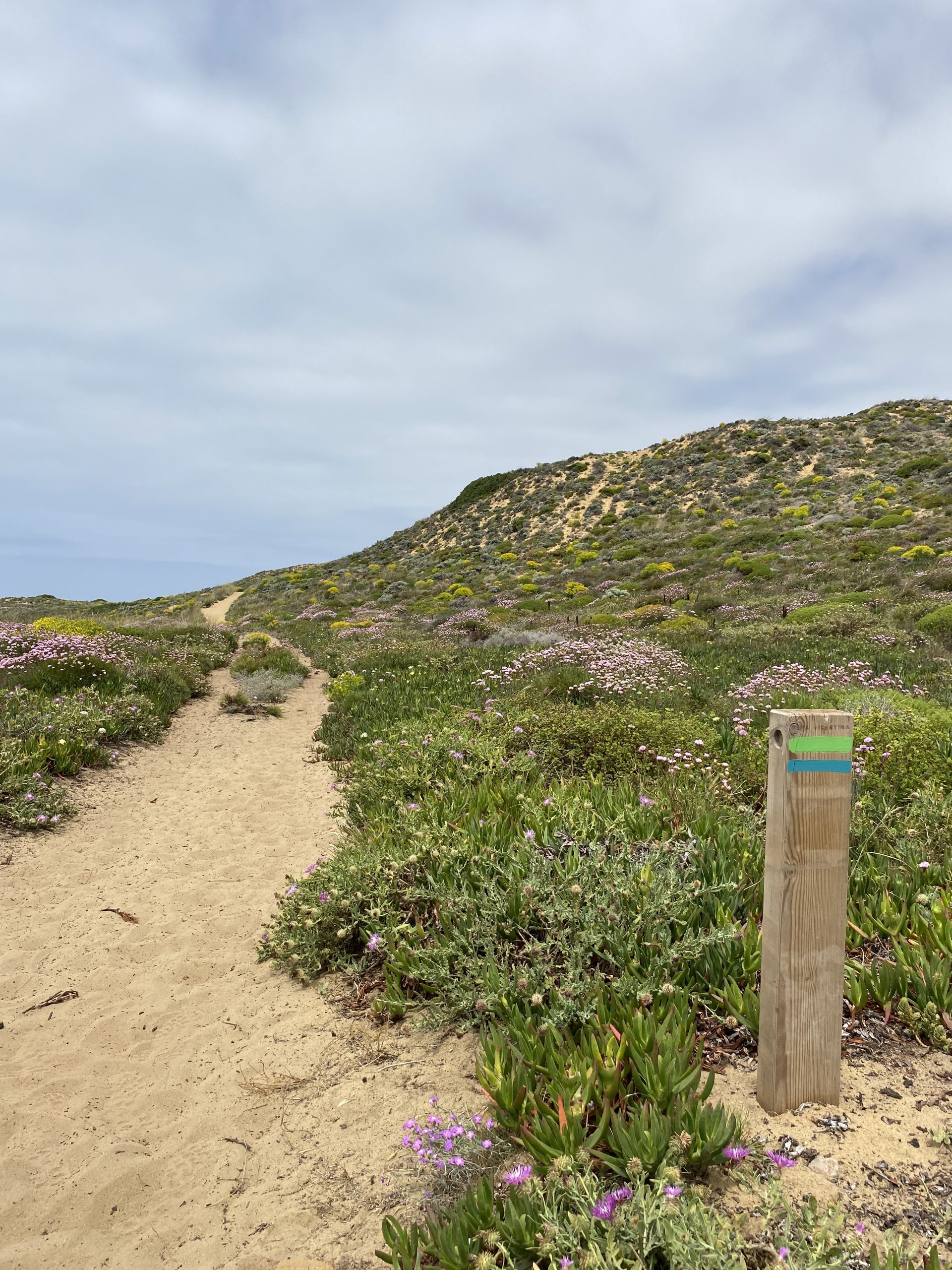
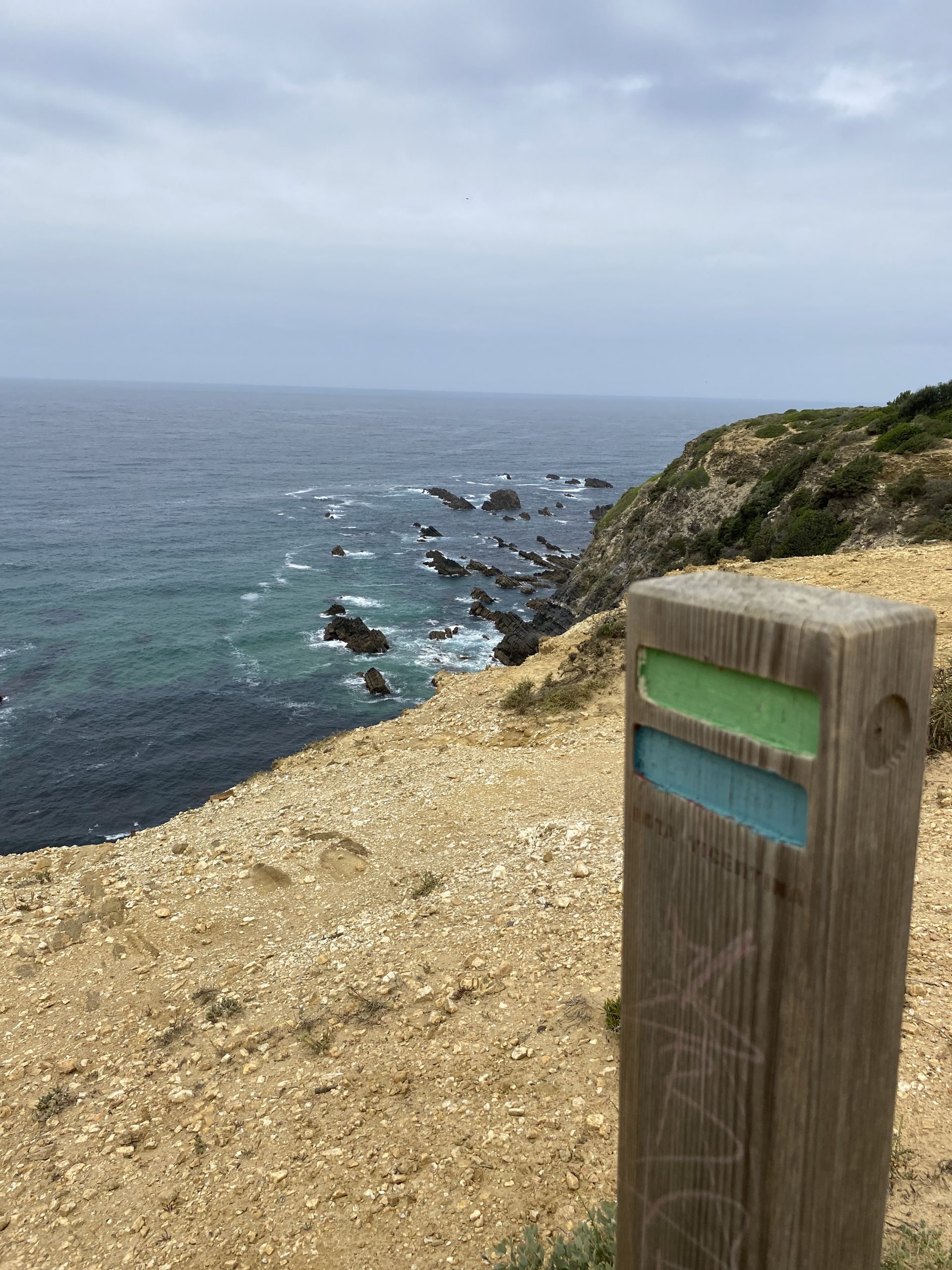
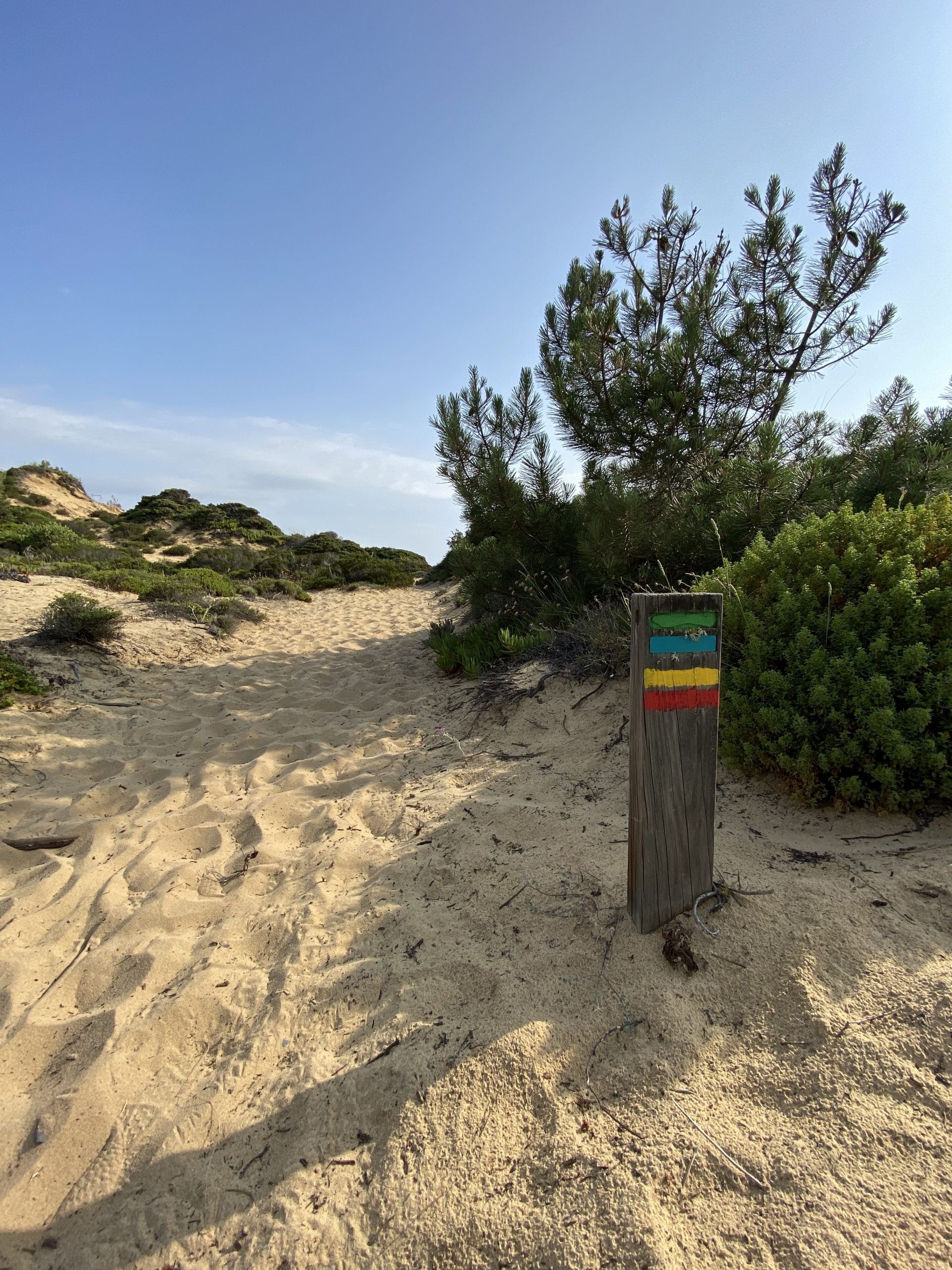
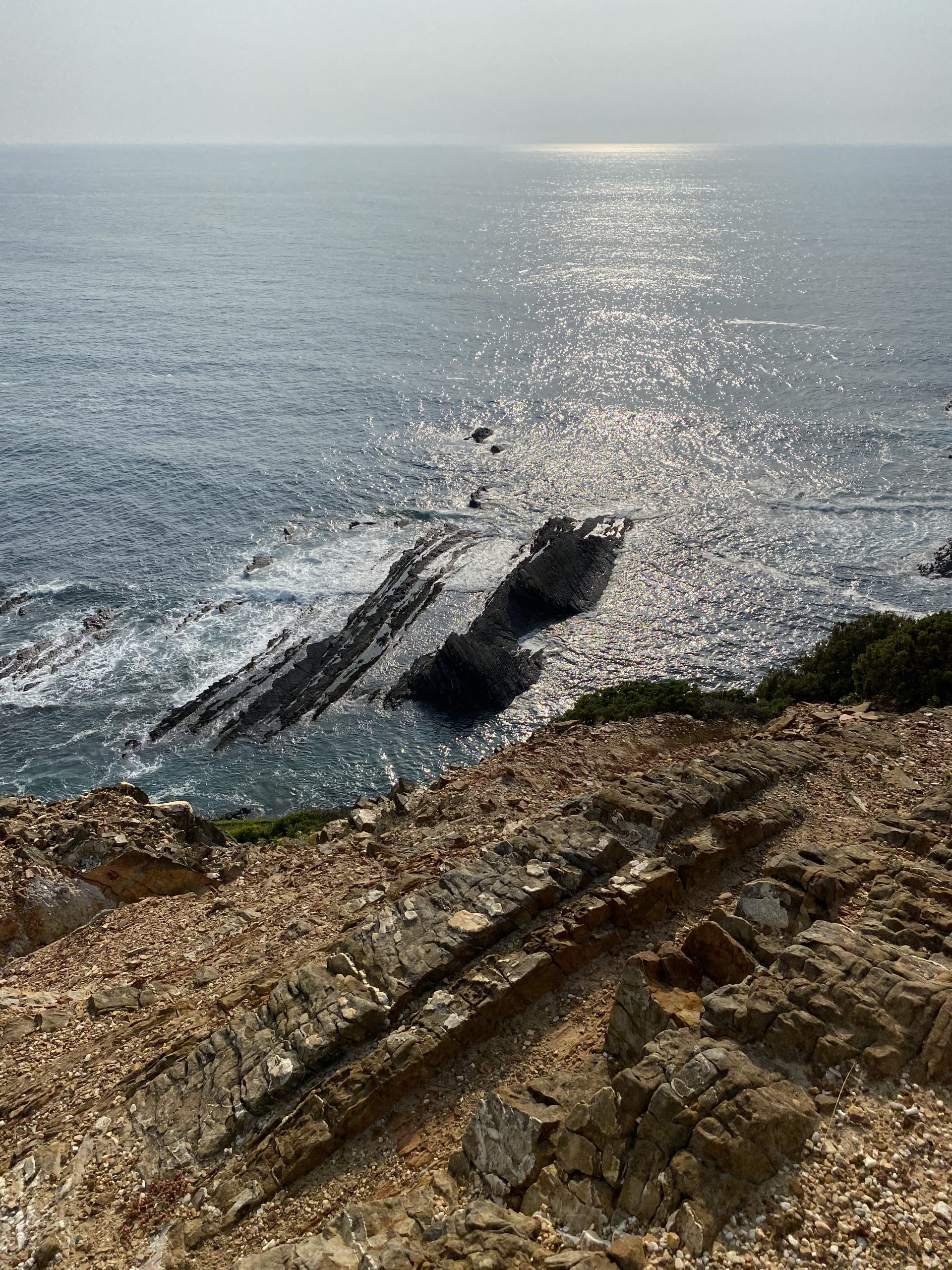
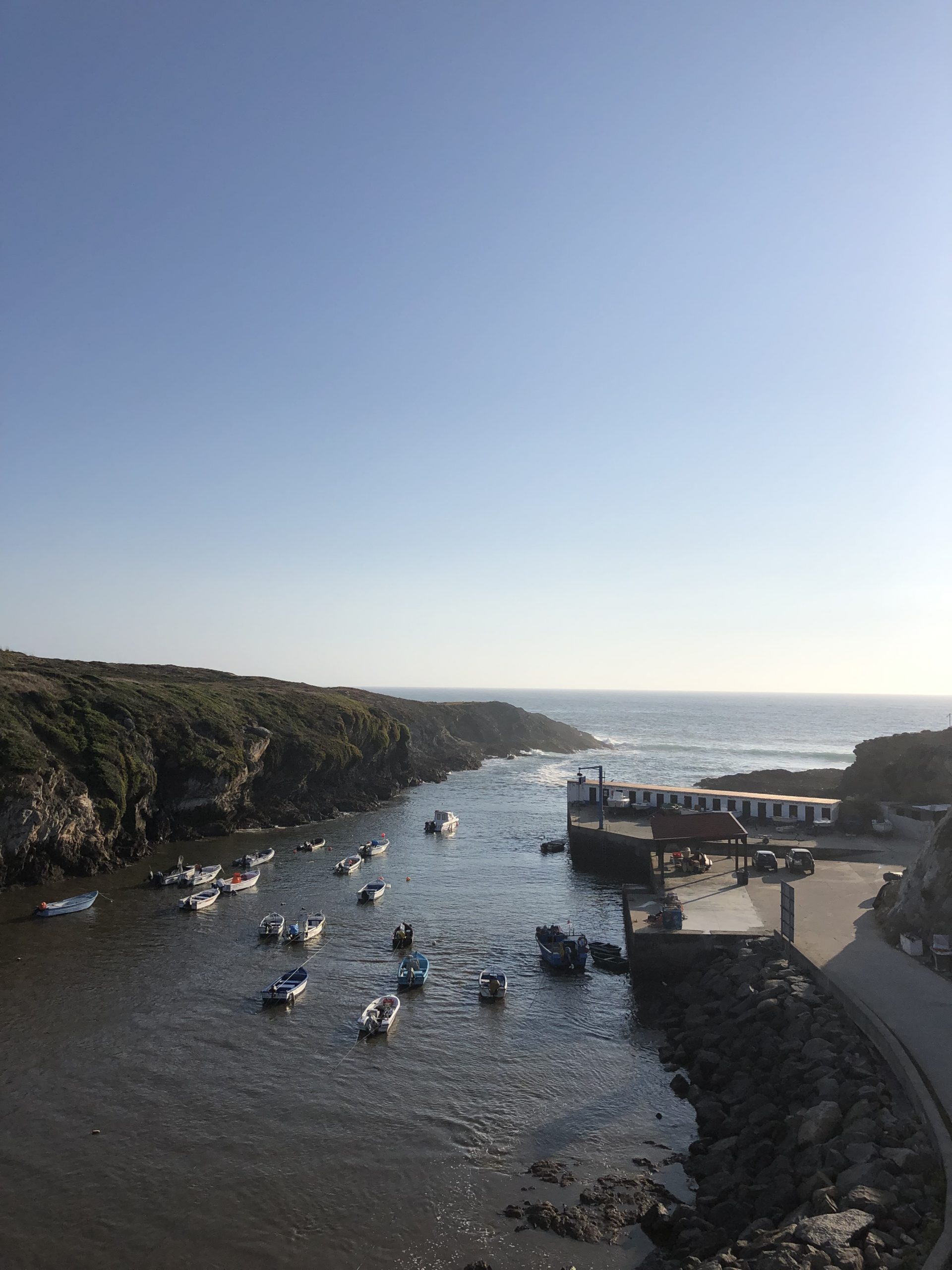
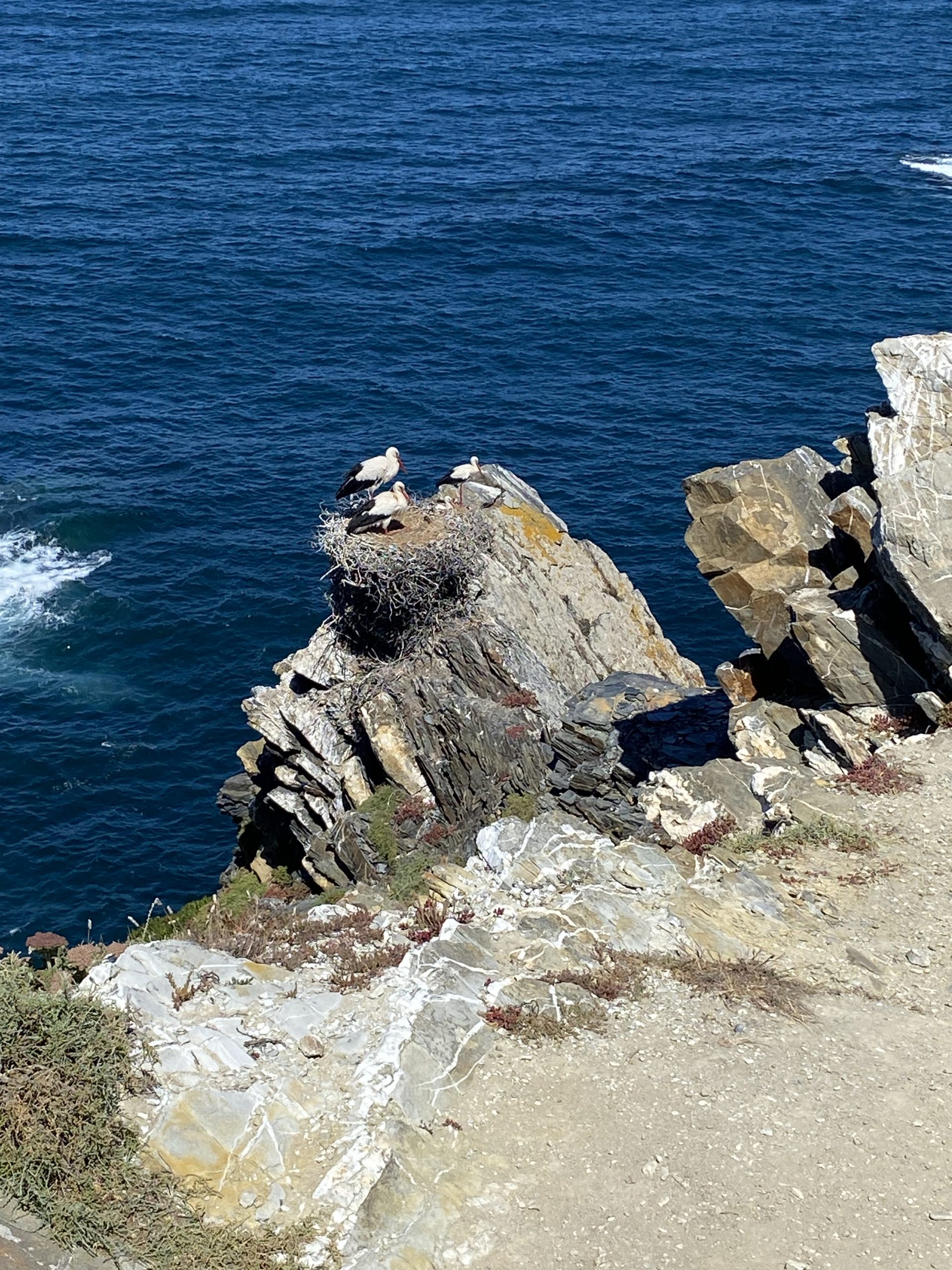
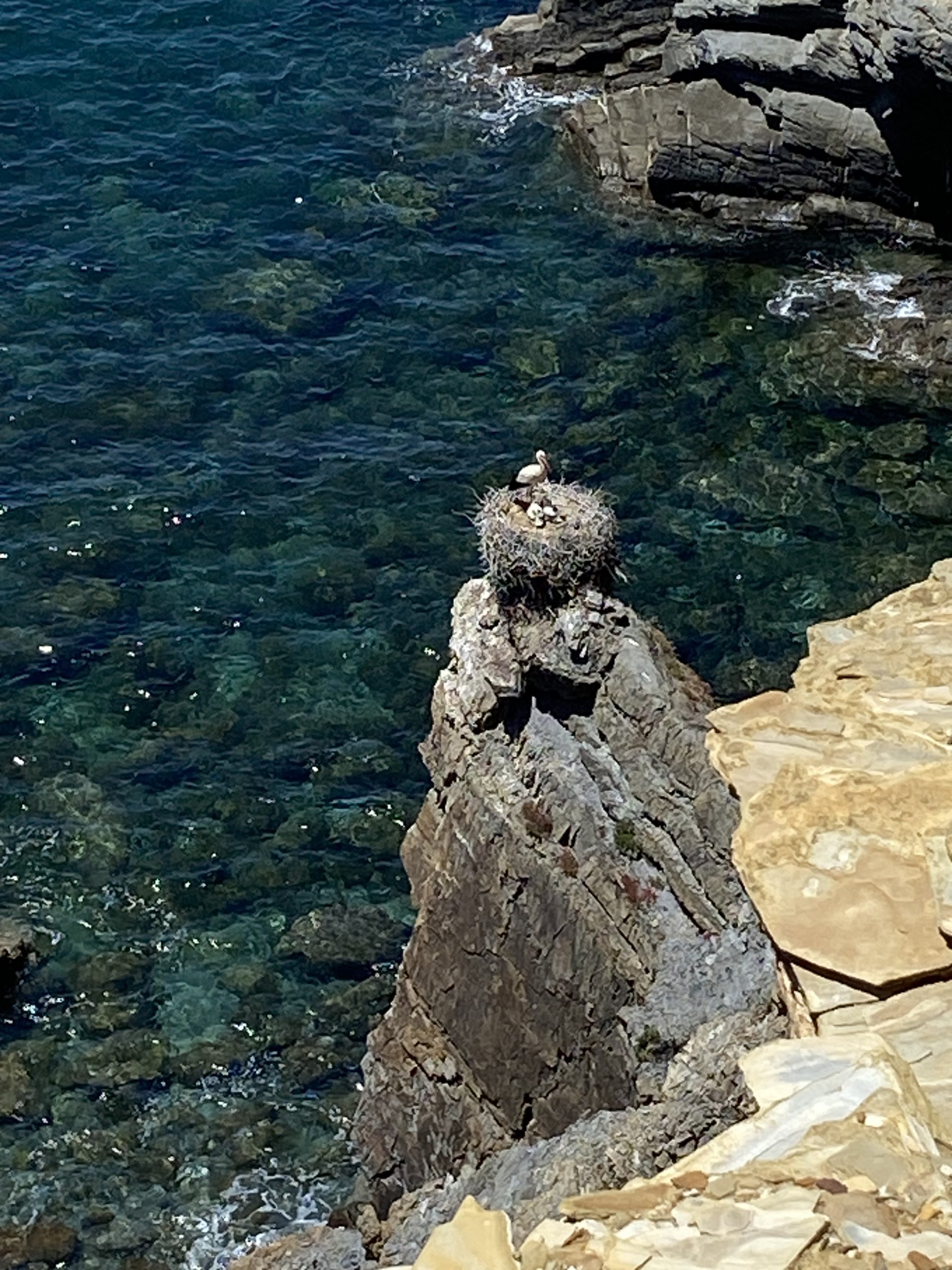
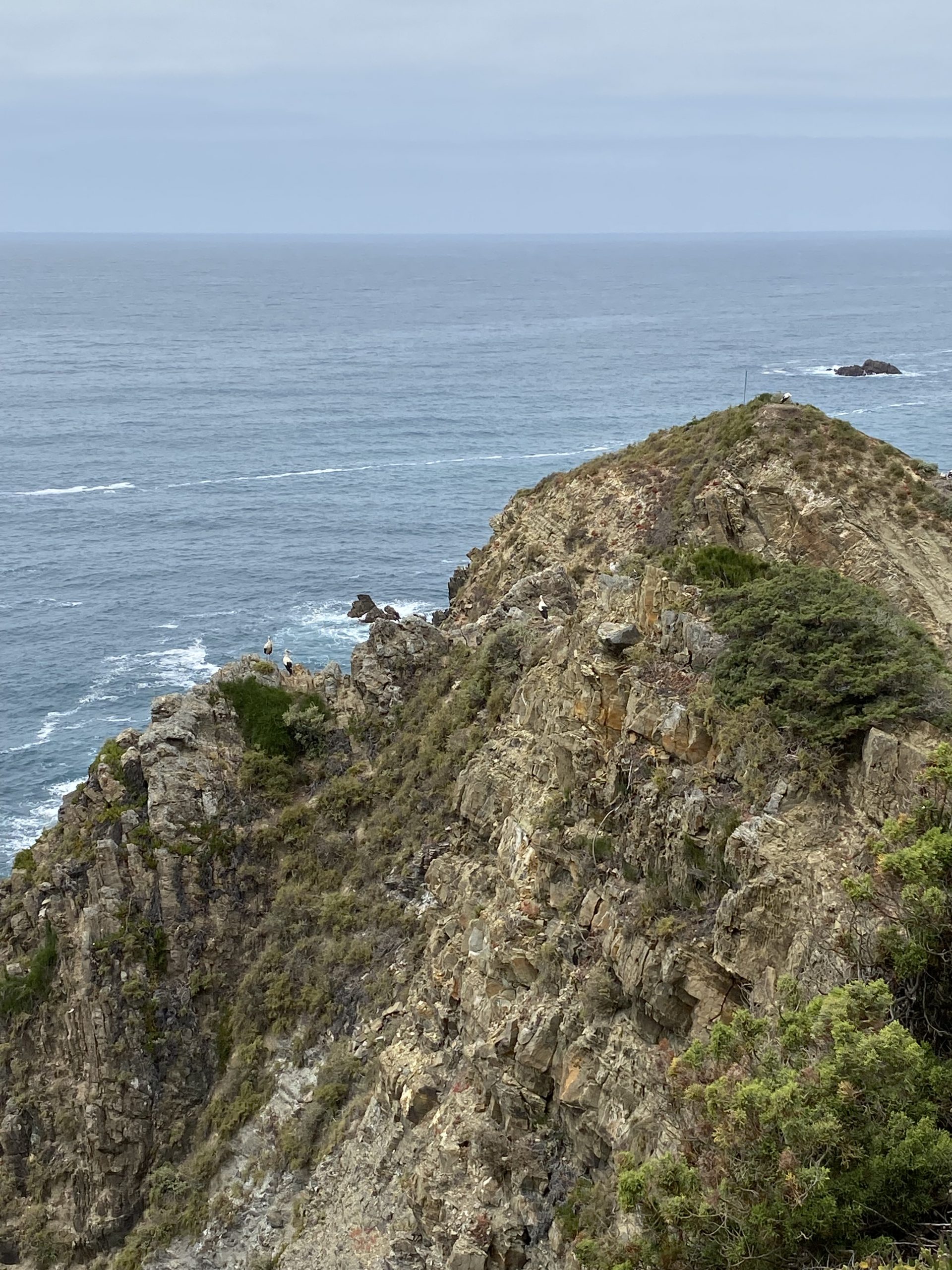
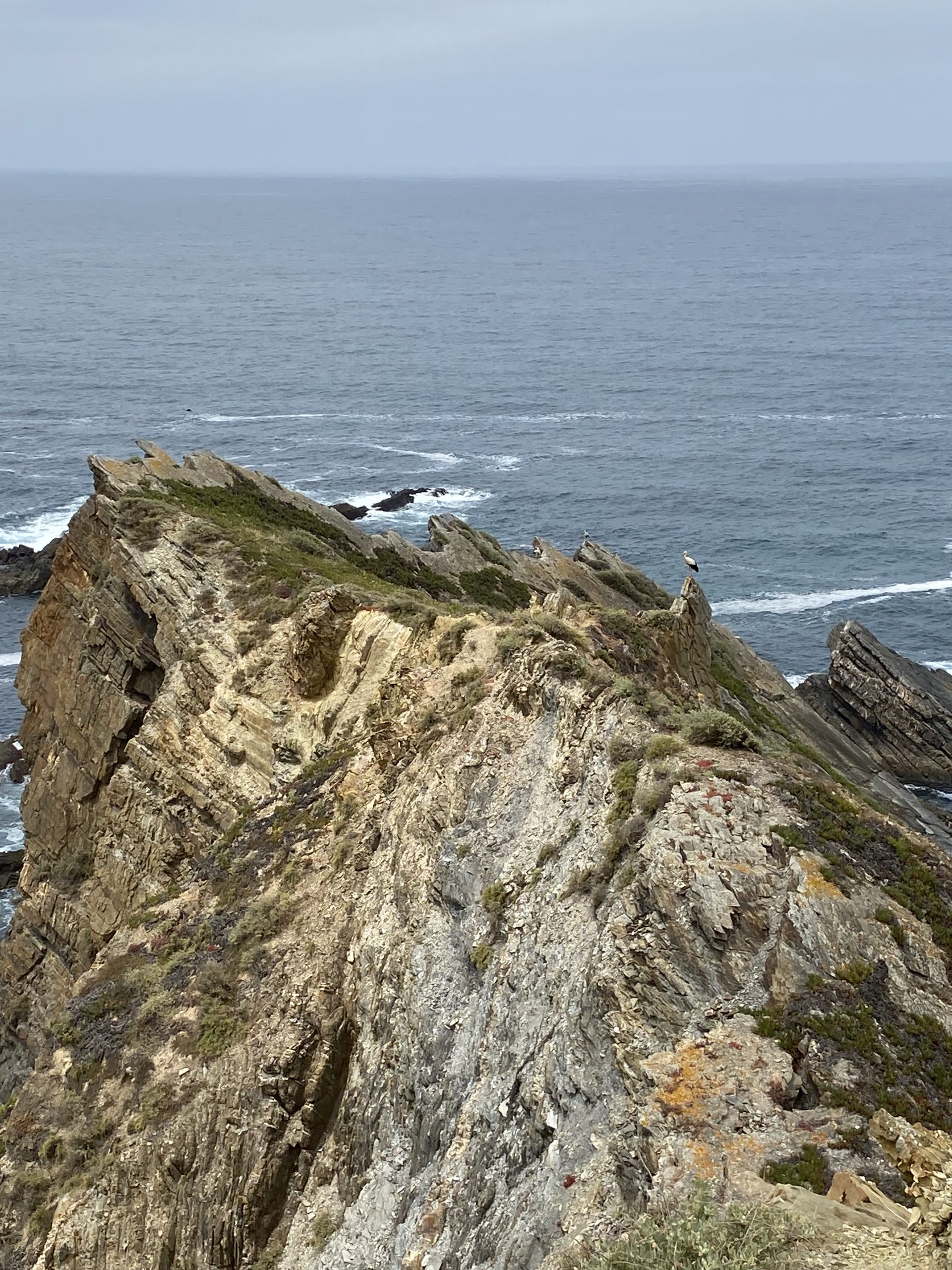
One of the more surprising sights in Alentejo is the abundance of storks. These large, elegant birds are a common sight, often seen perched on tall chimneys or nesting in trees. Along the Alentejo Coast, they even build their nests on the cliffs, defying the ocean winds—a sight that’s as unusual as it is impressive. When you walk the Fisherman’s Trail of the Rota Vicentina, there are plenty of places where you can observe this.
The Alentejo Bread
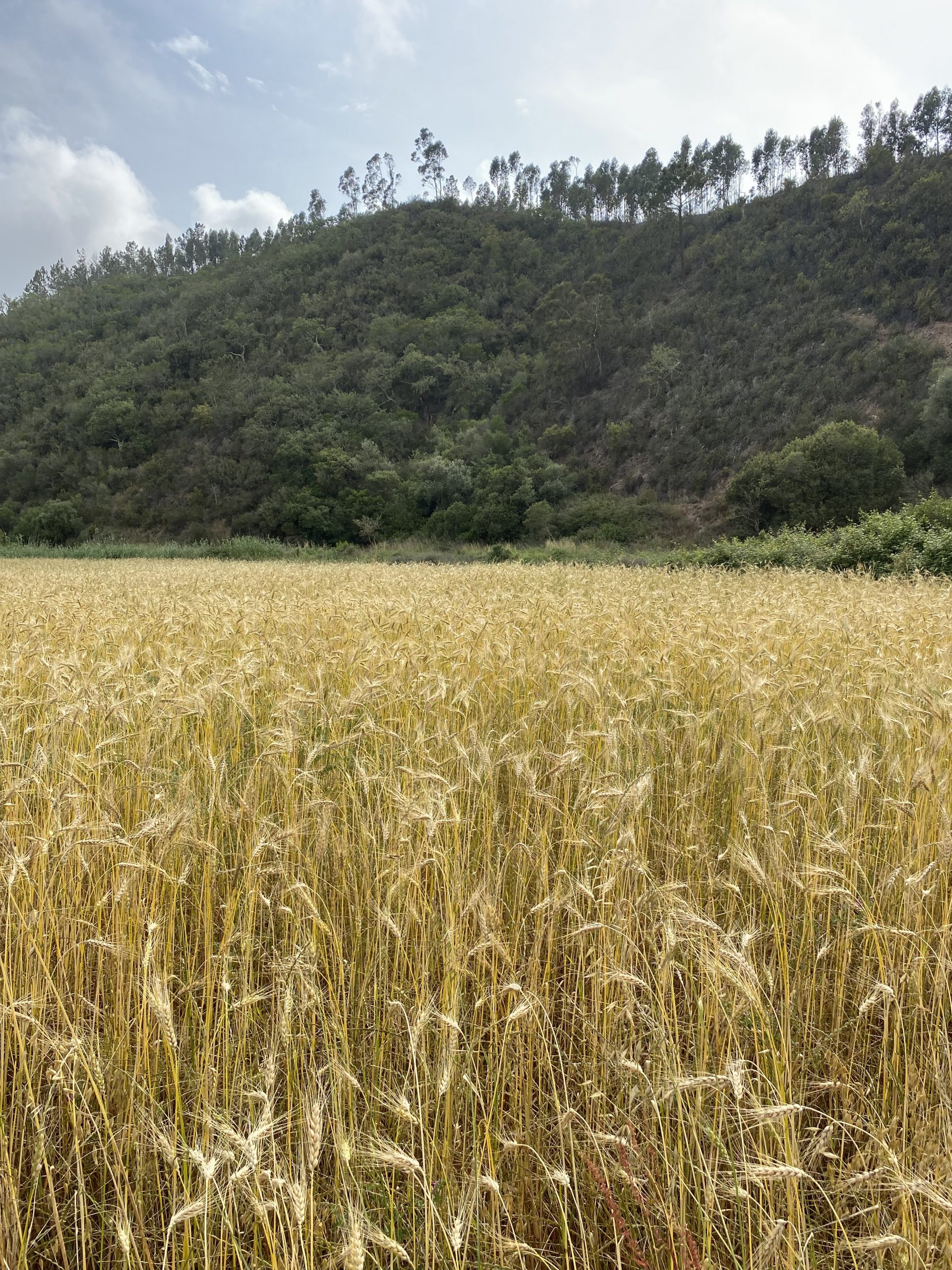
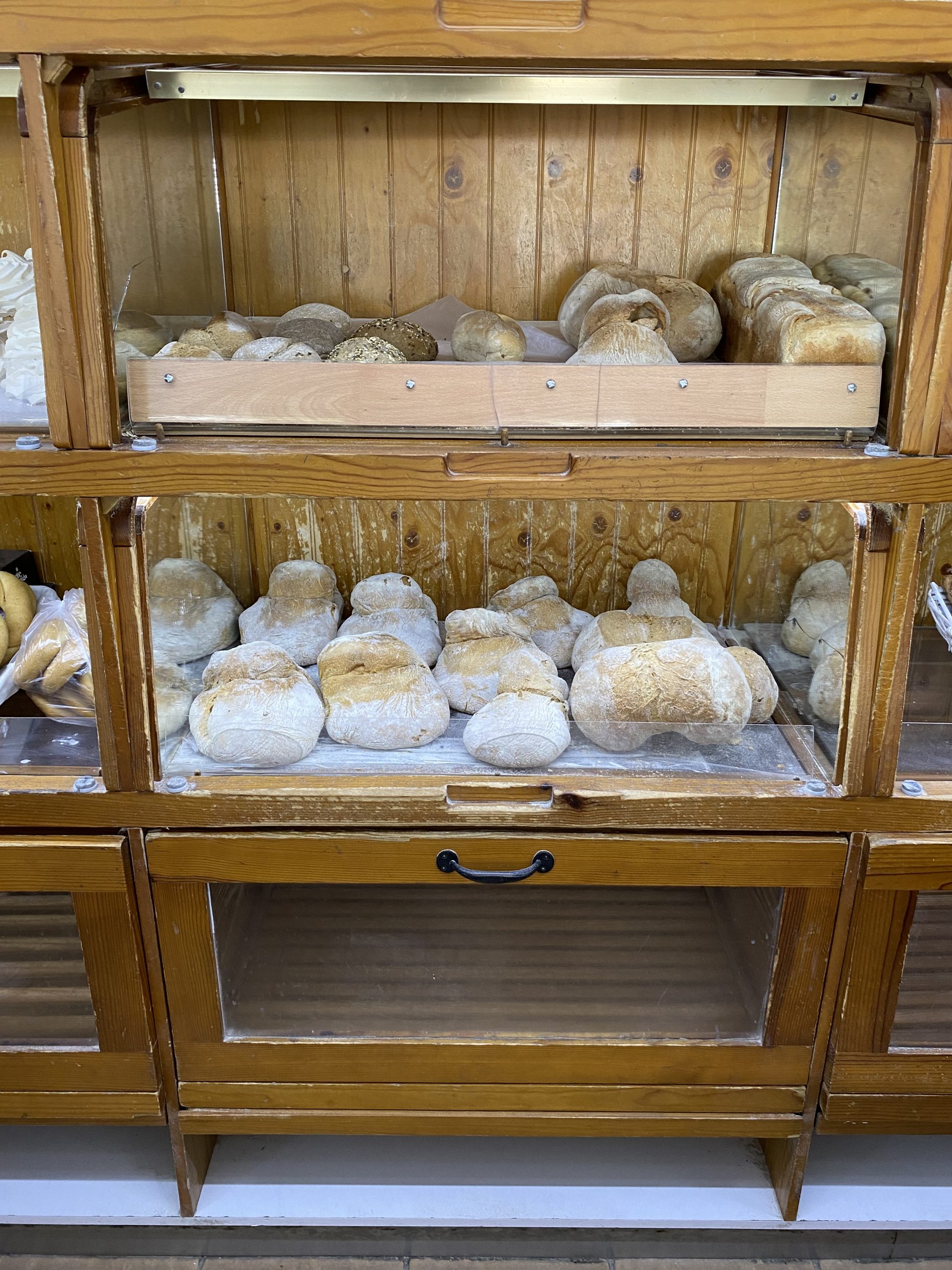
Of course, no journey through Alentejo would be complete without experiencing its food, and at the heart of it all is Alentejo bread. Known locally as “pão alentejano”, this bread is a cornerstone of the regional diet. Made from simple ingredients—wheat flour, water, salt, and natural yeast—it has a dense crumb and a thick, crunchy crust. The slight sourness of the bread, combined with its rustic texture, makes it a perfect companion to the rich flavors of Alentejo’s cuisine, from stews to cheeses.
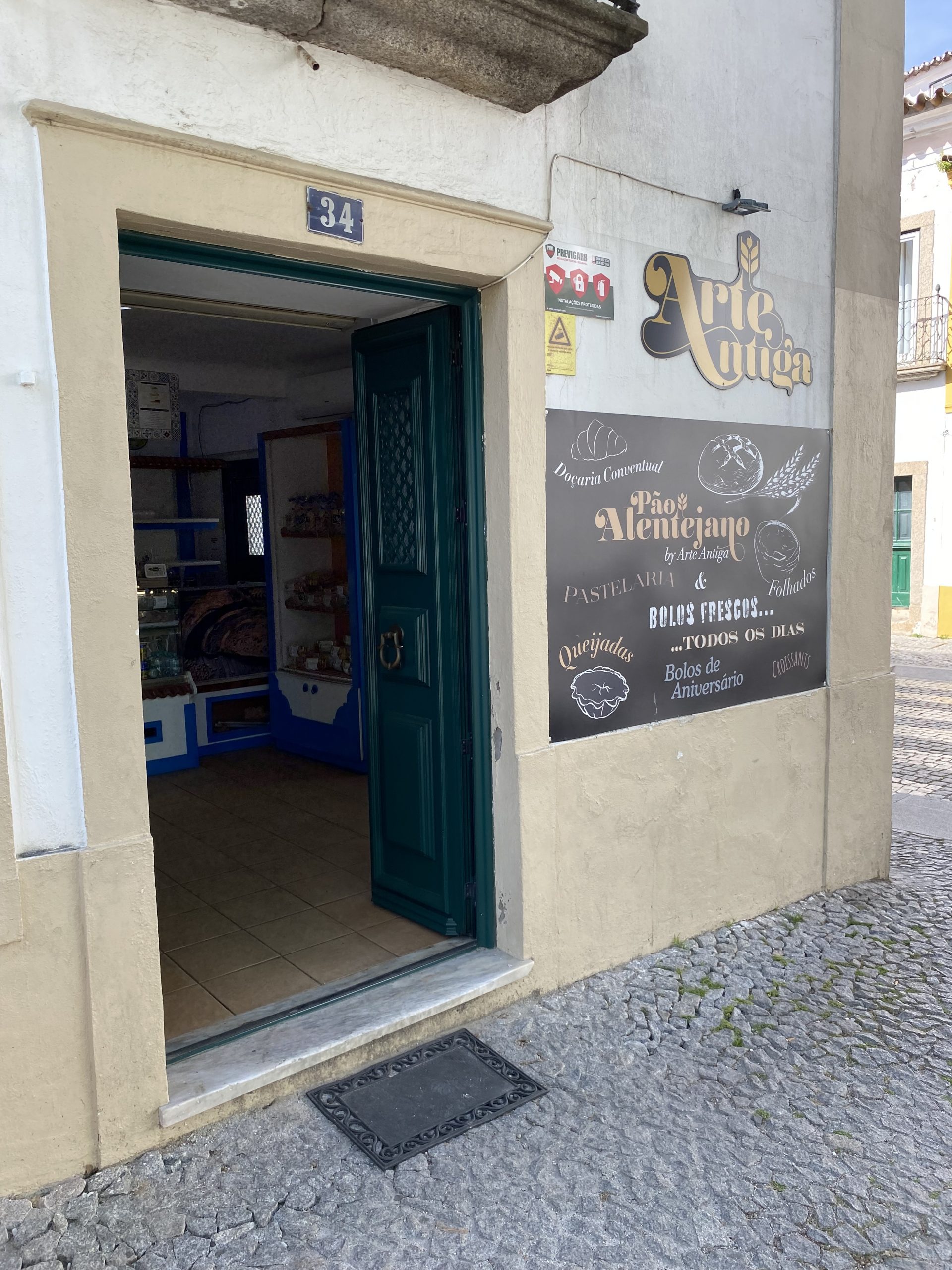
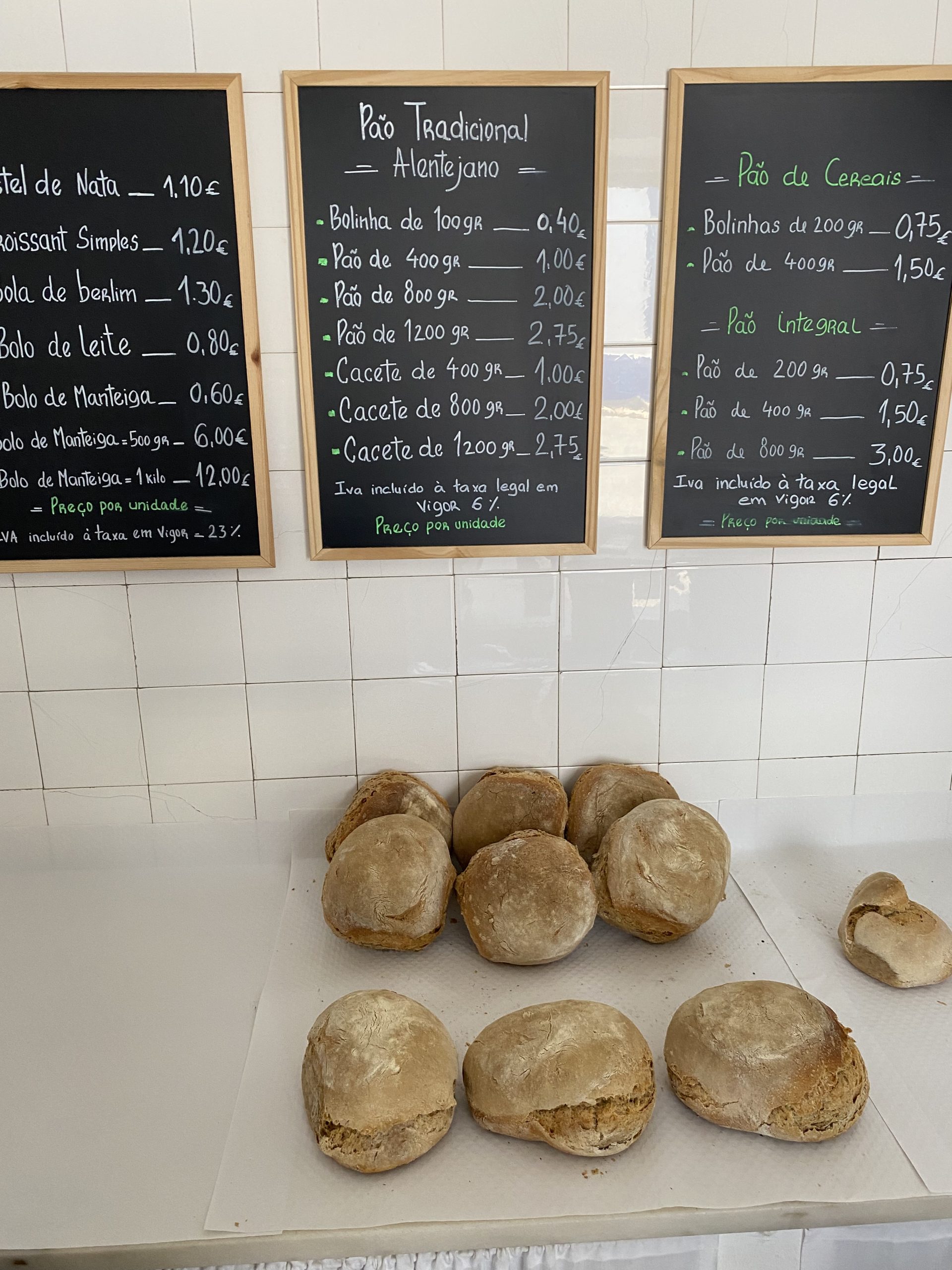
During my travels, I visited the Padaria Arte Antiga in Évora, where the scent of freshly baked bread greeted me as soon as I walked through the door. The bread is baked in a wood-fired oven at the production site in Beja (a nearby town). Besides the bread, I tried a lot of tasty local pastries! I went back every day during my stay in Evora to buy fresh products for myself and as presents for friends at my next destination!
Another discovery I made during my hikes on the Rota Vicentina. I found a traditional bakery in the beautiful little town of Zambujeira do Mar. Entering the Padaria Augusto Ferreira & Filhos is like stepping into a bakery decades ago, with a limited variety of artisanal pastries and bread, simple design and impressive old mechanic scale.
Because I always missed the Alentejo bread after my returns from Portugal, I developed a recipe of the bread! I wanted to bake a special bread variation, the “Pão Alentejano com Cabeça”. It is characterized by its round shape with a small portion of dough on the top, known as the “cabeça” (head). As I mentioned in a previous post, my recipe resulted from a combination of different sources and my experiments.
Let´s bake!
We will need the following ingredients.
Sourdough:
- 30 g water
- 70 g all-purpose white wheat flour (Type 550 in Germany)
- 2 g salt
- 50g active starter
Bread dough:
- 390 g water
- 640 g all-purpose white wheat flour (Type 550 in Germany)*
- 13 g salt
- 150g active sourdough
*you can substitute up to 20% of the flour with whole wheat
First, prepare the sourdough by mixing all the ingredients and letting it ferment (overnight at room temperature or for 3-4 hours at a warm place).
Mix the water and flour of the bread dough and autolyze it for one hour.
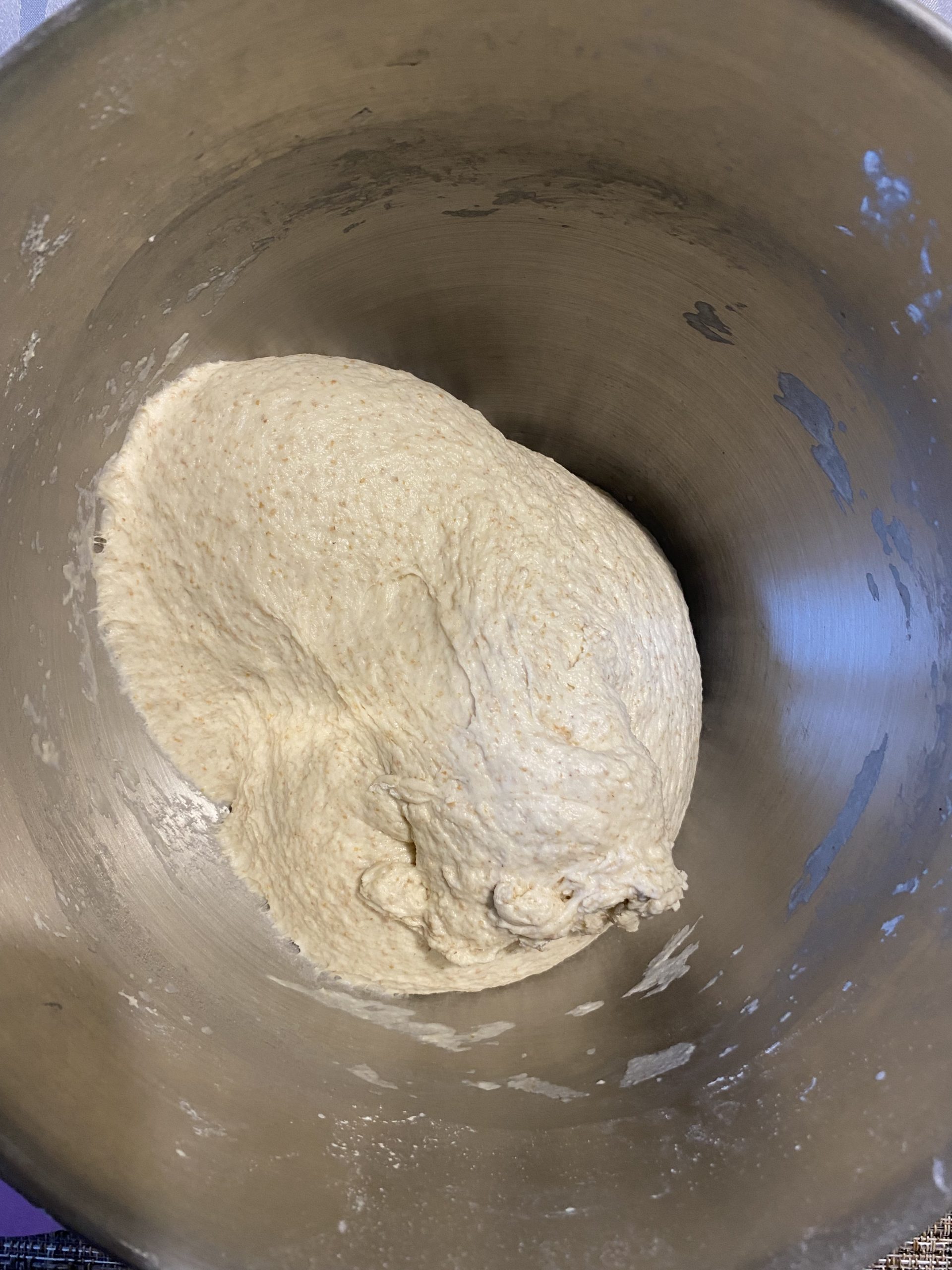
Mix all the ingredients for about 10 minutes in a stand mixer. Depending on the flour used, you might add some more water, if you notice, that the dough is too stiff.
Add the dough to a bowl or container greased with some olive oil. Let it proof on room temperature for 4-5 hours. Perform 2-3 coil folds in the first 2 hours.
Turn the dough out of the container on a floured surface. Roll the dough up and put it in a large bowl clothed with a floured towel. Cover the dough with the rest of the towel and put in in the refrigerator for overnight proof. You can also use a proof basket for it, just make sure, it is covered with a towel.
The next morning, preheat the oven to 230 C.
Prepare a baking sheet with baking paper.
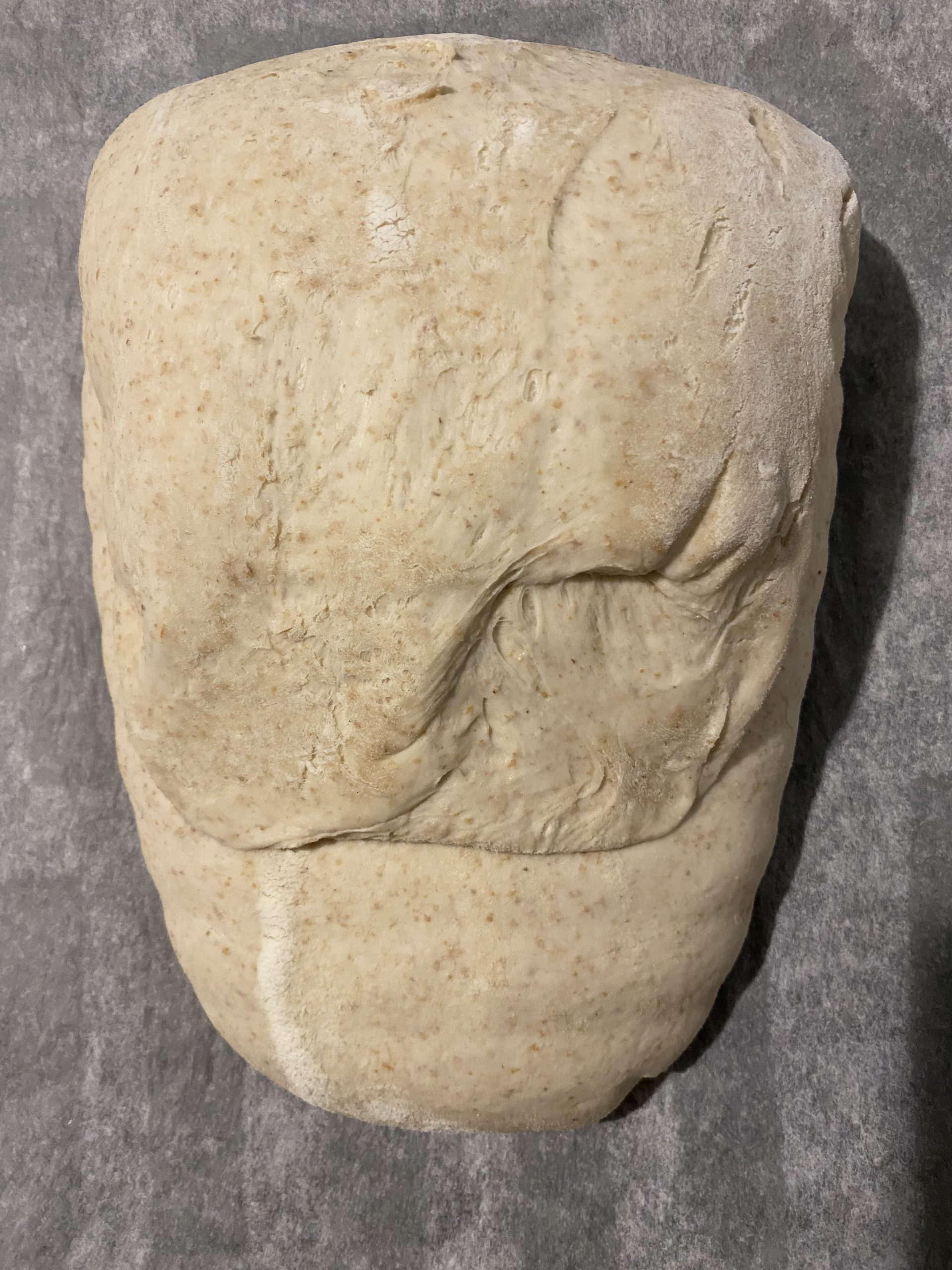
Take the nicely raised dough out of the refrigerator, and turn it on the richly floured surface. Pull the upper end of the lengthy dough roll over the lower end of the dough (this will be the “head”) and press it gently.
Transfer the dough to the baking sheet and bake it at 220 C for about 40-50 minutes until golden brown.
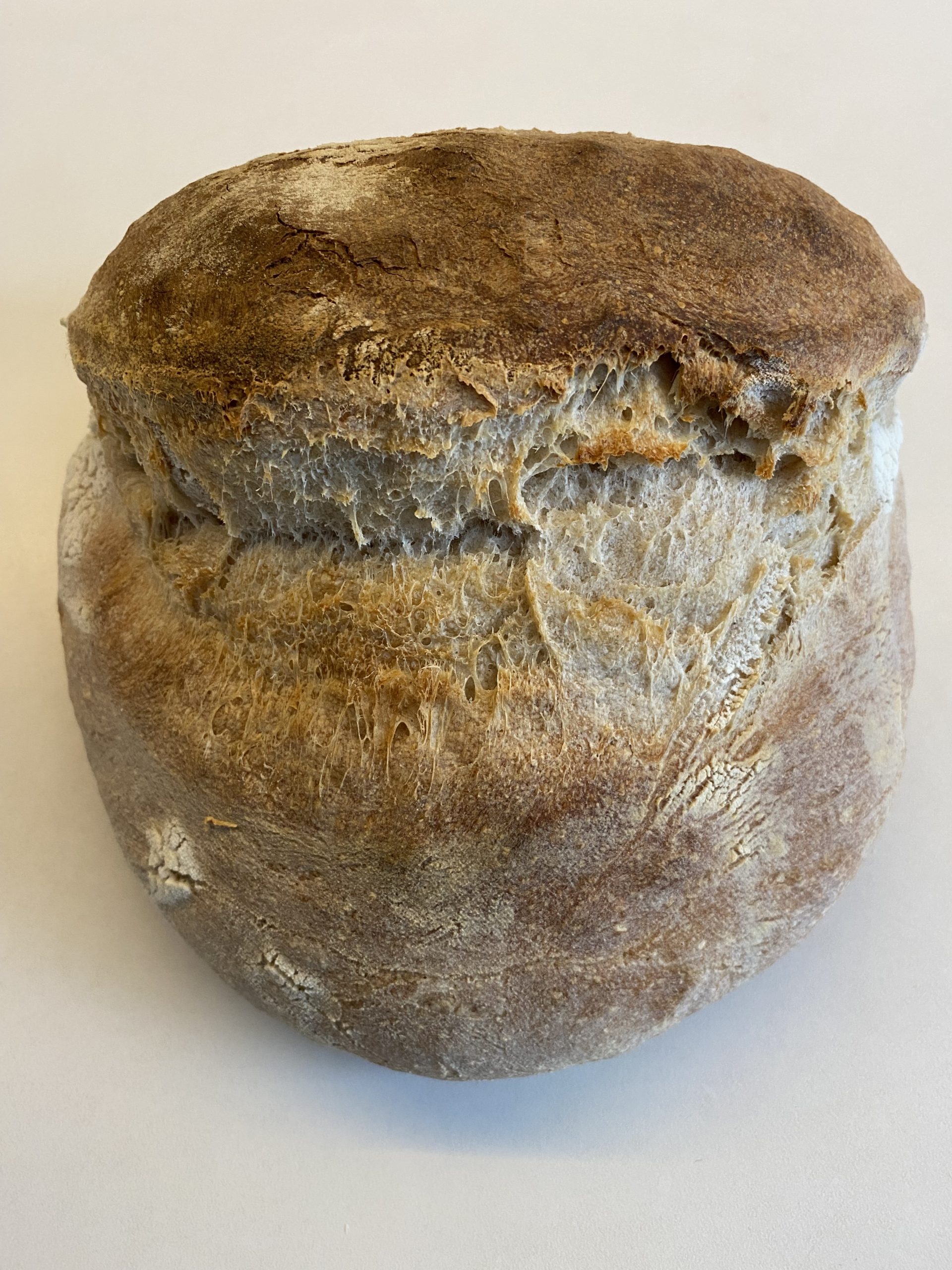
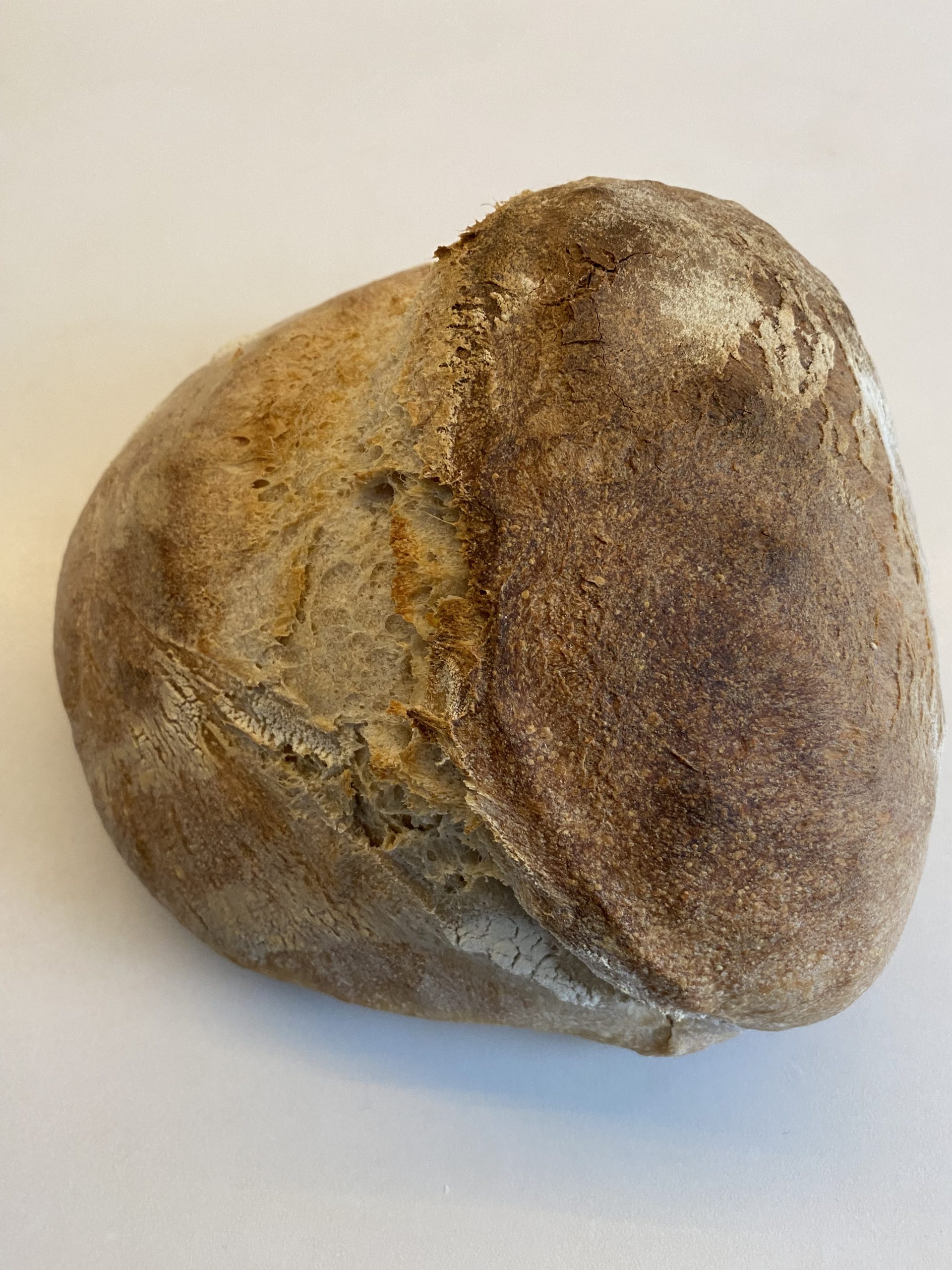
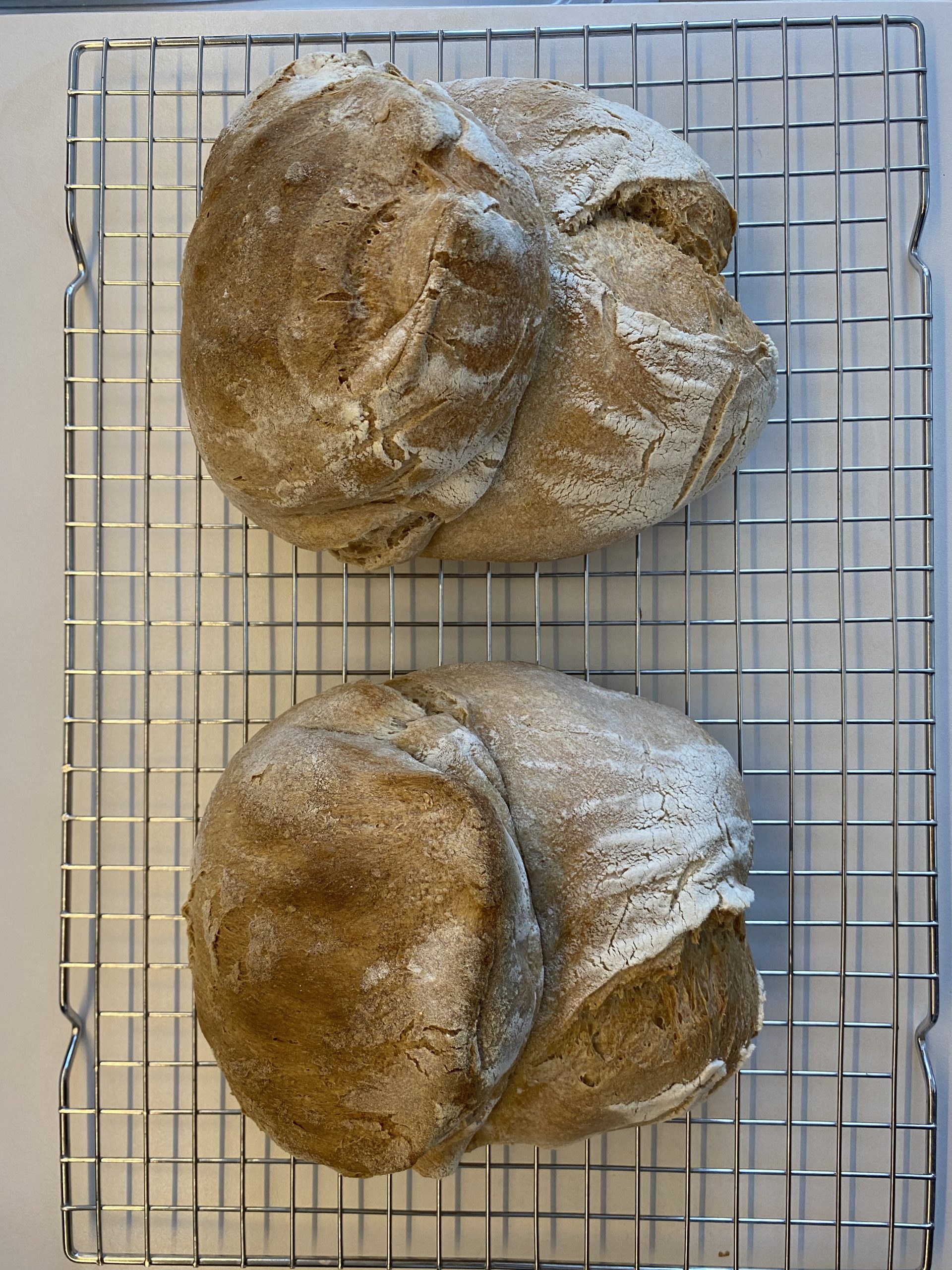
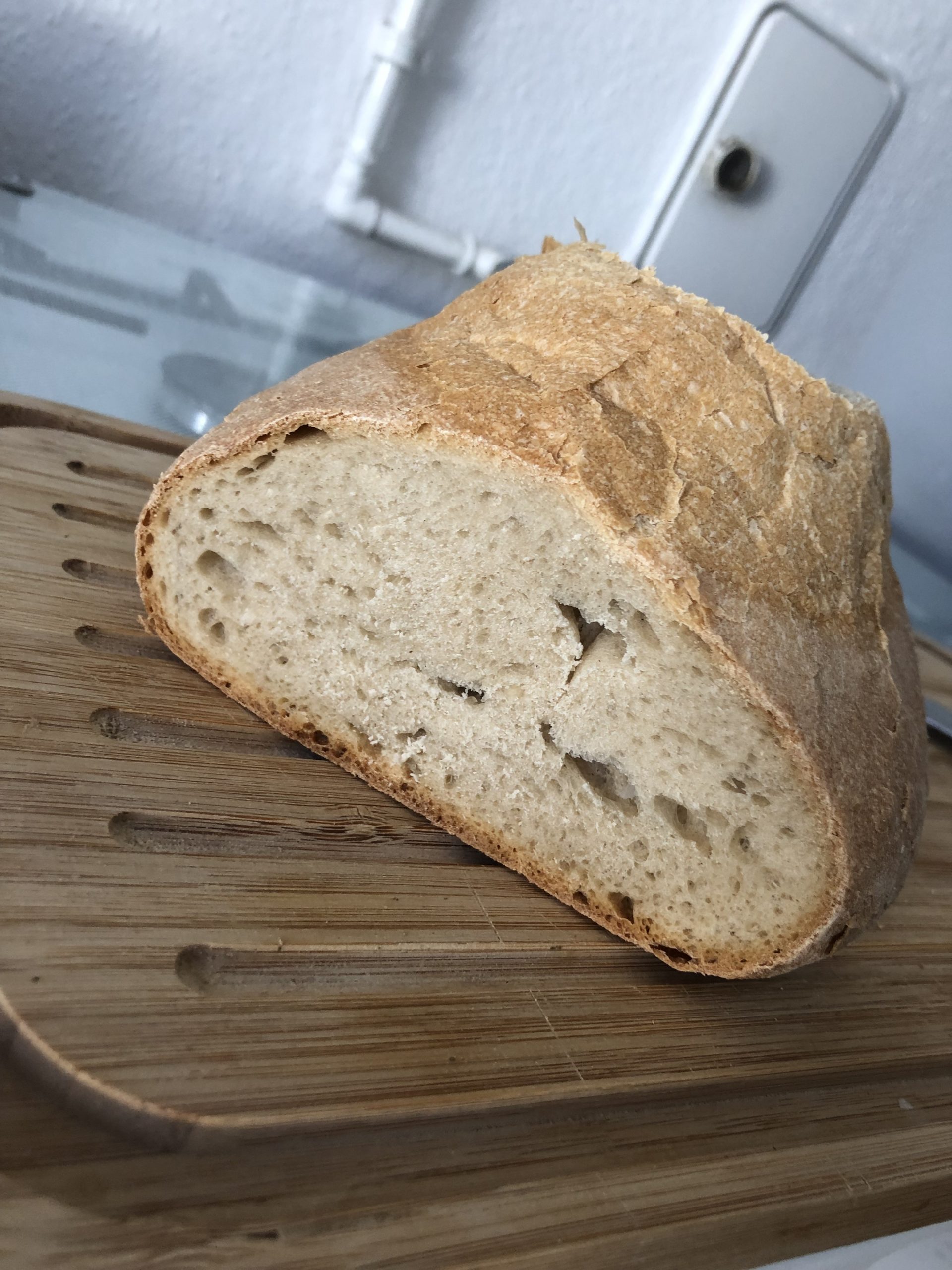
Although it is not easy to resist, you should let the bread cool down for 2 hours, before cutting it! I like to spread butter on a thick slice and snack on Portuguese cheese and chouriço from the famous Alentejo black pork! How do you like to eat the “Pão Alentejano com Cabeça”? Feel free to contact me and share your preferences!